

Coffee Cup Buying Guide - How to Choose the Best Coffee Mug?
A coffee mug seems like a simple purchase — until you're standing in front of a shelf of options and realizing you have no idea what actually makes one better than another. Material, size, insulation, handle design — they all affect how your coffee tastes and how long it stays at the right temperature.
This guide breaks down everything that matters so you can pick the right cup for how you actually drink coffee.
Coffee Mug Material: Which Is Best?
The material your mug is made from affects heat retention, durability, taste clarity, and how easy it is to clean. The three main options are ceramic, glass, and stainless steel — each with real trade-offs.
Ceramic is the most common. It's affordable, microwave-safe, and comes in every shape and size imaginable. The downside is that standard ceramic conducts heat easily — your coffee cools faster than you'd like, and the outside of the mug gets hot to touch. Ceramic also chips and cracks if handled roughly.
Standard glass lets you see the color and clarity of your drink, which is a genuine plus for coffee. But most glass mugs are single-wall, meaning they offer almost no insulation — your coffee goes cold quickly and the glass gets uncomfortably hot.
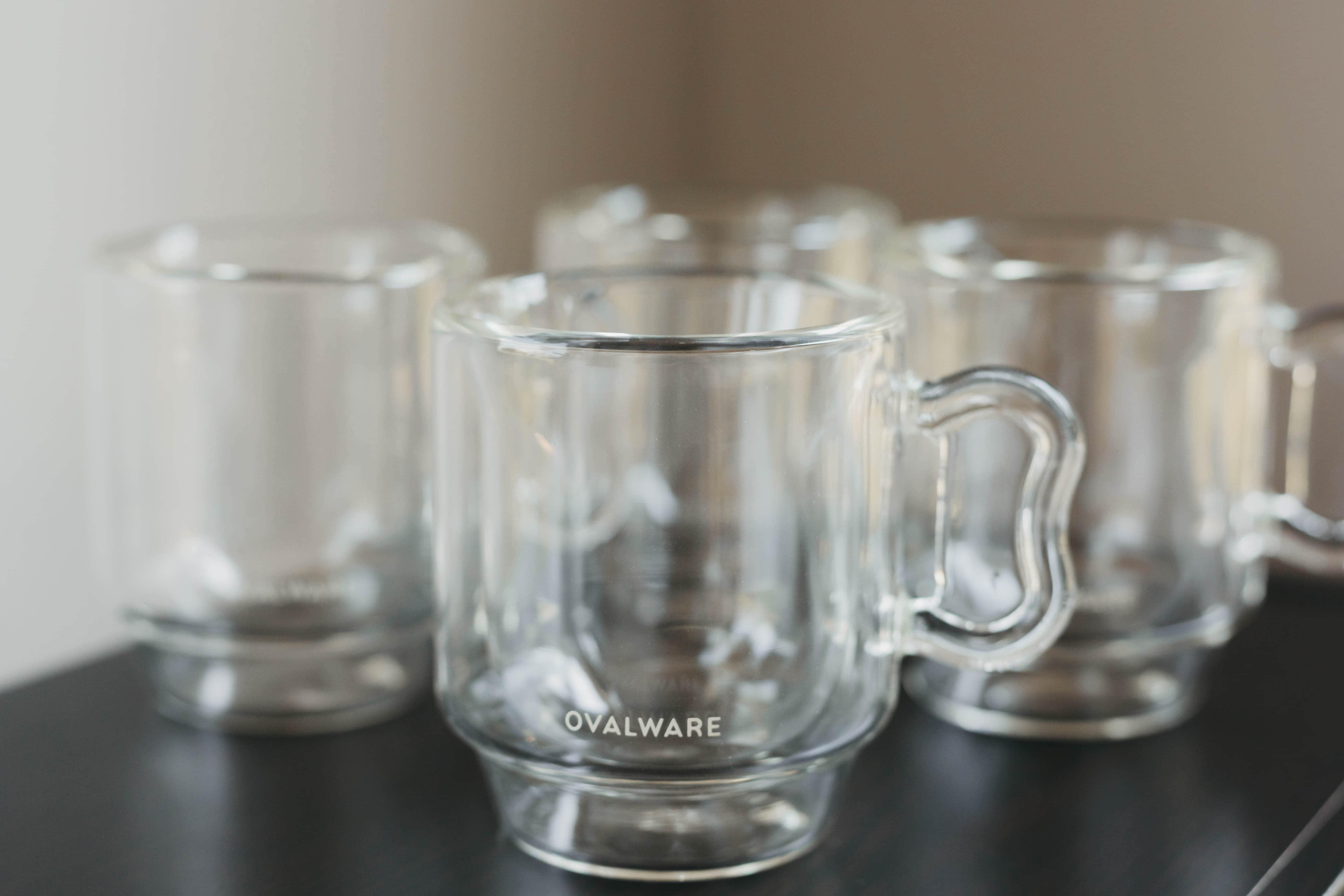
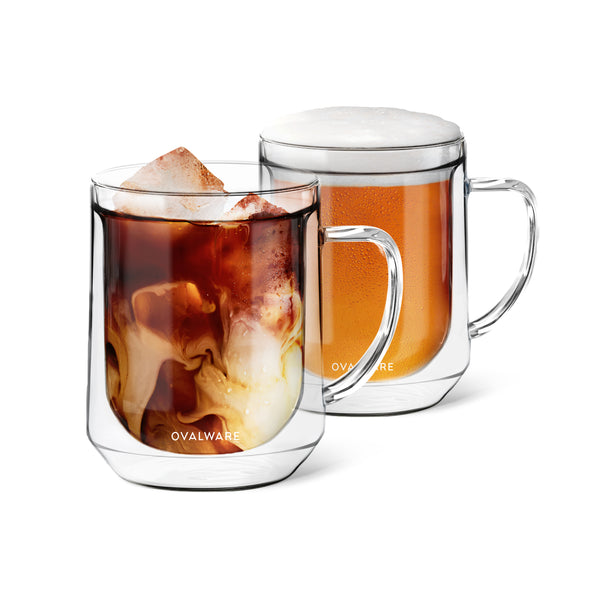
Double wall borosilicate glass solves both problems. Borosilicate glass is engineered to handle extreme temperature changes without cracking, and the double-wall vacuum insulation keeps drinks hot longer while the outside stays cool to the touch — no burning your hands, no condensation on the table. Ovalware's Double Wall Mug uses this construction — it's why the glass looks so clean and why your coffee stays at the right temperature significantly longer than a ceramic mug.
Stainless steel is the most durable option and insulates well, but it's opaque (you can't see your drink), can impart a metallic taste if the lining isn't high quality, and isn't microwave-safe. Better suited for travel mugs than everyday home use.
| Material | Heat Retention | Durability | Taste Neutral | Best For |
|---|---|---|---|---|
| Ceramic | Low | Medium | Yes | Home use, casual drinkers |
| Standard glass | Very low | Low | Yes | Visual presentation |
| Double wall borosilicate glass | High | High | Yes | Home use, tasting, gifting |
| Stainless steel | Very high | Very high | Varies | Travel, commuting |
Choosing the Right Size
The most common coffee mug size is 12 oz — the standard at most cafes and restaurants. But the right size for you depends on how you drink.

An 8 to 10 oz mug is ideal if you drink your coffee slowly and want it to stay hot throughout. A larger 16 oz mug suits people who prefer a long, leisurely cup or drink milder coffee. For espresso-based drinks — lattes, cortados, flat whites — a smaller 6 to 8 oz glass keeps the proportions right and the drink from going cold before you finish.
Taller mugs allow more crema to form on espresso, which improves aroma. But they're less practical for quick sips. Match the size to your actual habits — not to how much coffee you wish you drank.
Double Wall vs. Single Wall: Does It Matter?
Double wall insulation makes a meaningful difference in how long your coffee stays at the right temperature. A single-wall ceramic mug loses heat rapidly through direct contact with air — most coffees go lukewarm within 15 to 20 minutes. A double-wall vacuum mug keeps drinks at serving temperature for 60 to 90 minutes or more.
The secondary benefit is comfort: the outer wall stays cool to the touch even when the coffee inside is hot, so there's no need for a sleeve or handle grip. For people who hold their mug while they drink — rather than setting it down — this is a significant quality-of-life improvement.
Handle Design: One Handle vs. Two
Most everyday mugs have a single handle, which is practical for one-handed use and easier to serve when pouring for multiple people. Two-handled mugs are sometimes used for oversized cappuccinos or hot chocolate, but they're less common and harder to store.
Handle size matters too — a handle that's too small to fit four fingers is uncomfortable for regular use. Double wall glass mugs without handles (like a glass tumbler style) work well if the outer wall stays cool, since you can hold the mug directly.
Travel Mugs: What to Look For
If you drink coffee on the move, a dedicated travel mug is worth the investment. Key features to prioritize: a leak-proof lid, double-wall vacuum insulation, and a size that fits in a standard car cup holder (most 16 oz mugs do).
Stainless steel travel mugs outperform ceramic and glass for portability — they handle drops and bag use better. If you prefer glass at home, keep a stainless travel mug for commutes and use your double wall glass mug at your desk.
Coffee Maker Compatibility
Some specialty coffee brewers — particularly pour over makers and espresso setups — have specific cup height or width requirements. Check that your mug fits under the spout before brewing directly into it. Most standard 8 to 12 oz mugs work with drip machines and pour over setups without issue.
How to Take Care of Your Coffee Mug
A well-maintained mug lasts years. A few simple habits make a big difference:
- Hand wash double wall glass mugs — dishwashers can stress the vacuum seal over time
- Use warm water and mild dish soap; avoid abrasive scrubbers that scratch the surface
- For stubborn coffee stains, soak in a mix of warm water and baking soda for 30 minutes, then rinse
- Dry completely before storing to prevent mildew inside the mug
- Don't microwave double wall or stainless steel mugs — ceramic only
- Use a coaster on wood surfaces to prevent water rings from condensation
How Much Should You Pay for a Coffee Mug?
Basic ceramic mugs start at $5 to $15 and work fine for casual use. High-quality double wall borosilicate glass mugs typically run $20 to $45 for a set of two — the price reflects the glass quality, insulation performance, and build durability. Stainless steel travel mugs range from $20 to $50 depending on insulation quality and lid design.
A good mug is something you use every day for years. It's worth spending a bit more on something that keeps your coffee at the right temperature, feels good to hold, and doesn't look worn out after a few months.
Frequently Asked Questions
What is the best material for a coffee mug?
Double wall borosilicate glass is the best all-around material for home use. It keeps coffee hot significantly longer than ceramic, stays cool on the outside, doesn't affect taste, and looks elegant. Ceramic is a good budget option. Stainless steel is best for travel and commuting.
What size coffee mug should I get?
A 12 oz mug is the standard and suits most people. Choose 8 to 10 oz if you drink slowly and want your coffee to stay hot throughout. Go 16 oz if you prefer a large, leisurely cup. For espresso-based drinks like lattes or flat whites, a 6 to 8 oz glass keeps proportions right.
Does a double wall mug really keep coffee hotter?
Yes, significantly. A double wall vacuum mug keeps coffee at serving temperature for 60 to 90 minutes or more — compared to 15 to 20 minutes in a standard ceramic mug. The vacuum between the walls blocks heat transfer, and the outer wall stays cool to the touch throughout.
Is borosilicate glass safe for hot drinks?
Yes. Borosilicate glass is engineered specifically to handle rapid temperature changes without cracking or shattering — unlike standard glass. It's the same material used in laboratory equipment and high-quality cookware. It's safe for hot coffee, tea, and other beverages.
How do I remove coffee stains from a mug?
Soak the mug in a solution of warm water and two tablespoons of baking soda for 30 minutes, then scrub gently with a soft cloth and rinse thoroughly. For stubborn stains, a paste of baking soda and white vinegar works well. Avoid abrasive scrubbers that can scratch the surface.



Leave a comment
This site is protected by hCaptcha and the hCaptcha Privacy Policy and Terms of Service apply.