Best Glass for Iced Coffee: How Your Cup Affects Taste, Temperature, and the Pour
The glass you pour your iced coffee into isn't just a container. It affects how cold your drink stays, whether your hand gets wet from condensation, how the flavors come through, and , honestly , how much you enjoy the experience of drinking it. A $7 iced coffee from a coffee shop looks good in part because of the cup. You can recreate that at home.
This guide covers what actually matters when choosing a glass for iced coffee: material, wall construction, size, and shape. We'll also compare the options honestly so you can pick the right glass for how you drink.

Does Your Glass Actually Affect Iced Coffee?
Yes , the glass you use measurably affects the temperature, taste, and texture of your iced coffee. Glass material determines thermal shock resistance and whether the cup can crack when cold liquid hits it. Wall construction (single vs. double) determines how long your drink stays cold and whether the outside of the glass sweats. Shape and volume affect ice melt rate and how concentrated your drink stays as you drink it. A well-chosen glass keeps your iced coffee cold and properly diluted for longer than a random cup from the cupboard.
The difference is most noticeable with a double-wall glass. JoyJolt's explainer on double-wall glass science explains the mechanism: two layers of glass with an air pocket between them slow heat transfer significantly, keeping cold drinks colder for roughly 2-3x longer than a standard single-wall glass. The air pocket also eliminates condensation on the outer surface , no wet rings on your desk, no slippery grip.
What to Look for in an Iced Coffee Glass
Not all glasses are built the same. These are the four things that actually matter.
1. Material: Borosilicate vs. Soda-Lime Glass
Borosilicate glass is the right material for iced coffee. It has a lower thermal expansion coefficient than standard soda-lime glass, which means it can handle rapid temperature changes , like pouring cold brew directly over ice , without cracking. According to Giraffyco's drinkware material guide, borosilicate is lighter, more durable, and far more resistant to thermal shock than soda-lime glass. Standard bargain glassware is almost always soda-lime , it works until the day it doesn't.
2. Wall construction: Single vs. Double
Double-wall glasses keep iced drinks colder for longer and eliminate sweating. For everyday iced coffee at home, a double-wall glass is the clear practical upgrade , you get better temperature retention and a dry exterior without giving up the visual clarity of glass.
3. Volume and ice capacity
An iced coffee glass needs to be large enough to hold the drink plus a meaningful amount of ice. A 10-12 oz glass is fine for a short iced americano. For a full iced latte , 4 oz espresso, 6 oz milk, ice , you want at least 14-16 oz of total volume. Running out of room and having to pack in less ice means your drink warms faster.
4. Shape: Straight vs. Tapered
Straight-sided glasses are easier to drink from and easier to clean. Tapered glasses (wider at the top) look elegant and showcase layered drinks well. Avoid glasses that are narrower at the top than the base , they're awkward to stir and difficult to get ice into without splashing.
Single-Wall vs. Double-Wall Glass: The Real Difference
For iced coffee specifically, double-wall glass wins on every practical measure. The air pocket between the walls acts as thermal insulation , the same principle as a thermos, but in clear glass. Cold drinks stay 2-3x colder compared to single-wall glass, per Giraffy Co's insulation guide. The outer surface stays completely dry, so you get no condensation ring on the table and no slippery grip.
| Single-Wall Glass | Double-Wall Glass | |
|---|---|---|
| Temperature retention | Standard , drink warms in 15-20 min | 2-3x longer , stays cold 45-60+ min |
| Condensation | Yes , sweats on exterior | None , exterior stays dry |
| Visual clarity | Full , no distortion | Full , floating inner glass effect |
| Grip comfort | Cold, wet when full of ice | Room temperature exterior, dry |
| Thermal shock risk | Higher (soda-lime glass) | Lower (borosilicate) |
| Best for | Quick drinks, hot beverages | Iced coffee, cold brew, smoothies |
The single-wall glass is fine for hot drinks , it conducts heat both ways, which is useful when you want to warm your hands on a mug. For iced coffee, that same conductivity works against you.
Size and Shape: Why They Matter More Than You Think
The ideal iced coffee glass is 12-16 oz with straight or slightly tapered sides. A 12 oz glass holds a standard iced latte (double shot + 6 oz milk + ice) with enough room to stir. A 16 oz glass gives you more ice capacity, which means slower dilution and a colder drink for longer. Tall, narrow glasses (like a traditional highball) look sleek but warm up faster because less of the ice is in contact with the drink surface , a wider glass with more ice-to-liquid contact stays colder.
Shape also affects the experience of drinking. Barista Magazine's glassware guide for cold drinks notes that a slightly flared rim allows the full aroma of the coffee to reach your nose as you sip , a subtle but real difference compared to a straight cylindrical glass. For a drink as nuanced as specialty cold brew or a carefully made iced latte, aroma is part of the experience.
The Best Ovalware Glasses for Iced Coffee
Every Ovalware glass is made from borosilicate glass , no soda-lime, no plastic inserts, no risk of thermal shock cracks when you pour cold brew straight from the fridge over ice.
Double Wall Tasting Glass (350ml / ~12 oz)
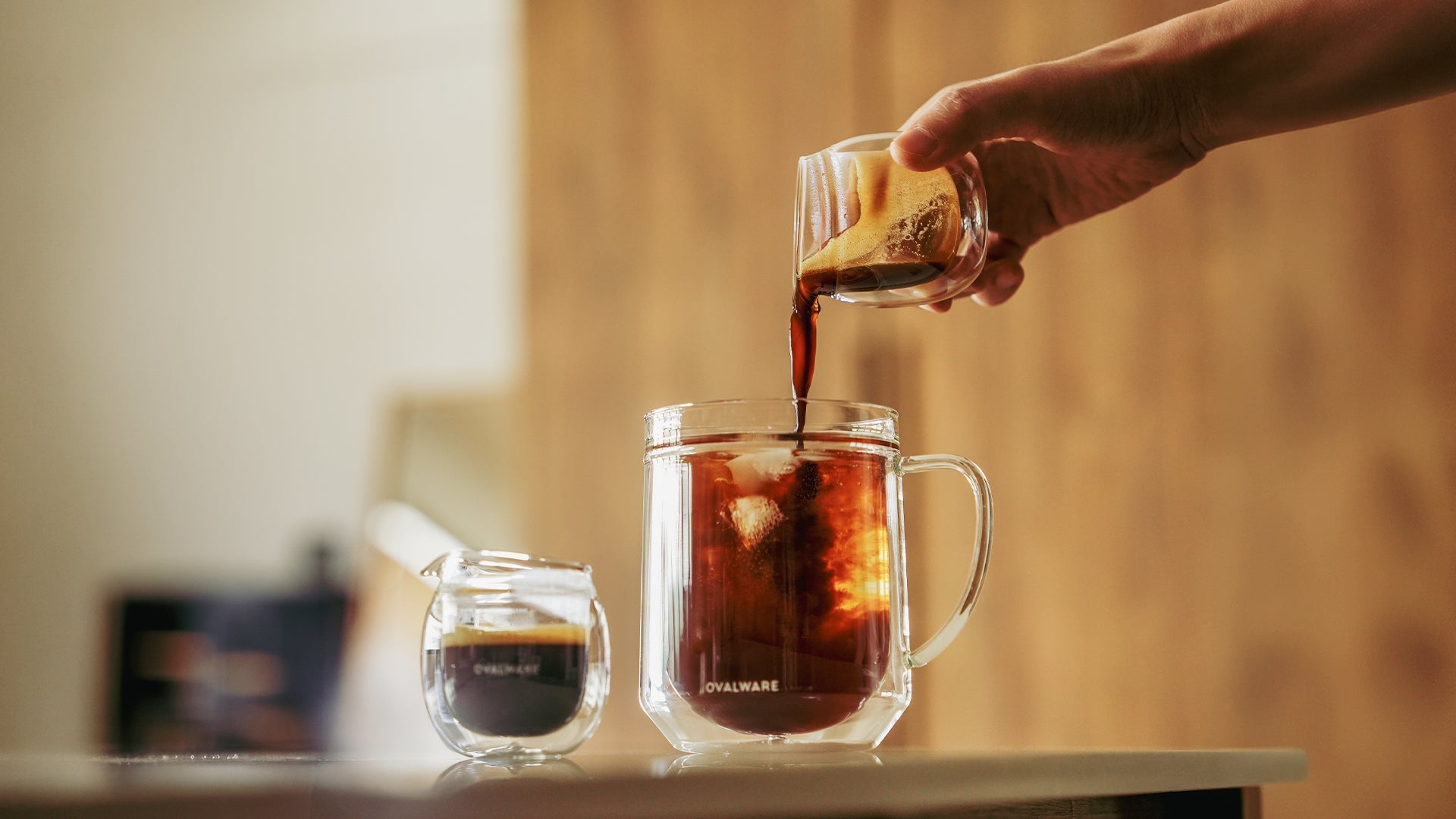
The purpose-built iced coffee glass. Double-wall borosilicate construction keeps drinks cold for up to an hour without any condensation on the exterior. The 350ml volume is sized exactly for a standard iced latte or cold brew over ice , enough room for your drink, your ice, and a proper stir. The floating inner glass creates a visual effect that makes any iced drink look intentional. See the Double Wall Tasting Glass.
Latte Master Glass
Designed for both hot and iced lattes. The slightly larger format gives more room for milk, foam, or cold brew. The clear borosilicate walls show off the layering effect of an iced latte , the gradient from espresso-dark at the bottom to milk-light at the top is part of the ritual. See the Latte Master Glass.
Espresso Pouring Glass
Smaller format, designed for short iced drinks , iced espresso, iced americano, or a smaller cold brew. See the Espresso Pouring Glass.

Matching Your Glass to Your Drink
Not every iced coffee is the same. Here's how to match glass to drink.
| Drink | Best Glass | Why |
|---|---|---|
| Iced latte | Latte Master Glass or 12-16 oz double-wall | Room for espresso, milk, and ice |
| Cold brew over ice | Double Wall Tasting Glass | Temperature retention, no condensation |
| Iced americano | Espresso Pouring Glass or 10-12 oz glass | Smaller volume, espresso-forward |
| Iced cold brew latte | Latte Master Glass | Room for cold brew + milk + ice |
| Iced matcha or flavored latte | Double Wall Tasting Glass | Shows off color layers, keeps cold |
Whatever drink you're making, the principle is the same: borosilicate glass, double-wall construction if you want temperature retention, and enough volume for the ice your drink needs. See the full Ovalware coffee drinkware collection for all options.
For more on making the most of your iced coffee, see our guide on cold brew vs. iced coffee and what to add to cold brew.
Frequently Asked Questions
What is the best type of glass for iced coffee?
The best glass for iced coffee is a double-wall borosilicate glass in the 12-16 oz range. Borosilicate handles thermal shock without cracking. The double-wall construction keeps your drink cold 2-3x longer than a single-wall glass and eliminates condensation on the outside. Clear glass lets you see the drink , which matters more than it sounds when you're making something that looks as good as it tastes.
Does the material of the glass affect how coffee tastes?
Glass is non-reactive, so it won't add any flavor to your coffee , unlike some plastics or unlined metals that can leave a detectable taste over time. Fusenpack's material comparison notes that glass is the most flavor-neutral material for coffee drinkware. For iced coffee especially, where the flavor profile is delicate, glass is the best choice for tasting the coffee as intended.
Why does my iced coffee glass sweat so much?
Sweating (condensation) happens when the cold exterior of a single-wall glass causes moisture in the air to condense on the surface. The fix is a double-wall glass , the outer surface stays at room temperature because the insulating air pocket prevents the cold from reaching it. No thermal transfer to the outside means no condensation.
How big should an iced coffee glass be?
For most iced lattes and cold brews: 12-16 oz. A 12 oz glass fits a double-shot iced latte (2 oz espresso + 6 oz milk + ice) with room to stir. For larger drinks or if you use a lot of ice, go 14-16 oz. Anything smaller and you'll be compromising on ice, which means a faster-warming drink.
Can I use a regular drinking glass for iced coffee?
Yes, but there are trade-offs. Regular soda-lime glass is more vulnerable to thermal shock , pouring cold brew or ice water into a warm glass can crack it over time. It also sweats heavily, which makes it slippery and leaves rings everywhere. For occasional use it's fine. If you make iced coffee daily, a purpose-built borosilicate glass is worth the small upgrade.
Drink It the Way It Deserves
The glass you use is the last step in making great iced coffee , and often the most overlooked one. Get the material right (borosilicate). Get the construction right (double-wall if you want it to stay cold). Get the size right (12-16 oz with ice capacity). The rest follows.
Our Double Wall Tasting Glass was designed specifically for this. Borosilicate glass, double-wall insulation, no condensation, clean enough to show off whatever you pour into it. Your morning cold brew or afternoon iced latte will look and taste better in a glass that was actually built for it. That's everyday magic.