How Long to Steep Cold Brew Coffee: The Complete Guide (12, 18, or 24 Hours?)
Twelve hours? Eighteen? Twenty-four? If you've searched "how long to steep cold brew coffee," you've already seen a dozen different answers , and most of them contradict each other. The confusion is real, but the answer isn't complicated. Here's exactly how long to steep your cold brew, why it matters, and how to adjust based on where you're brewing.
This guide covers the full picture: the science behind cold extraction, steep times by temperature, fridge vs. counter brewing, and how to tell if your batch went wrong. By the end, you'll nail your cold brew every time , no guesswork.
How Long Should You Steep Cold Brew Coffee?
Steep cold brew for 12-18 hours in the refrigerator (4-8°C / 39-46°F). For room temperature brewing (20-25°C / 68-77°F), 8-12 hours is enough. These ranges produce smooth, full-flavored cold brew without bitterness. Steeping longer than 24 hours in the fridge adds no flavor benefit and typically introduces bitterness from over-extraction of less desirable compounds. The sweet spot for most home brewers is 14-16 hours in the fridge overnight.
The reason there's a range , not a single number , is that steep time interacts with three variables: temperature, grind size, and your coffee-to-water ratio. Colder water extracts more slowly. A finer grind extracts faster. A higher ratio concentrates faster. Once you understand those levers, you can dial in your batch to exactly what you want.
The Science Behind Cold Brew Extraction
Cold brew works differently than hot coffee. When you brew hot, water at 90-96°C rapidly dissolves coffee solubles , the whole extraction happens in minutes. Cold water is a far less efficient solvent, which is why cold brew takes hours instead of minutes. But this slow extraction is also what makes cold brew smoother: many of the bitter, astringent compounds that dissolve quickly in hot water either don't extract at all in cold water, or extract very slowly.
Research published in Tea & Coffee Trade Journal found that most coffee solubles extract within the first 3-6 hours of cold brewing. Specific compounds reach saturation even faster: lactic acid plateaus around 20 minutes, formic acid around 40 minutes, chlorogenic acids by about 2 hours, and caffeine by roughly 2.3 hours. What takes the full 12-18 hours is not extracting new flavors , it's allowing the coffee to fully integrate and the body of the brew to develop.
Temperature is the biggest extraction variable. According to food science research on cold extraction, extraction rate roughly doubles with each 10°C increase in temperature (Arrhenius's law). That's why counter-brewed cold brew (at room temperature) is ready in 8-12 hours, while fridge-brewed cold brew needs 12-18 hours to achieve the same extraction level.

Cold Brew Steep Times by Temperature
Your brewing environment determines your ideal steep time. Here are the reliable ranges based on temperature.
| Brewing Location | Temperature | Recommended Steep Time | Notes |
|---|---|---|---|
| Refrigerator | 4-8°C (39-46°F) | 12-18 hours | Safest, most consistent. Best for overnight batches. |
| Cool room | 15-18°C (59-64°F) | 10-14 hours | Good for cool climates. Slightly faster than fridge. |
| Room temperature | 20-25°C (68-77°F) | 8-12 hours | Extracts faster. Don't leave overnight in summer heat. |
| Warm room / summer | 26°C+ (79°F+) | 6-10 hours | Watch carefully , over-extraction risk rises sharply. |
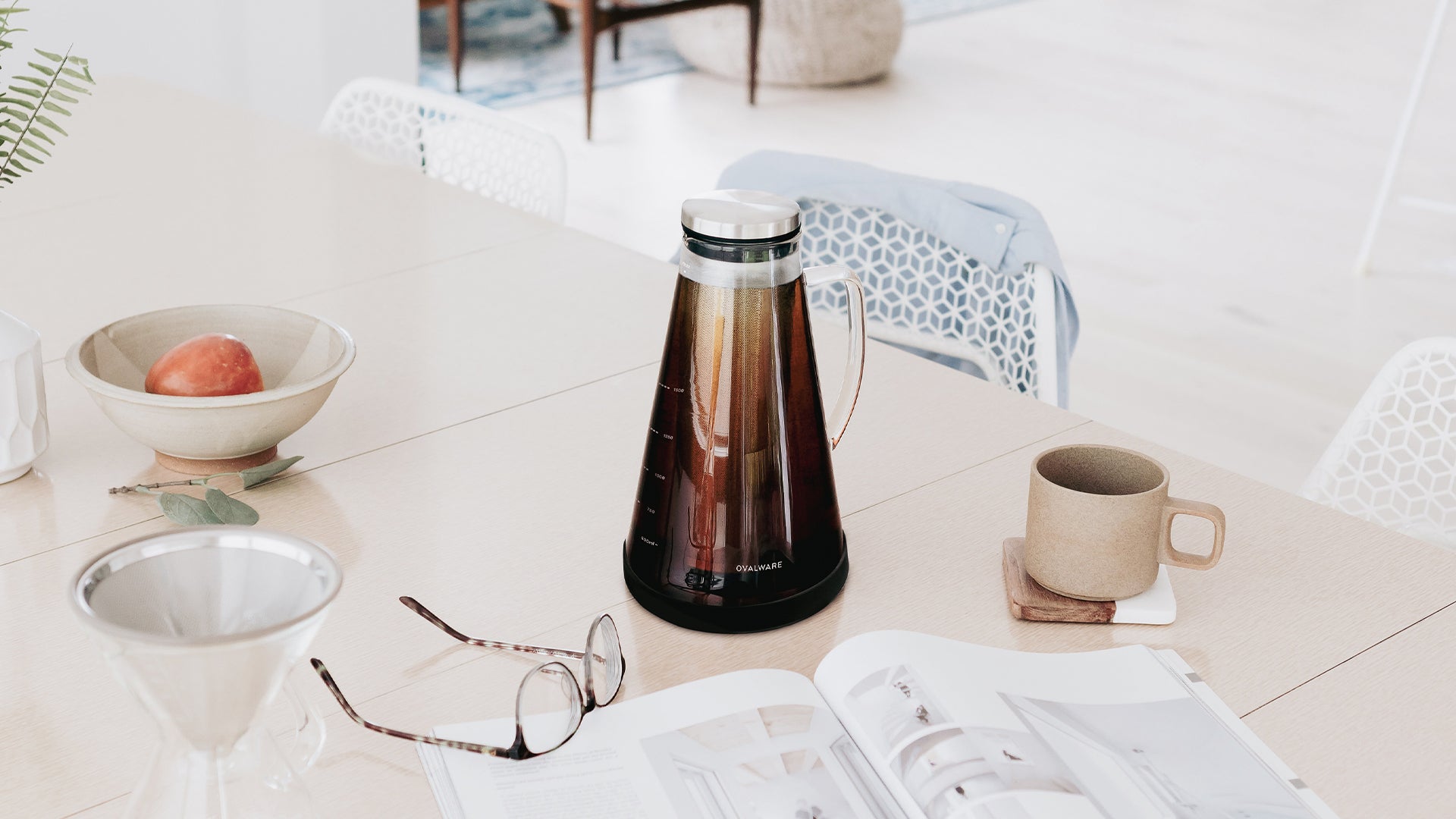
The simplest approach for most home brewers: set your batch in the fridge before bed and strain it when you wake up. That 12-15 hour window at refrigerator temperature reliably produces clean, smooth cold brew. The Ovalware glass cold brew maker is designed for exactly this rhythm , add grounds, fill with cold water, refrigerate overnight, pull the filter in the morning.
Fridge vs. Counter: Which Produces Better Cold Brew?
Refrigerator brewing produces the cleaner, more refined cup. The cold environment slows extraction enough that the brew develops slowly and evenly, which suppresses bitterness and produces a smoother flavor profile. Counter brewing is faster and often produces a slightly bolder, more intense cup , but it's more sensitive to over-extraction if you forget about it. For a beginner or anyone who wants consistent results without babysitting the clock, fridge brewing is the right call.
Counter brewing does have one advantage: it produces cold brew in under 10 hours, which is useful when you want cold brew today without waiting until tomorrow. Just taste it at the 8-hour mark , if it's to your liking, strain it immediately. Room-temperature cold brew left past 12 hours often develops an earthy, over-extracted edge that's hard to fix after the fact.
Food safety is also worth considering. Leaving coffee and water at room temperature for extended periods creates a mild bacterial growth risk, particularly in warm climates. Home Barista Guide recommends keeping room-temperature brews under 12 hours and immediately refrigerating any finished cold brew. Fridge brewing sidesteps this entirely.
Signs of Over-Extraction and Under-Extraction
Steep time is the easiest variable to fix once you can taste what went wrong. Here's how to diagnose your batch.
Signs of over-extraction (too long)
- Harsh bitterness that doesn't mellow with dilution
- Dry, astringent finish , like stale coffee
- Flat, one-dimensional flavor with no sweetness
- Dark, almost opaque liquid even when diluted
Signs of under-extraction (too short)
- Weak, watery flavor even with the right steep time
- Sour or acidic notes , not in a good way
- Lacks body and depth; tastes thin
- Very light color when poured
If your cold brew is consistently over-extracted, try one of: reducing steep time by 2 hours, going coarser on your cold brew grind size, or moving your brew to the fridge if you've been counter-brewing. If it's under-extracted, go the other direction , more time, or a slightly finer grind.

How Grind Size Affects Steep Time
Grind size and steep time are directly linked. A coarser grind has less surface area exposed to the water, which slows extraction , meaning it needs more time. A finer grind extracts faster, which can shorten your steep window but also increases the risk of over-extraction if you're not careful.
The standard recommendation for cold brew is an extra-coarse grind , roughly the texture of raw sugar or very coarse sea salt. At this grind size, a 12-16 hour fridge steep produces the ideal result. If you accidentally grind too fine, shorten your steep to 10-12 hours and keep tasting. Full details on grind settings are in our cold brew grind size guide.
Cold Brew Ratio: The Other Variable
Steep time is about extraction speed. Ratio is about concentration. The Ovalware Cold Brew Maker is designed for ready-to-drink cold brew at approximately a 1:12 ratio , 85g of coarse-ground coffee per 1L of water. This produces a smooth, balanced cup you can drink straight over ice with no dilution needed. If you're using a different maker designed for concentrate brewing, a 1:4 or 1:5 ratio produces a concentrate intended for diluting before drinking.
Changing the ratio doesn't change how long you steep , it changes how strong the finished product is. A higher ratio means a more concentrated brew at the end of the same steep window, not a faster extraction. See our complete coffee-to-water ratio guide for the exact numbers across every brew method.
Frequently Asked Questions
Can you steep cold brew for too long?
Yes. Steeping past 24 hours in the fridge typically produces a bitter, over-extracted brew. Most coffee solubles extract within the first 3-6 hours , the remaining time is for integration and body development, not additional flavor. Past 24 hours, you're only extracting the compounds that cause harshness and astringency.
Is 12 hours enough for cold brew?
Yes , 12 hours in the fridge is enough for a good cold brew, especially with a properly coarse grind. You may find 14-16 hours produces a slightly fuller body, but 12 hours is a reliable baseline. If your 12-hour batch tastes weak, try a coarser-to-finer grind adjustment rather than just adding more time.
Can I make cold brew in 4 hours?
You can make a passable cold brew in 4-6 hours at room temperature, or 2-3 hours with a finer grind and frequent agitation. It won't have the same smoothness or body as an overnight fridge brew , the flavor compounds need time to fully integrate , but it works in a pinch. This is sometimes called "quick cold brew" or "rapid cold brew."
Does cold brew get stronger the longer it steeps?
Up to a point, yes. Brew strength increases significantly from 4-12 hours, then plateaus. Past 18-20 hours, the change in strength is minimal , but the bitterness continues to increase. The goal isn't maximum strength; it's the best balance of flavor, strength, and smoothness.
What's the best cold brew ratio for overnight steeping?
The Ovalware Cold Brew Maker uses approximately 85g of coffee per 1L of water (≈1:12 ratio) for smooth, ready-to-drink cold brew , no dilution needed. Steep overnight in the fridge , 12 to 16 hours , strain, and store for up to 2 weeks refrigerated. For more on ratios, see our guide to what to add to cold brew coffee.
Get the Most Out of Every Batch
Steep time is the simplest lever in cold brew , and now you know exactly how to use it. Twelve to eighteen hours in the fridge. Taste at 12. Adjust grind and ratio before you adjust time. And never go past 24 hours.
The equipment matters too. A well-designed cold brew maker keeps grounds fully submerged, makes straining easy, and stores neatly in the fridge. Our Ovalware Cold Brew Maker is made from borosilicate glass with a stainless steel filter , no plastic, no aftertaste, built for exactly this overnight rhythm. Browse the full cold brew collection for everything you need to brew better at home.