Cold Brew Grind Size: The Exact Setting for Smooth Results
Grind size is the most common reason cold brew tastes bitter , and most people never think to check it. If you've made cold brew that came out harsh, over-extracted, or muddy, the grind is almost certainly the culprit. Get it right, and you get the smooth, low-acid cold brew that makes the effort worth it. This guide covers exactly what grind size to use, why it matters scientifically, and how to dial it in on any grinder.
What Is the Best Grind Size for Cold Brew Coffee?
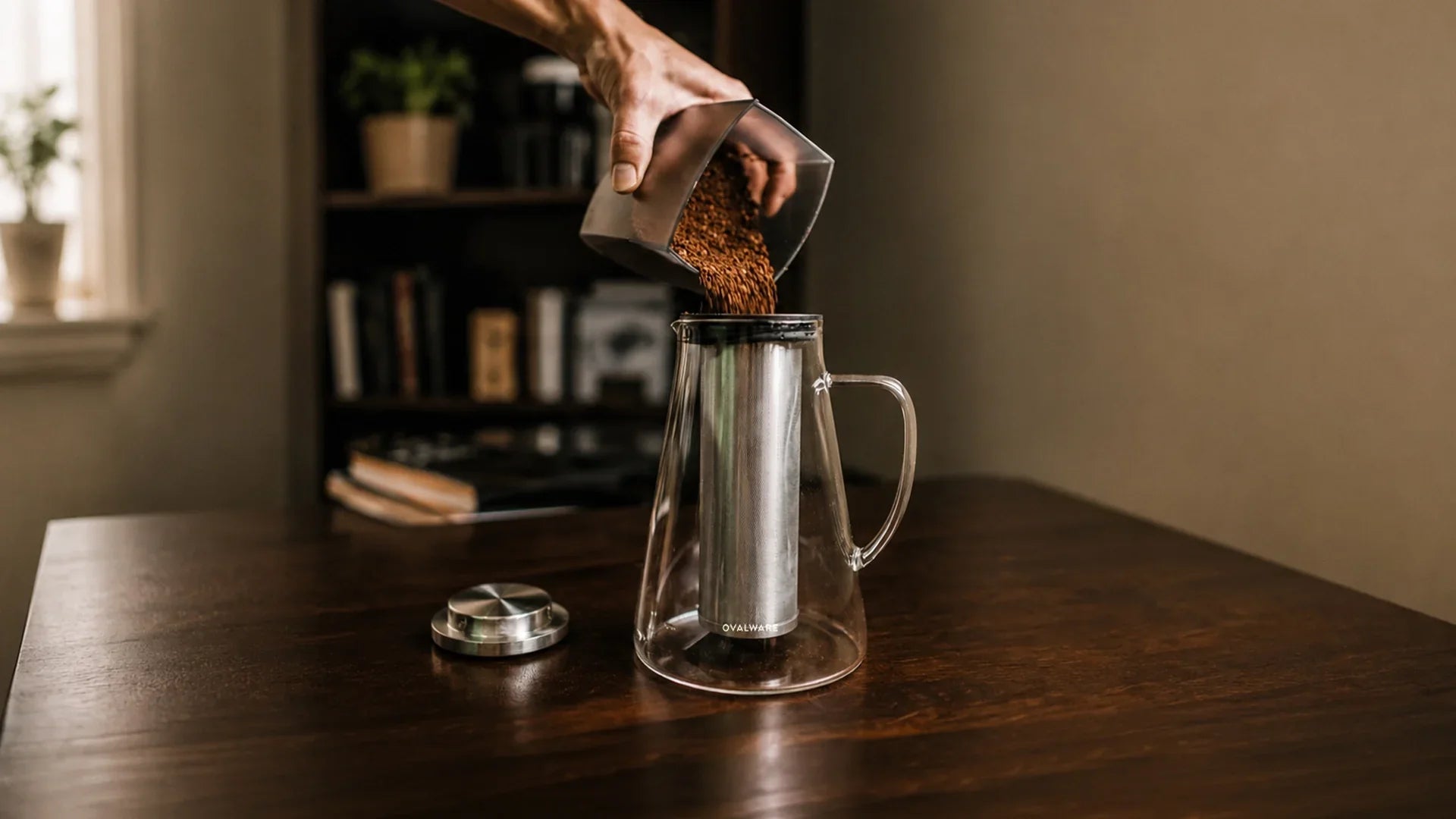
The best grind size for cold brew is extra coarse , roughly 800 to 1,400 microns in particle size. Visually, it should look like coarse sea salt or cracked black pepper: chunky, irregular, and noticeably larger than anything you'd use for a drip machine or pour over. This is typically the coarsest setting on most burr grinders.
Cold brew steeps for 12-24 hours at room temperature or in the fridge. That long contact time means extraction happens slowly regardless , which is exactly what you want. A coarse grind slows extraction further, pulling out the sweet, smooth flavor compounds (sugars, certain acids) while leaving behind the bitter compounds that extract last. Finer grinds over-extract rapidly in the 12-24 hour window, producing a harsh, astringent brew. Coarser grinds give you clean, smooth cold brew every time.
According to research published in Food Chemistry Advances (ScienceDirect), grind size significantly affects extraction kinetics in cold brew: finer particles lead to faster and higher extraction yield, which translates directly to over-extraction and bitterness if you're steeping for 12-24 hours.
Cold Brew Grind Size vs. Other Brew Methods
To understand why cold brew needs to be so much coarser than other methods, it helps to see where it sits in the full spectrum of coffee grind sizes.
| Brew Method | Grind Size | Approximate Particle Size | Looks Like |
|---|---|---|---|
| Espresso | Fine | 200-300 microns | Fine sugar or table salt |
| Moka pot | Fine-medium | 300-400 microns | Finer than table salt |
| Pour over | Medium | 500-600 microns | Coarse sand |
| Drip coffee | Medium | 500-700 microns | Sand |
| French press | Coarse | 700-900 microns | Raw sugar or kosher salt |
| Cold brew | Extra coarse | 800-1,400 microns | Coarse sea salt / breadcrumbs |
Notice that cold brew overlaps slightly with French press on the low end , but it should ideally be coarser than a French press grind, not the same. Many grinder guides lump them together, but cold brew's 12-24 hour steep demands more coarseness than the French press's 4-minute brew.

Why Grind Size Matters More for Cold Brew Than Any Other Method
In hot brewing, water temperature is the primary extraction variable. Hot water (90-96°C) extracts quickly and aggressively , even a slightly off grind can be corrected by adjusting brew time or temperature. In cold brew, time is your only real lever. You can't speed up or slow down extraction by adjusting temperature without fundamentally changing the process.
This means your grind size commitment is locked in for 12-24 hours. A grind that's too fine isn't something you can compensate for mid-brew , you'll notice it when you taste a harsh, bitter, over-extracted brew at the end. A grind that's too coarse under-extracts, giving you weak, thin cold brew with no depth of flavor.
A peer-reviewed study in Scientific Reports (Nature) analyzing cold brew extraction confirmed that both grinding and extraction time are the dominant variables in flavor profile and total dissolved solids (TDS) , more influential than the bean origin or roast level in many cases.
What Happens If Your Grind Is Too Fine?
If your cold brew tastes bitter, harsh, or leaves a drying sensation in the back of your throat, the grind is almost certainly too fine. Here's exactly what happens at the chemistry level: finer grounds have more surface area, which accelerates the extraction of all soluble compounds , including the bitter ones. In a hot brew, you'd just stop extracting after a few minutes. In cold brew, the grounds sit in water for half a day. Every extra micron of surface area is pulling bitterness into your cup for 12-24 hours straight.
The other problem with fine grinds: they make your cold brew murky and harder to strain. Fine particles pass through most filters, creating a sediment-heavy cold brew that never quite tastes clean. Coarse grounds stay on the right side of your filter and your cold brew comes out clear.
What Happens If Your Grind Is Too Coarse?
Under-extraction is the opposite problem, and it's more subtle. If your cold brew tastes weak, sour, or one-dimensional , almost watery despite a correct coffee-to-water ratio , you've likely gone too coarse. Extreme coarseness means the water can't penetrate the grounds efficiently, even over 24 hours. You extract early-stage compounds (sour acids) without reaching the sugars and complex flavor compounds that give cold brew its characteristic sweetness and body.
Get the grind right and your cold brew extracts cleanly , full flavor, no bitterness, no wasted coffee.
How to Dial In Grind Size on Your Grinder
The challenge: "extra coarse" means different things on different grinders. There's no universal dial setting. Here's how to dial in the right grind on any equipment.
On a Burr Grinder (Recommended)
Burr grinders are the right tool for cold brew. They produce consistent, uniform particle sizes rather than the jagged, uneven output of blade grinders. For cold brew:
- Start at the coarsest setting on your grinder
- Grind a small test batch and look at the grounds , they should look like coarse sea salt
- If they look more like regular table salt, move one or two steps coarser
- Make a small test batch (250ml) at your target grind, steep 14-16 hours, taste
- Adjust: if bitter, go coarser; if weak or sour, go slightly finer
On a Blade Grinder (Acceptable in a Pinch)
Blade grinders create uneven particle sizes , some fine, some coarse , which makes consistent cold brew harder to achieve. If you must use one:
- Use the shortest possible pulse (1-2 seconds total) for a rough, chunky grind
- The coarser the better , under-extraction is easier to fix than over-extraction
- Accept that results will vary batch to batch
If you're making cold brew regularly, a burr grinder is worth the investment. It also handles pour over, which means one tool covers your two main brew methods. See our guide to coffee-to-water ratios for more on how grind and ratio interact.
Pre-Ground Coffee for Cold Brew
Yes, you can use pre-ground coffee for cold brew , but only if it's specifically labeled "coarse" or "cold brew grind." Most supermarket pre-ground coffee is medium grind, designed for drip machines. It will over-extract badly in cold brew. If buying pre-ground, look for specialty roasters who offer a dedicated cold brew grind, or ask your local coffee shop to grind coarse for you.
The Science of Cold Brew Extraction (Why Cold Water Changes Everything)
Cold brew tastes different from iced coffee for a chemical reason, not just a temperature one. Tea & Coffee Trade Journal's analysis of cold brew chemistry explains: cold water extracts a different profile of compounds than hot water, even given unlimited time. Certain acids , particularly chlorogenic acids and quinic acids that create bitterness and harsh brightness in hot coffee , are poorly soluble at low temperatures. Cold brew simply doesn't pull them out in the same concentrations.
A 2018 study in Scientific Reports found that cold brew coffee samples had 28-50% lower titratable acid concentrations than hot-brewed counterparts , confirming that cold brew's smoothness isn't just perception, it's a measurable chemical difference.
This is why grind size is doubly important for cold brew. You're already starting with a gentler extraction chemistry (cold water, lower solubility). If your grind is too fine and you over-extract, you're pulling out those bitter, acidic compounds that cold water is supposed to naturally limit. Extra coarse grind + cold water + long steep = the smoothest possible extraction.
Cold Brew Grind Size and Ratio: How They Work Together
Grind size and coffee-to-water ratio are connected. Here are the two standard cold brew ratios and how grind size interacts with each:
| Style | Ratio | Grind Size | Steep Time | Result |
|---|---|---|---|---|
| Ready-to-drink | Ovalware ratio: 85g per 1L (≈1:12) | Extra coarse | 12-16 hours (fridge) | Smooth, ready-to-drink , pour straight over ice, no dilution needed |
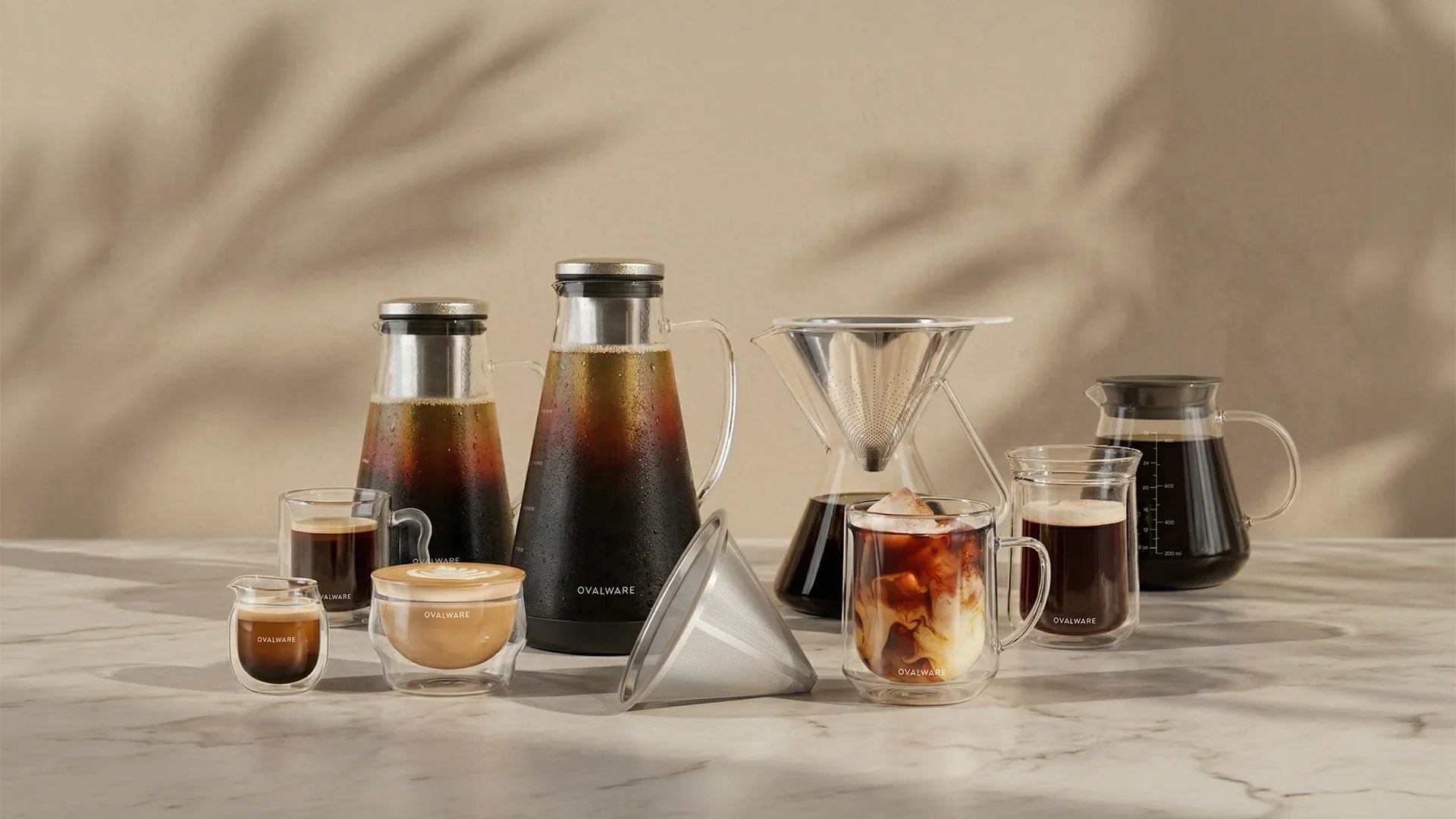
The Ovalware Cold Brew Maker is designed for ready-to-drink cold brew , steep 12-18 hours, pull the filter, pour over ice. Getting the grind right is what separates a smooth result from a bitter one.
Frequently Asked Questions
What grind size for cold brew: coarse or extra coarse?
Extra coarse, ideally. Think coarse sea salt or slightly larger. Standard coarse grind (French press level) works but sits on the fine edge of acceptable , you may get slightly more bitterness, especially with a full 24-hour steep. If you're steeping 12-14 hours, coarse is fine. For 18-24 hours, go extra coarse.
Can I use medium grind for cold brew?
Technically yes, but you'll need to reduce steep time significantly , 4-6 hours maximum before over-extraction kicks in. At 12+ hours, medium grind cold brew will be consistently bitter and harsh. If medium grind is your only option, steep in the fridge for 6-8 hours and strain early. It won't be as smooth as an extra-coarse 16-hour brew.
How do I know if my cold brew is over-extracted?
Three signs: bitterness that lingers after you swallow, a drying or astringent sensation at the back of your throat, and a dark brownish-black color rather than a rich amber-brown. If you hit all three, grind coarser and steep shorter next time.
Does grind size affect cold brew caffeine content?
Yes, slightly. Finer grinds extract more caffeine (along with more of everything else). Extra coarse cold brew has slightly less caffeine per ounce than medium-ground cold brew steeped for the same time , but the difference is modest compared to the impact on flavor. Prioritize grind size for taste, not caffeine optimization.
How long should I steep cold brew with an extra coarse grind?
12-18 hours in the fridge is the sweet spot for an extra coarse grind using the Ovalware ready-to-drink ratio (85g per 1L). Room temperature steeping is faster , 10-14 hours , because ambient temperature slightly accelerates extraction even without heat. Always steep in the fridge for consistent, predictable results.
Making Great Cold Brew Starts With the Right Equipment
Grind is the most important variable, but equipment matters too. The Ovalware Cold Brew Maker uses a fine stainless steel mesh filter that handles extra-coarse grounds cleanly , no paper filter needed, no sediment in your cold brew. The 1-liter borosilicate glass carafe holds a full liter of ready-to-drink cold brew. Steep overnight, pull the filter, and you're done.
If you're new to making cold brew at home, our cold brew maker buying guide covers everything you need to know before getting started.
Key Takeaways
- Use extra coarse grind for cold brew , 800 to 1,400 microns, or coarse sea salt in appearance
- Too fine = bitter, over-extracted, murky cold brew; too coarse = weak, sour, under-extracted
- Burr grinders produce more consistent results than blade grinders for cold brew
- Grind size and steep time work together , coarser grind allows longer, more forgiving steeps
- Cold water's chemistry naturally reduces bitterness; don't fight it by grinding too fine