Why Serious Coffee Drinkers Are Going Plastic-Free (And What to Use Instead)
The Short Version
Most coffee makers involve plastic touching hot water. That matters because heat accelerates the leaching of compounds from plastic into your drink , including microplastics, BPA, and other chemical additives.
The good news: switching to plastic-free brewing is easier and less expensive than most people assume. Glass and stainless steel alternatives exist for every major brew method, and many of them are actually better brewers , not just safer ones.
This guide covers why plastic in coffee is worth thinking about, what to specifically avoid, and what to use instead.
Why Plastic in Coffee Is a Real Concern
Coffee is brewed with hot water , typically between 88-96°C (190-205°F). At those temperatures, plastics behave differently than they do at room temperature.
Several studies have documented the problem:
- A 2020 study in Environmental Science & Technology found that a single plastic tea bag releases approximately 11.6 billion microplastic particles and 3.1 billion nanoplastic particles into a cup of hot water.1 Coffee makers with plastic brew baskets and tubes create similar exposure.
- BPA (bisphenol A) and BPS (bisphenol S), common in hard polycarbonate plastics, are endocrine disruptors that mimic estrogen in the body.2 "BPA-free" products often simply substitute BPS, which has similar concerns.
- A 2021 Food Chemistry study detected microplastics in coffee brewed through plastic single-serve pods at concentrations of 0.8 microplastic particles per ml of beverage.3
The research is still developing, and regulatory bodies haven't drawn firm conclusions. But the precautionary logic is sound: if you're drinking 1-3 cups of coffee per day, every day, the cumulative exposure adds up. Switching to glass and stainless steel costs roughly the same as a conventional coffee maker and eliminates the concern entirely.

Which Plastics Are the Biggest Problem?
Not all plastics are equally problematic. Here's a quick guide:
| Plastic Type | Resin Code | Heat Concern | Common In |
|---|---|---|---|
| Polycarbonate (PC) | #7 | High , releases BPA/BPS with heat | Older reusable bottles, some carafes |
| Polystyrene (PS) | #6 | High , releases styrene above 70°C | Foam cups, cheap coffee makers |
| PVC (#3) | #3 | High , releases phthalates | Tubing in some drip machines |
| Polypropylene (PP) | #5 | Low , most heat-stable common plastic | Coffee pods, some brew baskets |
| HDPE / LDPE | #2 / #4 | Very low at typical brew temps | Water reservoirs |
The highest-risk components in conventional coffee makers are the brew basket, carafe, and any tubes that carry hot water. If those parts are made from #3, #6, or #7 plastic, that's where to focus your concern.
The Plastic-Free Swap Guide by Brew Method
Pour Over
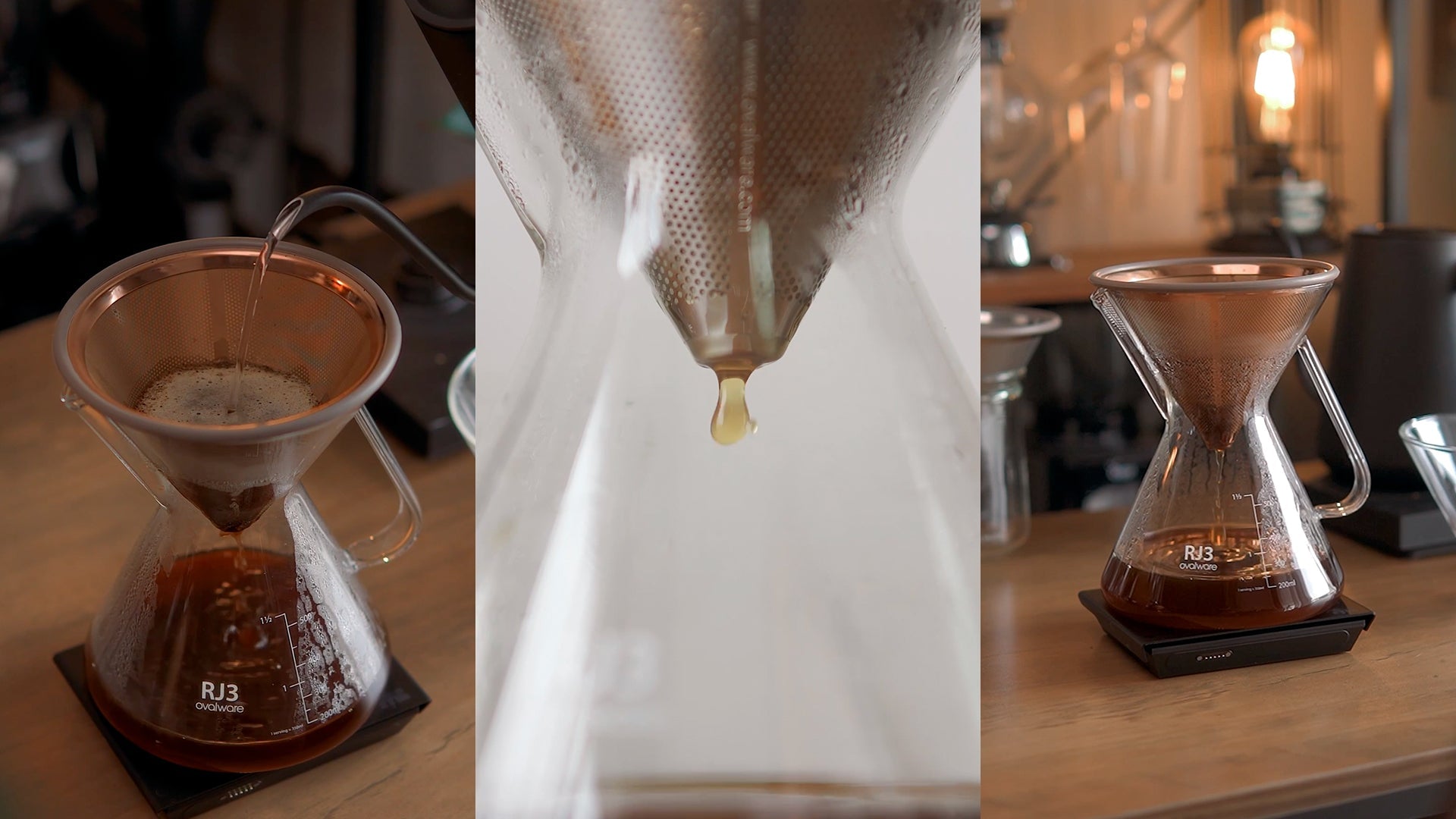
Pour over is the easiest to go completely plastic-free. The design is inherently simple: hot water goes through a filter into a vessel. Choose a glass or ceramic dripper and a glass carafe, and there's nothing plastic in the chain.
What to avoid: Plastic dripper bodies (many entry-level pour over brewers are plastic), plastic carafes.
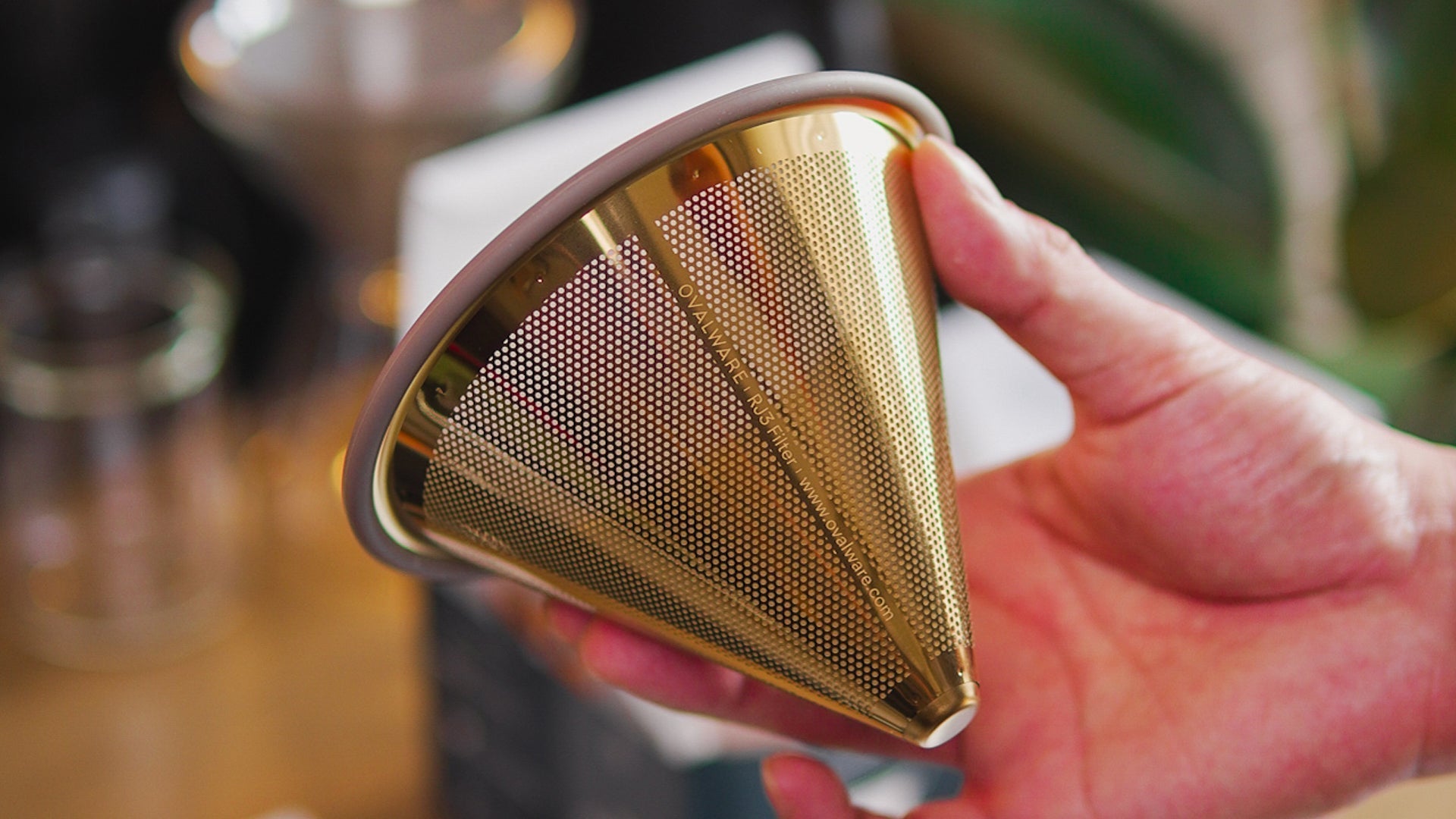
What to use: Glass or ceramic drippers. A stainless steel reusable filter eliminates paper waste entirely and is rated for thousands of uses.
The Ovalware Pour Over Kit is fully plastic-free: borosilicate glass brewer, stainless steel filter cone, and borosilicate glass range server. No paper filters required.
Cold Brew
Cold brew doesn't involve hot water, which significantly reduces leaching risk even with plastic. That said, plastic cold brew makers can absorb coffee oils and odors over time, and microplastic shedding still occurs , especially if the vessel is ever hand-washed with abrasive materials.
What to avoid: Single-walled plastic cold brew jars with tight-fitting plastic mesh filters.
What to use: Glass vessel with a stainless steel filter. The glass doesn't absorb flavors, is easy to clean thoroughly, and will last indefinitely.
The Ovalware Cold Brew Maker is borosilicate glass with an ultra-fine stainless steel filter , no plastic in contact with your brew at any point.
French Press
Most glass French presses already have minimal plastic contact , the frame and plunger handle may be plastic, but the glass carafe is where the brewing happens. The main concern is the plunger mesh: low-quality mesh can shed metal particles, but this is a much smaller concern than plastic.
What to use: A French press with a borosilicate glass carafe, stainless steel plunger, and stainless mesh filter.
Drip Coffee Maker
This is the hardest category to go plastic-free. Most automatic drip machines route hot water through plastic tubes, into a plastic brew basket, and into a plastic-lined thermal carafe. True plastic-free drip machines are rare and expensive.
If you want zero plastic: Switch to manual methods (pour over, French press, Moka pot). You'll get better coffee and full control.
If you need automation: Look for drip machines with a stainless steel water path and borosilicate glass carafe. A few brands offer this , check the product specifications carefully before buying.
Single-Serve Pod Machines
These are the highest-concern category. Single-use plastic pods (even "compostable" ones) are brewed at pressure with water near boiling point. The combination of heat, pressure, and thin plastic pod walls creates ideal conditions for leaching. A 2021 study found measurable microplastics in pod-brewed coffee at higher concentrations than other brew methods.3
Recommendation: Transition to a reusable method. Pour over or French press takes under 5 minutes and produces dramatically better coffee.

Borosilicate Glass vs. Regular Glass , What's the Difference?
If you're switching to glass coffee gear, you'll see "borosilicate glass" frequently. It matters.
Regular glass (soda-lime glass) expands significantly when heated, making it prone to cracking or shattering under thermal shock , like when you pour boiling water into a cold glass vessel.
Borosilicate glass has a much lower thermal expansion coefficient. It can withstand dramatic temperature changes without cracking. All serious glass coffee gear , from laboratory equipment to specialty coffee brewers , uses borosilicate. It's also lighter, clearer, and more scratch-resistant than soda-lime glass.
When shopping for plastic-free coffee equipment, look for borosilicate glass specifically. If a product just says "glass" without specifying, it's likely soda-lime , not ideal for hot brew applications.
What About Stainless Steel?
Food-grade stainless steel (304 or 316 grade) is one of the most inert materials you can put hot liquid in contact with. It doesn't leach, doesn't absorb flavors, and is essentially non-reactive at coffee brewing temperatures.
Cheap stainless steel can contain higher nickel content, which may leach slightly in acidic environments (coffee is mildly acidic at pH 4.5-5.5). Look for 18/8 (304) or 18/10 stainless as a baseline quality marker , that ratio refers to the chromium/nickel content, which indicates corrosion resistance.
Stainless steel coffee filters specifically are a worthwhile switch from paper: no chemicals from paper processing, no flavor absorption, and they last for years. The main difference from paper is that stainless lets coffee oils through, which adds body and richness to the cup.
Full Plastic-Free Coffee Setup
Here's what a completely plastic-free coffee station looks like:
| Item | Material | Notes |
|---|---|---|
| Pour over brewer | Borosilicate glass or ceramic | Avoid plastic drippers |
| Coffee filter | Stainless steel mesh | Reusable, lasts years |
| Carafe / server | Borosilicate glass | Check for plastic lid seals |
| Cold brew maker | Borosilicate glass + stainless filter | Cold brew is lower risk but glass is still better |
| Kettle | Stainless steel with glass or stainless interior | Avoid plastic-lined kettles |
| Coffee storage | Glass jar or stainless canister | Keeps beans fresher than plastic too |
| Drinking cup | Ceramic, glass, or stainless | Avoid travel mugs with plastic-lined interiors |
| Product | Material | Price |
|---|---|---|
| Pour Over Coffee Maker | Borosilicate glass + stainless steel | $46.99 |
| Cold Brew Maker (1.5L) | Borosilicate glass + stainless steel | $46.99 |
| Stainless Steel Coffee Filters | 304 stainless steel | $27.99 |
Frequently Asked Questions
Is plastic in coffee makers actually harmful?
The research is still developing, but multiple peer-reviewed studies have documented microplastic and chemical leaching from plastic coffee gear at brewing temperatures. Whether the exposure levels cause harm is debated. The precautionary case for switching is strong: glass and stainless alternatives are widely available, cost roughly the same, and eliminate the variable entirely.
What is the safest material for a coffee maker?
Borosilicate glass and food-grade stainless steel (304 or 316) are the safest materials for coffee brewing. Both are non-reactive, don't leach at brewing temperatures, and don't absorb flavors or odors. Ceramic is also safe for drippers and cups.
Are BPA-free coffee makers safe?
BPA-free doesn't mean chemical-free. Many BPA-free plastics substitute BPS (bisphenol S), which has similar endocrine-disrupting properties. Polypropylene (#5) is the most inert common plastic and is used in many BPA-free coffee brewers , it's lower risk than polycarbonate, but glass and stainless are still preferable.
Does cold brew need plastic-free equipment?
Cold brew is lower risk because it doesn't involve hot water , heat is the primary driver of leaching. However, plastic still sheds microplastics through contact and washing, and coffee's mild acidity can interact with plastic over time. A glass cold brew maker is still recommended.
Are stainless steel coffee filters safe?
Yes. Food-grade stainless steel (18/8 or 304) is non-reactive and safe for coffee filtration. It doesn't leach at any coffee brewing temperature and lasts indefinitely with normal care. The main difference from paper filters is that stainless lets coffee oils through, producing a richer, fuller-bodied cup.
The Bottom Line
Going plastic-free isn't about being alarmist , it's about making a simple, low-cost swap that eliminates a real variable from your daily ritual. The research on microplastics and chemical leaching is still maturing, but the direction is clear enough that it's worth acting now.
Pour over and cold brew are the easiest places to start. Both methods have excellent glass and stainless alternatives that produce better coffee than most of what they replace.
The easiest first step: replace your plastic coffee maker with a glass pour over or cold brew setup. You'll notice the difference in both peace of mind and what's in your cup.
Sources:
- Environmental Science & Technology , Plastic Tea Bags Release Microplastics (2020)
- National Institute of Environmental Health Sciences , BPA
- Food Chemistry , Microplastics in Coffee from Single-Use Pods (2021)
- Perfect Daily Grind , BPA-Free Coffee Equipment
- Sprudge , The Case Against Plastic Coffee Gear