Ube Latte Recipe: How to Make the Viral Purple Coffee Drink at Home
Ube is everywhere right now. The vibrant purple yam from the Philippines has taken over TikTok, café menus, and now home kitchens , and the ube latte is leading the charge. If you've seen the dreamy purple drinks flooding your feed and wondered how to make one at home, you're in the right place.
This guide covers everything: what ube tastes like, which ingredients you actually need, and the exact steps to make both hot and iced ube lattes from scratch. No special equipment required beyond an espresso machine or strong coffee maker and a good glass to serve it in.
What Is Ube?
Ube (pronounced "ooh-beh") is a purple yam native to the Philippines, known for its vivid violet color, naturally sweet flavor, and creamy, starchy texture. It's been a staple in Filipino cooking for generations , used in everything from halaya (ube jam) to hopia to ice cream. What makes it unique is the combination of flavor notes: part vanilla, part pistachio, part coconut, with a subtle earthiness that's hard to compare to anything else.
In 2024 and 2025, ube became a global breakout ingredient. By 2026, ube lattes have followed the same trajectory as pistachio lattes , a café-first trend that TikTok turned into a mainstream home ritual. The color alone makes it one of the most shareable drinks in the coffee world.
For coffee, ube works primarily as a flavored syrup or paste blended with milk. It doesn't have caffeine on its own , the coffee component comes from your espresso or strong brew.
What Does an Ube Latte Taste Like?
An ube latte tastes mildly sweet with notes of vanilla, coconut, and a faintly nutty richness , think of it as a subtler, earthier cousin to a vanilla latte, with a color that's hard to ignore. The ube flavor is gentle rather than intense, which is why it pairs so naturally with espresso and creamy milk. The bitterness of the coffee balances the sweetness of the ube syrup.
Ube doesn't taste like a typical purple fruit (it's not grape, not blueberry). It's more like a sweet potato crossed with vanilla , warm, smooth, and slightly floral. People who think they won't like it are often surprised by how approachable it is.
Ube Latte Ingredients
You have two options for the ube component: ube syrup or ube halaya (jam). Both work. Here's what you need:
For the Ube Syrup (easiest path)
- 2 tbsp ube syrup (store-bought or homemade , see below)
- 2 shots espresso (or 3-4 oz strong brewed coffee)
- 4-6 oz milk of your choice (oat milk gives the creamiest result; whole milk works great too)
- Ice (for iced version)
For the Ube Halaya Version (more authentic flavor)
- 1-2 tbsp ube halaya (ube jam, available at Asian grocery stores or online)
- 2 shots espresso
- 4-6 oz steamed or frothed milk
- A small splash of warm water to dissolve the jam
Optional flavor additions
- A drop of vanilla extract
- A pinch of coconut cream or coconut milk for extra depth
- A sprinkle of toasted coconut flakes on top
Note: food-grade purple coloring is not the same as ube. Many café drinks labeled "ube" are actually taro or artificially colored , real ube has a warmer, earthier purple tone and a distinctly different flavor. Use the real thing when you can.

How to Make an Ube Latte (Iced)
The iced ube latte is the most popular version and the easiest to make at home in under 5 minutes. Here's the exact process:
- Make your ube base. Add 2 tbsp ube syrup (or 1-2 tbsp ube halaya dissolved in 1 tbsp warm water) to the bottom of your glass.
- Pull your espresso. Pull 2 shots of espresso , about 2 oz total. If you don't have an espresso machine, brew 3-4 oz of strong coffee using a moka pot or French press.
- Add ice. Fill your glass with ice.
- Pour the espresso over the ice. This chills the espresso fast and creates the layered effect as it hits the ube syrup below.
- Froth and pour the milk. Froth your milk lightly using a handheld frother or just pour cold milk directly over the espresso. Oat milk creates a naturally creamy texture without frothing.
- Stir and taste. Give it a gentle stir to combine, taste for sweetness, and adjust with more syrup if needed.
- Garnish. Optional: a few toasted coconut flakes or a drizzle of ube syrup on top for that TikTok-worthy finish.
How to Make a Hot Ube Latte
The hot version takes about the same time , the key difference is frothing or steaming the milk to create that café-style texture.
- Warm your ube syrup or halaya. Add the ube component to your cup first. If using halaya, stir it into a small splash of hot water until smooth.
- Pull your espresso. Add 2 shots directly into the cup over the ube base and stir briefly to combine.
- Steam or froth your milk. Steam to about 140-150°F if you have a steam wand. If not, heat milk on the stove or microwave and froth with a handheld frother until light and foamy.
- Pour the milk. Slowly pour the steamed milk over the espresso-ube mixture. Tilt the cup slightly for better layering.
- Serve immediately. The purple swirl effect is most visible right after pouring. Give it a light stir if you want an even color.

How to Make Ube Syrup at Home
Homemade ube syrup takes about 10 minutes and tastes noticeably better than most store-bought options. You'll need: 1 cup water, 1 cup sugar, 2 tbsp ube halaya (or 1 tsp ube extract + 2 tbsp purple yam powder).
- Combine water and sugar in a small saucepan over medium heat. Stir until sugar dissolves.
- Add the ube halaya or ube extract. Whisk until fully incorporated.
- Simmer for 5 minutes, stirring occasionally.
- Remove from heat and let cool. Strain through a fine mesh strainer if using halaya for a smoother syrup.
- Store in a sealed jar in the fridge for up to 2 weeks.
Ube halaya is available at most Filipino grocery stores, H-Mart, and many Asian supermarkets. Brands like Monika and Goldilocks are widely available and reliable. You can also find it on Amazon if there's no Asian grocery nearby.
Which Milk Works Best?
Milk choice matters more than most people think. Here's how the main options compare for ube lattes:
| Milk | Flavor pairing | Froth quality | Best for |
|---|---|---|---|
| Oat milk | Excellent , neutral, slightly sweet, creamy | Very good | Iced latte, everyday ritual |
| Whole milk | Rich, classic, slightly buttery | Best of all | Hot latte, latte art |
| Coconut milk | Outstanding , enhances ube's coconut notes | Good (full-fat) | Tropical variation |
| Almond milk | Light, slightly nutty | Moderate | Lower-calorie version |
| Macadamia milk | Buttery, rich, pairs beautifully | Good | Special-occasion version |
Coconut milk is the sleeper pick here. The coconut notes in ube halaya and coconut milk reinforce each other , it makes the flavor of the ube taste more vivid without any extra effort.
Ube Latte Variations
Once you have the base recipe down, the variations are easy:
- Ube matcha latte: Skip the espresso and use 1 tsp ceremonial-grade matcha whisked with 2 oz hot water as the base. Layer under oat milk with ube syrup. The earthy green tea and sweet purple ube are a surprisingly natural pairing.
- Ube cold brew latte: Swap espresso for 4 oz of cold brew coffee. The lower acidity of cold brew softens the overall flavor profile and makes it even smoother.
- Ube cortado: Equal parts espresso and frothed ube oat milk in a small glass , a concentrated, elegant version.
- Ube latte with boba: Add tapioca pearls to the bottom of an iced ube latte for a milk tea-meets-coffee crossover drink. Popular in Filipino-American cafés right now.
The Right Glass Makes a Difference
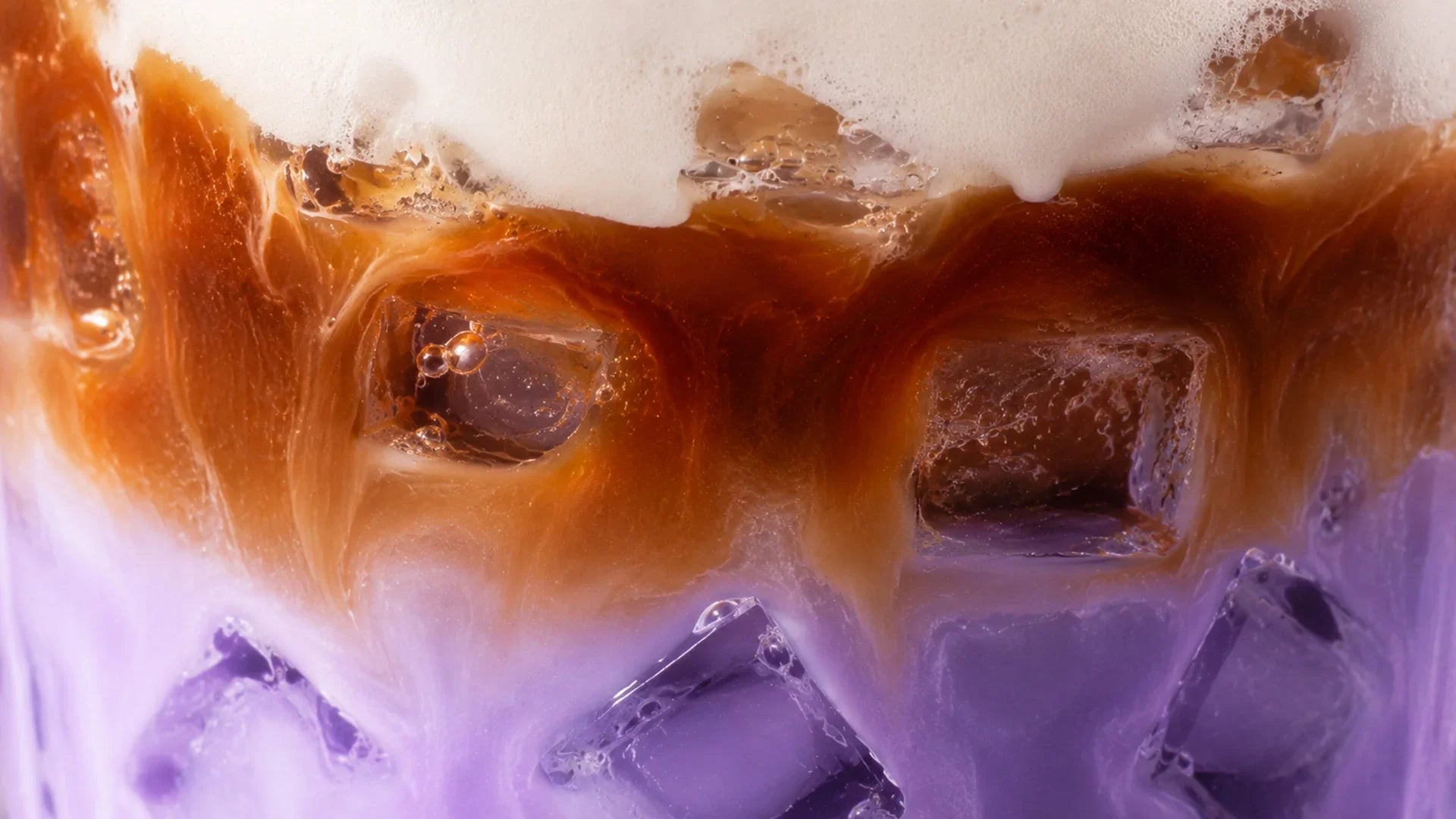
Part of the ube latte's viral appeal is the visual: that vivid purple swirl against white milk and dark espresso. The right glass shows it off , and it also affects how you experience the drink.
The Ovalware Latte Master Glass is designed specifically for lattes and espresso-based drinks. It's a 250ml / 8.5oz double-wall borosilicate glass with a wide mouth that's shaped for latte art and easy layering. The double-wall keeps your hot latte warm longer without burning your hand, and it keeps iced drinks cold without sweating on the outside.
| Latte Master Glass (Set of 2) | |
|---|---|
| Capacity | 250ml / 8.5oz per glass |
| Material | Hand-blown borosilicate glass |
| Wall type | Double-wall , no condensation, no burning your hand |
| Colors | Clear Glass, Frost White, Stealth Gray |
| Dishwasher safe | Yes |
| Price | $36.99 for a set of 2 |
The wide, open shape makes the purple-to-white gradient look its best , and makes it easy to layer properly without everything mixing immediately. If you're making these to photograph or share, this is the glass to use.
Shop the Latte Master Glass , Set of 2, $36.99
Free shipping on US orders $65+.
Tips for a Better Ube Latte Every Time
- Use real ube, not taro. Many "ube" flavored products are actually taro (a different root vegetable with a milder, starchier flavor). Real ube has a warmer purple color and a distinctly sweeter, more complex flavor.
- Don't skip the stir before drinking. The ube syrup settles to the bottom. Give the drink a thorough stir before you drink it to get the flavor even throughout.
- Adjust sweetness carefully. Ube syrup and halaya are already fairly sweet. Taste before adding more. Most people find 1.5 tbsp is the sweet spot for an 8-10 oz drink.
- Use cold-brewed espresso for a smoother result. If your espresso is harsh or bitter, it fights the ube instead of complementing it. Fresher, lighter-roasted beans work better here than dark roast.
- Serve immediately. The visual gradient is best right after you pour , it starts blending within a few minutes.
Frequently Asked Questions
What does ube latte taste like?
An ube latte tastes mildly sweet with notes of vanilla, coconut, and a subtle earthy richness. The ube flavor is gentle and approachable , not sharp or artificial. Combined with espresso and creamy milk, it's smooth, balanced, and lightly sweet. Most people describe it as "vanilla-adjacent but more interesting."
Is an ube latte healthy?
Ube is a whole root vegetable that's naturally high in antioxidants, fiber, and vitamins B6 and C, according to research published in plant nutrition journals. The latte form adds sugar via syrup, so it's more of an occasional treat than a health drink , but it's no worse than any other flavored latte. Using oat milk and reducing syrup to 1 tbsp keeps it moderate.
Can I make an ube latte without espresso?
Yes. Strong brewed coffee works well , use a moka pot or French press and brew at a higher coffee-to-water ratio than usual. You can also make an ube matcha latte using ceremonial-grade matcha instead of espresso for a caffeine-free-adjacent option with a similar flavor profile.
Where can I buy ube syrup or ube halaya?
Ube halaya (jam) is available at Filipino grocery stores, H-Mart, most Asian supermarkets, and online. Common brands include Monika, Goldilocks, and Conti's. Ube syrup is increasingly available at Trader Joe's, Whole Foods, and online. Torani and DaVinci both make ube flavored syrups.
What's the difference between ube and taro?
Ube and taro are different root vegetables. Ube (purple yam) is sweeter, has a more vivid purple color, and tastes of vanilla and coconut. Taro is starchier, milder, and grayish-purple. Many drinks labeled "ube" in cafés are actually taro or artificially colored , real ube has a warmer purple and a more complex flavor.
More Recipes to Try
If you enjoyed this, check out our pistachio latte recipe , the same approachable format with a different flavored syrup that's equally easy to make at home. And if you're into exploring café-style drinks, our espresso tonic recipe is another summer staple worth trying.
The everyday magic of a great latte doesn't require a café. It just requires the right ingredients, a few minutes, and a glass worth using.