

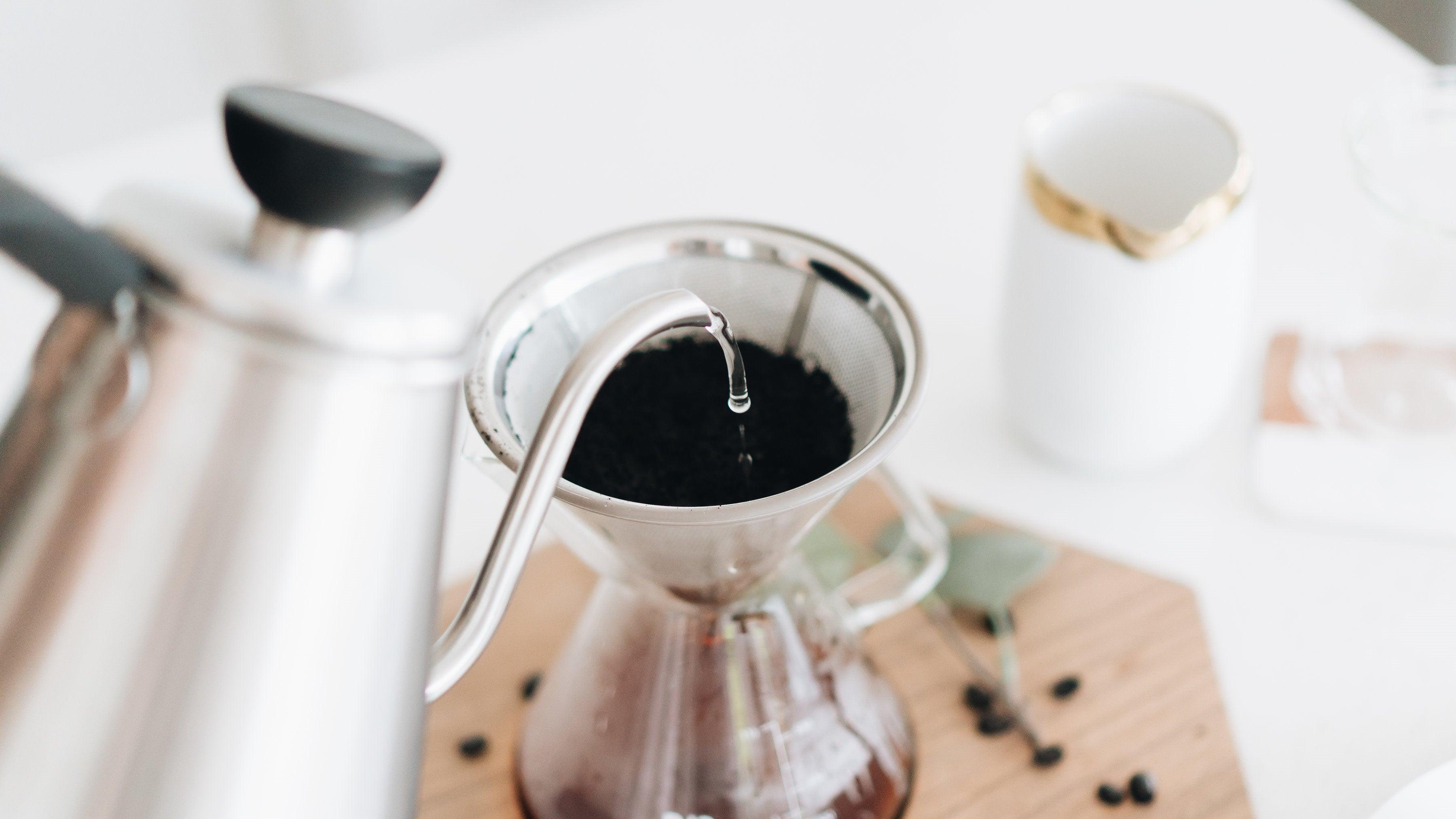
The Exact Pour Over Coffee Ratio (And Why It Changes Everything)
The Short Answer: 1:15 to 1:17
The standard pour over coffee ratio is 1 gram of coffee for every 15–17 grams of water. For a typical 300ml cup, that's 18–20 grams of coffee to 300 grams of water.
But here's what most guides won't tell you: the ratio you choose changes the entire character of your brew — not just how strong it is. A 1:15 ratio tastes bolder and more syrupy. A 1:17 ratio opens up brightness and floral notes. The difference is real, and learning to use it intentionally is what separates a good cup from a great one.
This guide covers everything you need: the numbers, the logic, the adjustments, and how to dial in your pour over like a specialty barista.
Why Ratio Matters More Than Any Other Variable
Coffee is approximately 98–99% water. The ratio determines how much of the coffee's soluble compounds actually make it into your cup — which directly shapes flavor, body, and balance.
The Specialty Coffee Association (SCA) defines the "Golden Cup Standard" as a brewing ratio of 55 grams of coffee per liter of water (roughly 1:18), targeting a Total Dissolved Solids (TDS) of 1.15–1.35% and extraction yield of 18–22%.1
Pour over brewing tends to sit slightly stronger than that — most specialty cafés use 1:15 to 1:16 — because pour over extracts cleanly and the high clarity makes a slightly concentrated brew taste balanced rather than heavy.
The key principle: ratio controls strength, grind controls extraction quality. If your coffee tastes weak, add more coffee (adjust ratio) before changing anything else. If it tastes bitter or sour, look at grind size and water temperature first.
Pour Over Coffee Ratio Chart by Cup Size
Use this as your starting reference. All measurements use grams — a kitchen scale makes this effortless and is the single biggest upgrade you can make to your brew.
| Cup Size | Water | Coffee (1:15) | Coffee (1:16) | Coffee (1:17) |
|---|---|---|---|---|
| Small (8 oz / 240ml) | 240g | 16g | 15g | 14g |
| Medium (10 oz / 300ml) | 300g | 20g | 19g | 18g |
| Large (12 oz / 360ml) | 360g | 24g | 23g | 21g |
| Carafe (600ml) | 600g | 40g | 38g | 35g |
| Carafe (800ml) | 800g | 53g | 50g | 47g |
Start at 1:16 and adjust from there. It's the most forgiving ratio across a wide range of roast levels and origins.
How Ratio Affects Flavor — What Actually Changes
Understanding what each ratio actually does helps you troubleshoot and intentionally shape your brew.
1:13 to 1:14 — Concentrated / Espresso-Style
Very strong. Heavy body, syrupy texture, intense sweetness. Not ideal for most pour overs — can mask nuance in light-roasted specialty coffees. Works well if you're adding milk or making a concentrate for iced drinks.
1:15 — Full-Bodied and Bold
Rich, weighty cup. Dark roasts shine here. This ratio is unforgiving of over-extraction — bitterness amplifies at this strength if grind is too fine or water too hot. Great for medium-dark roasts you want to drink black.
1:16 — The Sweet Spot
Balanced strength. Enough body to feel satisfying, enough water to let sweetness and origin character express themselves. The best starting point for any new coffee. Recommended for most light-to-medium roast specialty coffees.
1:17 — Bright and Expressive
Lower body, higher clarity. Floral, tea-like, fruity notes become more prominent. Ideal for washed Ethiopian or Kenyan coffees where the goal is delicacy. Can feel thin if you're used to bold coffee — adjust your palate expectations before dismissing it.
1:18 and above — Tea-Like
Light-bodied, high clarity. Very close to the SCA standard. Can taste watery if the coffee isn't high quality or freshly roasted. Best reserved for very light roasts and pour over aficionados who prefer a nuanced, almost tea-like experience.
How to Measure Your Ratio (The Right Way)
Volume-based measurements (tablespoons, scoops) are inconsistent. Different coffees have different densities — a tablespoon of a light, low-density Ethiopian bean weighs 4–5g, while a dark roast might weigh 7g. That's a massive variation in your actual ratio.
Always use a kitchen scale. It takes 10 seconds and makes your brewing repeatable.
Here's a simple workflow:
- Place your pour over brewer on the scale, tare to zero
- Add ground coffee — check the gram weight
- Tare again, then pour water slowly while watching the scale climb to your target weight
- Total brew time should land around 3:00–3:30 minutes for a 300ml cup
If you don't have a scale, a rough volume guide: 1 tablespoon of medium-roast coffee ≈ 5–6g. Use 3 tablespoons per 300ml as a starting point, then adjust by taste.
Adjusting for Roast Level
Roast level changes density and solubility, which means the same ratio can yield very different results depending on what you're brewing.
- Light roast: Start at 1:15 to 1:16. Light roasts are denser and harder to extract — a slightly stronger ratio compensates. Water temperature: 94–96°C (201–205°F).
- Medium roast: 1:16 is the sweet spot. This is the most forgiving category. Water temperature: 90–94°C (194–201°F).
- Dark roast: Start at 1:17 to 1:18. Dark roasts extract more aggressively — a longer ratio prevents bitterness from dominating. Water temperature: 88–92°C (190–198°F).
Troubleshooting by Taste
Your cup is giving you information. Here's how to read it:
| Taste | What It Means | Fix |
|---|---|---|
| Watery / weak | Too little coffee or over-diluted | Increase ratio (use more coffee) — try 1:15 instead of 1:17 |
| Bitter / harsh | Over-extracted — too fine a grind, or water too hot | Coarsen your grind one step; don't change ratio first |
| Sour / sharp | Under-extracted — too coarse a grind, or water too cool | Grind finer, or raise water temperature by 2–3°C |
| Flat / dull | Stale coffee, or water too cold | Use fresher beans (roasted within 2–4 weeks); raise water temp |
| Too strong but tastes good | Ratio is slightly tight | Adjust to 1:16.5 — add 10–15g more water to your next brew |
The Filter Question: Paper vs. Stainless Steel
Your filter affects how ratio plays out in the cup — not the math, but how it tastes.
Paper filters absorb coffee oils and fines, producing a clean, bright cup. The same 1:16 ratio through paper will taste lighter and more delicate than through metal.
Stainless steel filters let oils and micro-fines pass through, adding body and complexity. The same 1:16 ratio through a stainless filter will feel richer — almost like a hybrid between pour over and French press. If you're used to paper and switch to metal, you may want to adjust toward 1:17 to compensate for the added body.
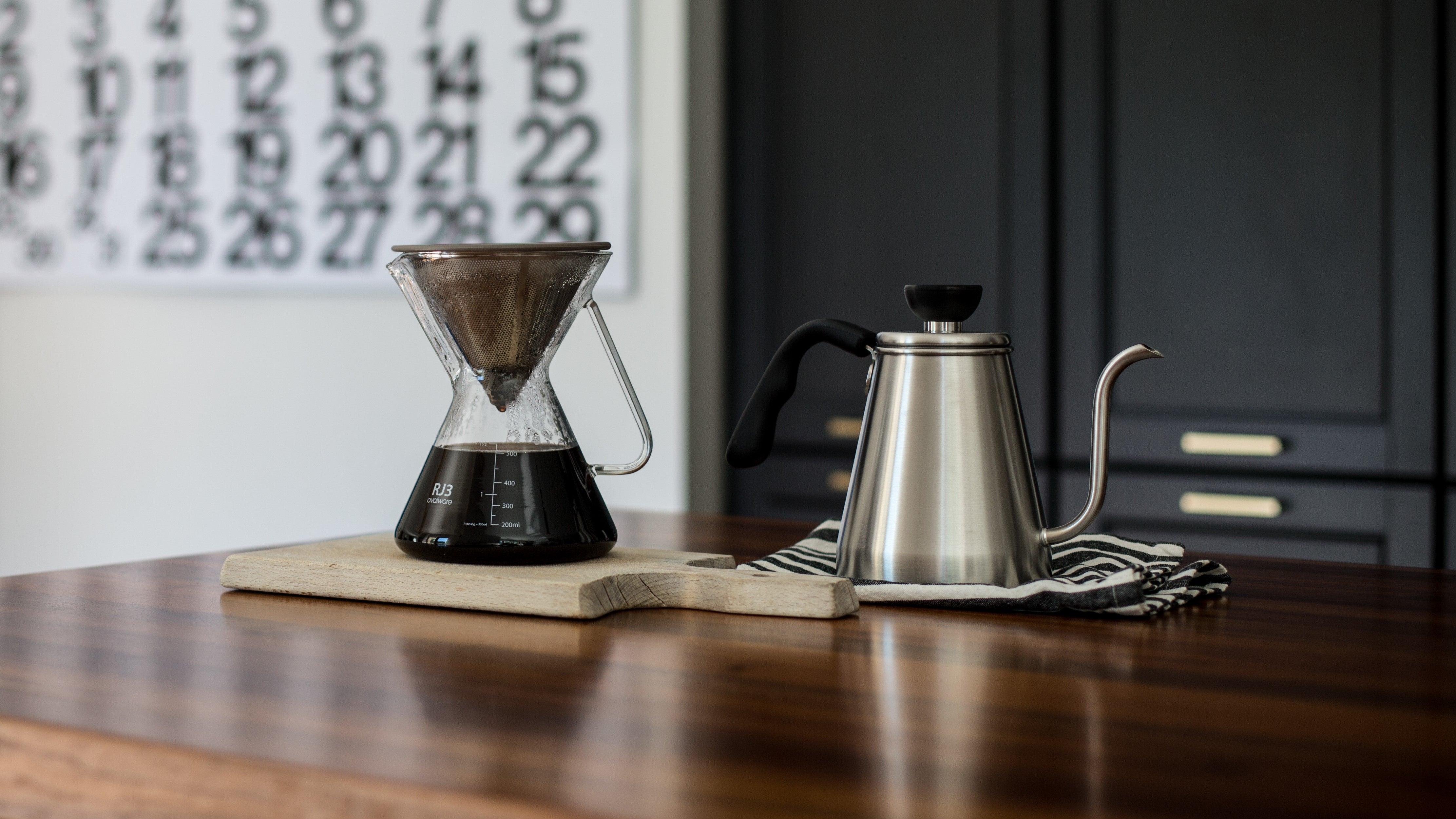
At Ovalware, our stainless steel coffee filters are designed specifically for pour over brewing — they let the natural oils and flavor compounds through while keeping grounds out of your cup. The result is a more textured, full-flavored brew that doesn't require buying paper every few weeks.
Pour Over Ratio vs. Other Brew Methods
For context, here's how pour over sits relative to other common methods:
| Method | Typical Ratio | Body | Clarity |
|---|---|---|---|
| Espresso | 1:2 | Very high | Low (emulsified) |
| AeroPress | 1:10 to 1:16 | High | Medium |
| Pour Over | 1:15 to 1:17 | Medium | High |
| Drip Coffee | 1:17 to 1:18 | Medium-low | High |
| French Press | 1:12 to 1:15 | Very high | Low (oils present) |
| Cold Brew | 1:4 to 1:8 | Concentrate | Medium |
What Equipment You Actually Need
You don't need expensive gear to brew with the right ratio. Here's a minimal setup that covers the fundamentals:
- Kitchen scale — the most important tool. $15–30 gets you something accurate to 0.1g.
- Gooseneck kettle — controls pour speed and bloom. Standard kettles work too, just pour slowly.
- Pour over brewer + filter — a quality cone brewer with consistent flow rate makes ratio control much easier.
- Fresh coffee — roasted within 2–4 weeks. Stale coffee is under-soluble and even a perfect ratio won't save it.
The Ovalware Pour Over Coffee Maker comes as a complete 3-piece kit: borosilicate glass brewer, reusable stainless steel filter cone, and a glass range server. The stainless filter is calibrated to produce a consistent 3–3.5 minute brew time when used with a medium-coarse grind at 1:15 to 1:16 ratio — which means you get reliable results without guesswork.
| Product | Best For | Price |
|---|---|---|
| Pour Over Coffee Maker | Complete kit — brewer + filter + server | $46.99 |
| Stainless Steel Filters | Replacement filter / upgrade from paper | $27.99 |
The Bloom: A Step Most People Skip
Before your full pour, do a bloom: pour 2x the weight of coffee in water (for 20g coffee, pour 40g water) and let it sit for 30–45 seconds. This releases CO₂ trapped in freshly roasted beans, which creates channels and uneven extraction if not released first.2
A vigorous bloom means fresh coffee — you'll see the grounds bubble and swell. If there's no bloom, your beans are stale.
Frequently Asked Questions
What is the best pour over coffee ratio?
Start at 1:16 — 1 gram of coffee per 16 grams of water. This is the most balanced ratio for light and medium roasts and works with most pour over brewers. Adjust to 1:15 for a stronger cup or 1:17 for something brighter and more delicate.
Is 1:15 or 1:17 better for pour over?
Neither is objectively better — they serve different purposes. Use 1:15 for a richer, bolder cup with more body (good for dark and medium roasts). Use 1:17 when you want to highlight floral or fruity notes in light-roasted specialty coffees. Most people prefer 1:16 as a daily driver.
How many grams of coffee for a 12 oz pour over?
A 12 oz cup is approximately 360ml. At 1:16, use 22.5g of coffee to 360g of water. Round to 22g or 23g depending on whether you want slightly lighter or slightly stronger.
Does the filter type affect the ratio I should use?
Indirectly, yes. Stainless steel filters pass coffee oils through, which adds body and texture — you may want to use a slightly higher ratio (1:17) compared to paper to account for the added richness. Paper filters absorb oils, producing a cleaner, lighter cup that may taste best at 1:15 to 1:16.
Why does my pour over taste weak even with the right ratio?
The most common cause is stale coffee — beans more than 4–6 weeks past roast date are under-soluble. Other causes: grind too coarse (under-extraction), water not hot enough, or a poorly calibrated scale. Try fresher beans first before adjusting ratio.
The Bottom Line
The pour over coffee ratio isn't a rigid formula — it's a starting point. Begin at 1:16, taste, and move in one direction. Once you find what you like for a specific coffee, write it down. The best cup you'll ever brew is the one you've dialed in for your beans, your water, and your palate.
Everything else — grind size, water temperature, pour technique — builds on top of that foundation. Get the ratio right first, and everything else gets easier.
Ready to put it into practice? The Ovalware Pour Over Kit includes a calibrated stainless steel filter and glass server — everything you need to start brewing with precision from day one.
Sources:

Leave a comment
This site is protected by hCaptcha and the hCaptcha Privacy Policy and Terms of Service apply.