Cappuccino vs Latte vs Macchiato: What's Actually Different
Cappuccino, latte, and macchiato are three of the most ordered drinks at any coffee shop. Most people have a favorite. Fewer people can explain exactly what makes each one different. If you've ever stared at a coffee menu and wondered whether you're about to order a small drink or a large one, or how much milk is actually in there, this guide will sort it out for good.
The Short Answer: What Makes Each One Different
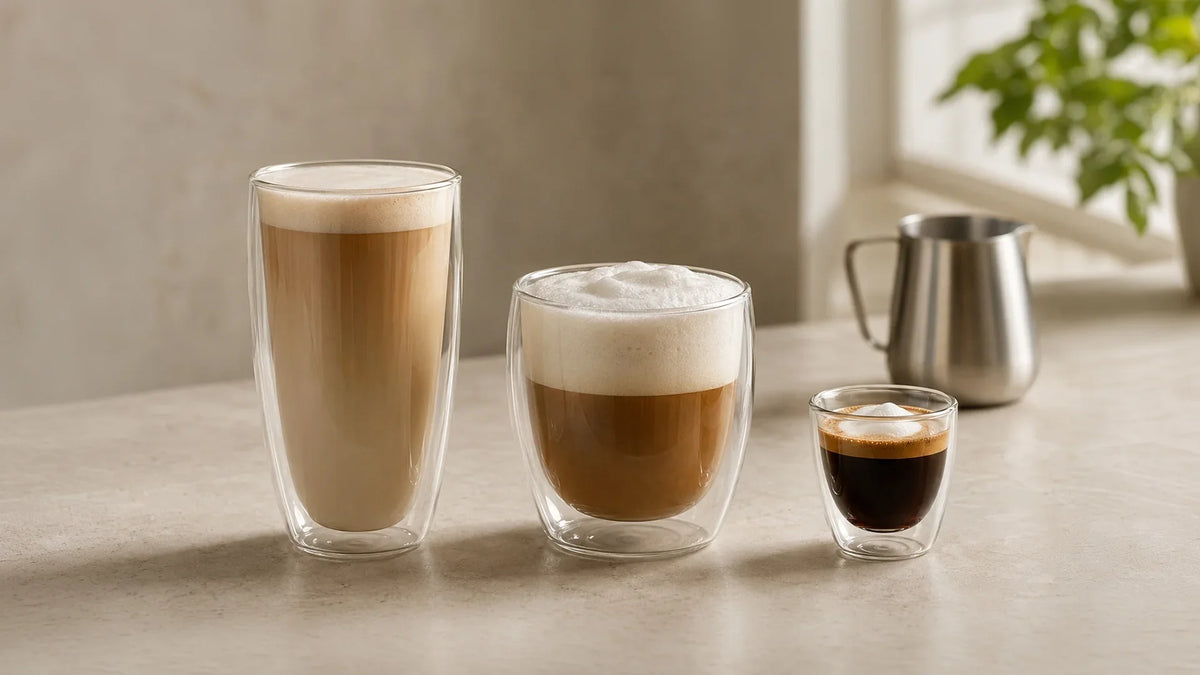
Quick answer: All three drinks use the same espresso base. The difference is the amount and texture of milk added. A macchiato is barely any milk (just a dot or a small pour). A cappuccino is equal thirds of espresso, steamed milk, and foam. A latte is mostly milk with a thin foam layer and a small espresso base. Volume, foam, and milk-to-coffee ratio are everything.
| Drink | Espresso | Milk | Foam | Total Volume | Coffee Intensity |
|---|---|---|---|---|---|
| Macchiato (espresso) | 30ml | 5-10ml | Small dot | 35-40ml | Very high |
| Macchiato (latte style) | 60ml | 120-150ml | Thin layer | 180-210ml | Medium |
| Cappuccino | 60ml | 60ml | 60ml | 180ml | High |
| Flat White | 60ml | 90-120ml | Thin microfoam | 150-180ml | High |
| Latte | 60ml | 180-300ml | Thin layer | 240-360ml | Low to Medium |
What Is a Cappuccino?
Quick answer: A cappuccino is one-third espresso, one-third steamed milk, one-third milk foam. Total volume is around 180ml. It's more intense than a latte because the milk volume is lower, and the thick foam gives it a distinctive airy texture on top.
The classic cappuccino rule is "three equal thirds." If you pull a 60ml double espresso, you add 60ml of steamed milk and 60ml of thick foam. The result is a drink that's strongly coffee-forward with a soft, cloud-like texture from the foam layer on top.
In Italian coffee culture, the cappuccino is a morning drink. Ordering one after noon is considered unusual in Italy. In the US, the timing rules are more relaxed, and you'll find cappuccinos ordered all day. The smaller volume (compared to a latte) makes it feel like a more concentrated, intentional drink.
The foam on a cappuccino is thicker and drier than latte foam. Microfoam (tiny, uniform bubbles) is ideal. Thick foam with large bubbles (called "dry foam") is less desirable but common when milk is over-aerated. The best cappuccino foam has a consistency close to thick shaving cream.
What Is a Latte?
Quick answer: A latte is espresso with a large amount of steamed milk and a thin foam layer on top. The standard ratio is roughly 1:3 to 1:5 (espresso to milk). Total volume is 240-360ml depending on the size. It's the mildest of the three drinks in terms of coffee intensity.
The word "latte" comes from Italian "caffe latte," meaning coffee milk. In Italy, caffe latte is usually made at home as a simple combination of espresso and warm milk. The version you order at a US coffee shop is the caffe latte format popularized by American specialty coffee chains: a double espresso shot with a generous pour of steamed milk and a thin microfoam surface.
Lattes are the most beginner-friendly espresso drink. The higher milk volume softens the bitterness of the espresso, making the drink sweet and approachable even without added sugar. They're also the easiest drink to practice latte art on because the thin microfoam surface gives you a smooth canvas.
The latte is the drink the Ovalware Latte Master Glass is designed for. The 250ml capacity is sized for a smaller, more coffee-forward latte. For the full 360ml cafe-style latte, any larger glass works.
What Is a Macchiato?
Quick answer: The word "macchiato" means "stained" in Italian. A traditional espresso macchiato is an espresso shot "stained" with just a small dollop of foam. Total volume is 35-40ml. The latte macchiato (popular in US cafes) is the reverse: steamed milk "stained" with espresso, totaling 180-210ml.
The confusion around macchiato comes from the fact that two very different drinks share the name. Here's how to tell them apart:
Espresso Macchiato (Traditional)
A single or double espresso shot with a small dot of milk foam on top. The foam is just enough to cut the intensity slightly and soften the crema. Total volume: 30-40ml. This is the most coffee-forward drink of the three. Intense, rich, and over quickly. If you order a "macchiato" at a traditional Italian cafe, this is what you'll get.
Latte Macchiato (American Style)
Steamed milk in a tall glass with espresso poured through the foam, leaving a visible "stain" where the coffee meets the milk. The espresso goes in last, which is the reverse of a standard latte. The layering effect is visual: dark espresso resting on white milk foam. Total volume: 180-210ml. Starbucks popularized this format in the US. If you order a "macchiato" at a mainstream American coffee chain, this is usually what you'll get.
How to Make Cappuccino, Latte, and Macchiato at Home
Quick answer: All three drinks start with the same foundation: a pulled espresso shot. You change the amount and texture of milk from there. Learn to steam milk to the right consistency and the rest follows naturally.
The Espresso Foundation
All three drinks use a double espresso shot (about 60ml) as the base. For precise measurement, the Ovalware Espresso Shot Glass has measurement markings at exactly 30ml (single shot) and 60ml (double shot). Pull your shot into it first to verify volume, then pour into the serving glass.
For a deep dive on espresso volumes and what single, double, and ristretto mean, see our post on how many ml is a shot of espresso.
Milk Steaming Basics
The key difference between cappuccino and latte milk is foam volume:
- Cappuccino milk: Introduce more air while steaming. Aim for roughly double the volume of milk you started with. The foam is thick and holds its shape when spooned.
- Latte milk: Introduce less air. The milk should expand only slightly. Texture is silky and fluid rather than thick. Microfoam integrates into the milk rather than floating on top.
- Macchiato milk: For an espresso macchiato, you only need a dollop of foam. Froth a very small amount of milk separately and spoon just the foam onto the shot.
Which One Should You Order (or Make)?
Quick answer: If you want to taste the espresso clearly, go macchiato. If you want a balanced drink with some coffee intensity, go cappuccino. If you want something milky, smooth, and approachable, go latte.
| If you want... | Order this |
|---|---|
| Maximum coffee intensity, minimum milk | Espresso macchiato |
| Bold coffee with airy foam texture | Cappuccino |
| Espresso-milk balance in a medium size | Flat white or cortado |
| Mild coffee, mostly milk, approachable flavor | Latte |
| Visual layers, sweeter profile | Latte macchiato |
The Ovalware Latte Master Glass
| Feature | Details |
|---|---|
| Capacity | 250ml / 8.5oz per glass |
| Material | Hand-blown borosilicate glass, double-wall |
| Best for | Lattes, cappuccinos, matcha, chai drinks |
| Colors | Clear Glass, Frost White, Stealth Gray |
| Dishwasher safe | Yes |
| Price | $36.99 (set of 2) |
The Latte Master Glass is designed for espresso-based milk drinks. Double-wall construction keeps drinks warm, the wide mouth works for latte art, and the clear glass shows off the layering. Free shipping on US orders $65 and over.
Frequently Asked Questions
What is the difference between a cappuccino and a latte?
A cappuccino has equal thirds of espresso, steamed milk, and foam (around 180ml total). A latte has a double espresso shot with a large amount of steamed milk and a thin foam layer (240-360ml total). The cappuccino is more coffee-intense and has a thick foam texture. The latte is milder and larger, with more milk and less foam.
What is a macchiato at Starbucks vs a traditional macchiato?
A traditional espresso macchiato is a small drink: espresso with a tiny dot of foam on top (35-40ml total). It is very coffee-forward and barely modified. A Starbucks macchiato (latte macchiato style) is a tall drink with steamed milk and a shot of espresso poured through the foam (180-210ml total). Same name, very different drinks.
Which has more caffeine: cappuccino, latte, or macchiato?
All three typically use a double espresso shot as the base, so caffeine is roughly equal (about 80-100mg per double shot). The espresso macchiato might use only a single shot (30-40mg). If comparing by volume, a latte feels less caffeinated because the caffeine is diluted across more milk, but the actual amount is the same.
Can I make a cappuccino, latte, or macchiato without an espresso machine?
Yes. A moka pot produces strong espresso-style coffee that works as the base for all three drinks. An AeroPress on a concentrate setting also works. A handheld frother can produce adequate foam for a cappuccino and smooth textured milk for a latte.
What size glass should I use for a latte vs a cappuccino?
A cappuccino is served in a 150-180ml cup. A latte is served in a 240-360ml glass. For home use, a 250ml glass like the Ovalware Latte Master Glass works for both a cappuccino-style smaller latte and a standard cappuccino. For a full-size cafe latte, use any tall glass above 300ml.