How Many ML Is a Shot of Espresso? Single, Double, Ristretto
Ask five baristas how many ml is in a shot of espresso and you'll get five slightly different answers , not because anyone's wrong, but because "a shot" actually refers to several different drinks depending on which one you mean. A single, a double, a ristretto, and a lungo are all "a shot" in casual conversation, and they range from about 15ml to 60ml. Here's the exact breakdown, where the confusion comes from, and how to actually measure your own shots at home.
How Many ML Is a Shot of Espresso?
A single espresso shot is 30ml (1oz), and a double shot is 60ml (2oz). These are the two standard reference points most cafés and home machines are calibrated around, and they're the two volumes you'll see marked on dedicated espresso measuring glassware.
Ristretto and lungo are variations on the same dose of coffee, not separate "sizes" , a ristretto uses less water for a shorter, more concentrated shot (commonly cited around 15-20ml), while a lungo uses more water for a longer, more diluted one (typically 40-50ml). All four start from a similar amount of ground coffee; what changes is how much water passes through it.
Single vs Double vs Ristretto vs Lungo: The Full Breakdown
| Shot Type | Volume | Typical Dose | Extraction Time | Taste |
|---|---|---|---|---|
| Ristretto | ~15-20ml (0.5-0.7oz) | 18g (1:1 ratio) | 22-25 sec | Concentrated, often rounder and less bitter than expected |
| Single (standard) | 30ml (1oz) | 9-10g | 25-30 sec | Balanced , the reference shot |
| Double (doppio) | 60ml (2oz) | 18g (1:2 ratio) | 25-30 sec | Same balance as a single, more volume |
| Lungo | 40-50ml (1.3-1.7oz) | 18g (1:3 to 1:4 ratio) | 45-60 sec | More bitter, less concentrated , extraction runs longer |

The ristretto result surprises most people: because extraction stops earlier, fewer of the late-extracting bitter compounds make it into the cup. According to Barista Essentials' ristretto vs. espresso vs. lungo comparison, a ristretto is often rounder and more intense in flavor rather than simply "stronger," while a lungo , despite using more water , tends to taste more bitter because the extra extraction time pulls out compounds a standard shot leaves behind.
Why Volume Measurements Vary So Much Online
Modern specialty coffee measures espresso by weight, not volume , which is the real source of all the conflicting "ml" numbers you'll find online. The current Specialty Coffee Association's espresso standard defines a double shot as an 18g dose yielding 36g of brewed espresso , a 1:2 ratio by weight, not by milliliters. Because espresso's density is close to water's, 36g translates to roughly 36ml in practice, which is close enough to the commonly cited 60ml that recipes and articles round differently depending on the source.
That's also why you'll see ristretto volumes quoted anywhere from 15ml to 25ml , professional ratio framing defines it by weight (an 18g dose yielding an 18g, or 1:1, shot), while consumer-facing guides translate that into rounder, easier-to-remember volume numbers. Both are "correct"; they're just speaking two different measurement languages. Coffee Circle's breakdown of espresso, lungo, and ristretto reaches the same numbers from the weight side, confirming the 1:1 (ristretto), 1:2 (espresso), and 1:3-to-1:4 (lungo) ratio framework as the underlying standard most professional sources actually use.
Why Your Home Machine Might Not Match These Numbers
Bean freshness, grind size, tamping pressure, and machine calibration all shift the actual volume and timing of a "standard" shot, which is why two people following the same recipe on different machines can get noticeably different results. A consistent extraction window matters more than hitting an exact number: industry surveys on espresso parameters have found that a majority of baristas target a 25-30 second extraction window regardless of the specific machine, using that timing , not just the final volume , as the real consistency check.
This is part of why measuring by volume at home is genuinely useful even though professionals measure by weight: a kitchen scale precise enough for espresso dosing is a bigger investment than most home setups need, while a marked glass gets you most of the consistency benefit for a fraction of the cost and effort.
How Much Caffeine Is in Each Shot Type?
| Shot Type | Approximate Caffeine |
|---|---|
| Ristretto | ~40-50mg |
| Single shot | ~63mg |
| Double shot | ~125mg |
| Lungo | ~60-75mg |
The USDA FoodData Central database lists espresso at roughly 63mg of caffeine per fluid ounce (30ml), which lines up with the single-shot figure above. Ristretto actually contains slightly less caffeine than a full shot, not more , caffeine dissolves early in the extraction, so stopping the shot sooner means slightly less of it ends up in the cup, even though the flavor reads as more intense. InstaCuppa's single vs. double vs. ristretto vs. lungo guide and Miscela d'Oro's espresso comparison both confirm this same caffeine ordering, even though their exact mg figures vary slightly by bean and roast assumptions.
How to Actually Measure Your Shots at Home
Pulling consistent shots starts with measuring your output, not guessing by eye or by timer alone. A dedicated espresso measuring glass with marked volumes removes the guesswork , instead of estimating "about an inch of espresso," you can see exactly when you've hit 30ml or 60ml.

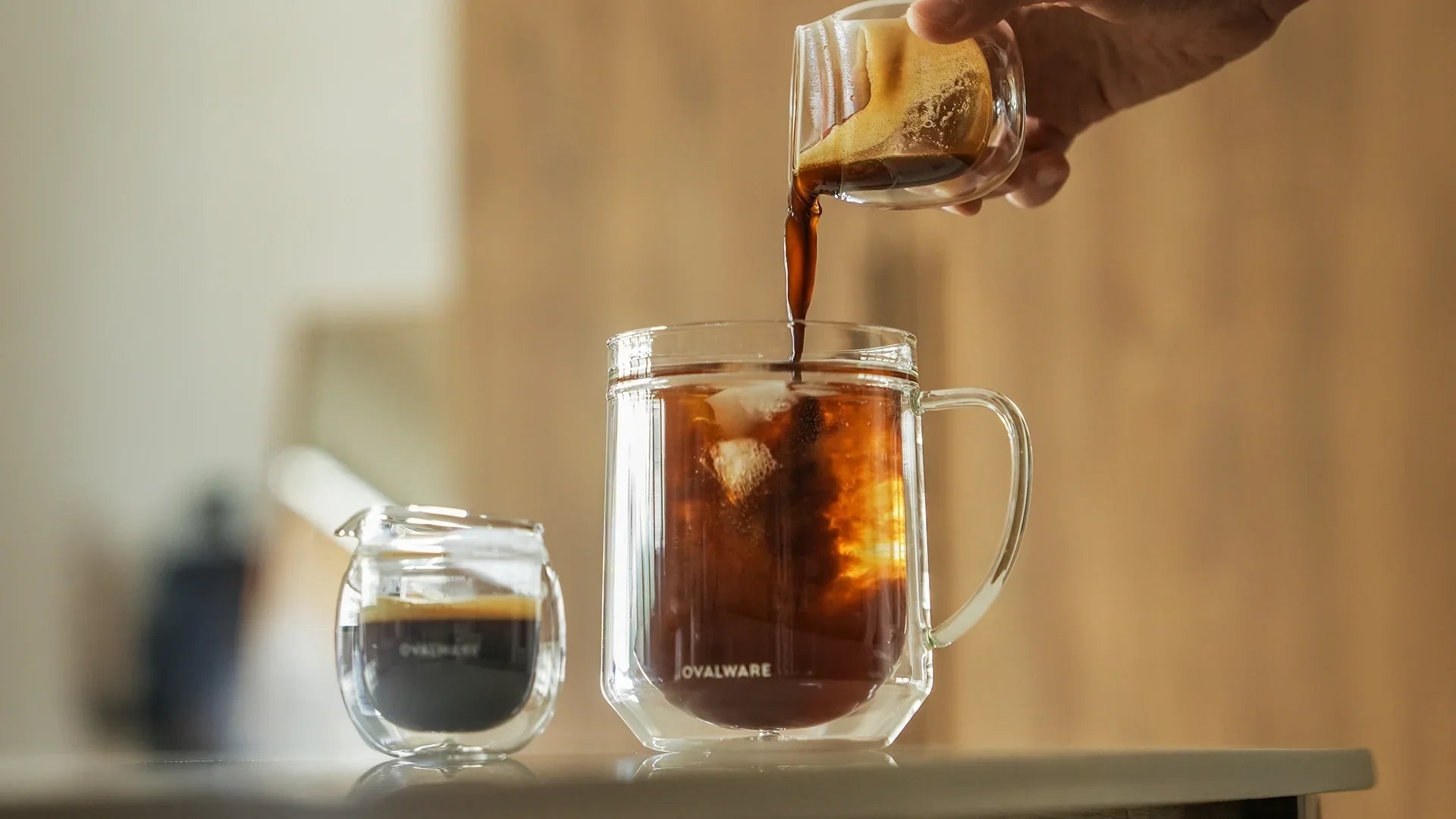
The Ovalware Espresso Shot Glass is built around exactly these two reference points: it has permanent oval-dot markings at 30ml (1oz) for a single shot and 60ml (2oz) for a double , the same two numbers that come up constantly in any conversation about espresso volume. It's a stackable, single-wall design (not double-wall insulated), with two interlocking glass vessels that nest together so the lower section stays comfortable to hold while the upper chamber holds the hot shot.
| Feature | Espresso Shot Glass |
|---|---|
| Capacity | Up to 60ml / 2oz |
| Markings | 30ml (1oz) single shot · 60ml (2oz) double shot |
| Design | Stackable, single-wall, interlocking borosilicate glass |
| Sold as | Set of 2 |
| Price | $29.95 |
| Free shipping | US orders $65+ |
If you want to pull a ristretto, there's no dedicated marking for it , pour to roughly halfway between empty and the 30ml line as a starting point, then adjust by taste. For watching the shot pull and presenting it at the table, the Ovalware Espresso Pouring Glass is built for that , clear glass with a built-in spout so you can watch the crema form as it extracts.
Consistent measurement matters more than any single number on this page. Routes Coffee's guide to espresso parameters makes the point that the specific volume you land on matters less than pulling the same volume every time , once your ratio is dialed in and repeatable, you can adjust grind and dose around it instead of guessing fresh each morning.
Common Measurement Mistakes
- Confusing weight-based and volume-based ratios. An "18g in, 36g out" double shot and a "60ml double shot" are describing roughly the same drink in two different units , they're not contradicting each other.
- Assuming ristretto is just "less espresso." It's a different extraction stopping point, not a smaller version of the same shot , which is why it tastes different, not just weaker.
- Pulling a lungo when you meant to order an americano. Both involve "more water," but a lungo extracts longer through the grounds while an americano dilutes a normal shot afterward with separately heated water , the flavor outcome is different.
- Eyeballing shot volume without a marked glass. Visual guessing is the easiest way to end up with wildly inconsistent shots day to day.
- Grinding the same way for every shot type. A lungo benefits from a slightly coarser grind than a standard shot, since the extra water and longer extraction time will over-extract a fine grind into excessive bitterness, according to Coffee Friend's guide to espresso variations.
Frequently Asked Questions About Espresso Shot Sizes
How many ml is a standard shot of espresso?
A single shot is 30ml (1oz) and a double shot is 60ml (2oz). These are the two most commonly used reference volumes across cafés and home espresso setups.
Is a ristretto stronger than a regular espresso shot?
It tastes more concentrated but actually contains slightly less caffeine, since caffeine extracts early and a ristretto's shorter extraction time pulls less of it into the cup overall.
Why do some sources say a double shot is 36ml and others say 60ml?
It depends on whether the source is measuring by weight or by volume. Professional standards define a double as an 18g dose yielding 36g of liquid (close to 36ml); many consumer guides round this up to the more familiar 60ml (2oz) figure.
What's the difference between a lungo and an americano?
A lungo is pulled with more water running through the grounds during extraction itself, making it more bitter. An americano starts as a normal shot, then gets diluted afterward with separately heated water, preserving the original shot's balance.
How do I measure a ristretto if my glass only has 30ml and 60ml markings?
Pour to roughly the halfway point between empty and the 30ml line, then adjust to taste , ristretto doesn't have one universally fixed volume, so this is a starting point rather than an exact target.
The Bottom Line
A single shot of espresso is 30ml, a double is 60ml, and everything else , ristretto, lungo , is a variation on how much water runs through the same dose of coffee. Once you have a glass that actually shows you those two reference points, dialing in consistent shots gets a lot easier.
If you're building out your home espresso setup, our guide to making perfect espresso at home and americano at home guide are good next reads , and our cappuccino guide covers what to do with that shot once it's measured.