How Long Does Cold Brew Last in the Fridge? (And How to Store It Right)
You made a batch of cold brew on Sunday. It's Thursday. Is it still good?
The answer depends on how you stored it , and whether you've mixed it with anything. Cold brew has a longer shelf life than most other coffee drinks, but "longer" isn't "forever." Here's the exact timeline, the science behind it, and how to make every batch last as long as possible.
How Long Does Cold Brew Last in the Fridge?
Homemade cold brew keeps for 7 to 14 days in the refrigerator. Most batches taste best in the first 5-7 days , that's the peak freshness window. After that, flavor starts to soften, and by day 10-14 you may notice off-notes developing.
According to SF Bay Coffee's cold brew shelf life guide, cold brew remains microbiologically safe for longer than two weeks , but taste quality declines well before safety becomes a concern. Drink it fresh for best results.
| Type | Shelf Life | Notes |
|---|---|---|
| Homemade cold brew (plain) | 7-14 days | Peak flavor in first 5-7 days |
| Cold brew + dairy milk or creamer | 2-3 days | Dairy accelerates spoilage significantly |
| Cold brew + oat or almond milk | 3-4 days | Slightly longer than dairy, still short |
| Store-bought (unopened, pasteurized) | 90-120 days | Pasteurization and sealed packaging extend life |
| Store-bought (opened) | 7-10 days | Once opened, treat like homemade |
| Frozen cold brew | Up to 3 months | Freeze in portions or ice cube trays |

Why Cold Brew Lasts Longer Than Regular Iced Coffee
Cold brew's extended shelf life comes from one key difference: it's never heated. Regular iced coffee is hot-brewed coffee that gets chilled , the heat accelerates oxidation from the moment it's made, and chilling it afterward doesn't reverse that process.
Cold brew steeps entirely in cold water for 12-18 hours. Two things make this more stable:
- Lower acidity: Cold extraction produces a significantly less acidic cup than hot brewing. Lower acidity means fewer reactive compounds that speed up degradation.
- No heat exposure: Heating coffee accelerates both oxidation and the breakdown of aromatic compounds. Cold brew skips this entirely , the flavor compounds that make it smooth are never damaged by heat.
The result is a drink that stays consistent for days, as long as it's stored correctly. That stability is one of the main reasons cold brew has become a Sunday-prep staple for so many home coffee drinkers.
4 Storage Rules That Actually Matter
Storage makes a bigger difference than most people realize. These four factors determine how long your batch stays at peak quality.
1. Use an Airtight Container
Oxygen is cold brew's main enemy. Every time cold brew is exposed to air, oxidation compounds , the same chemistry that turns cut apples brown. Research on cold brew's shelf life chemistry consistently identifies airtight sealing as the single most important storage factor.

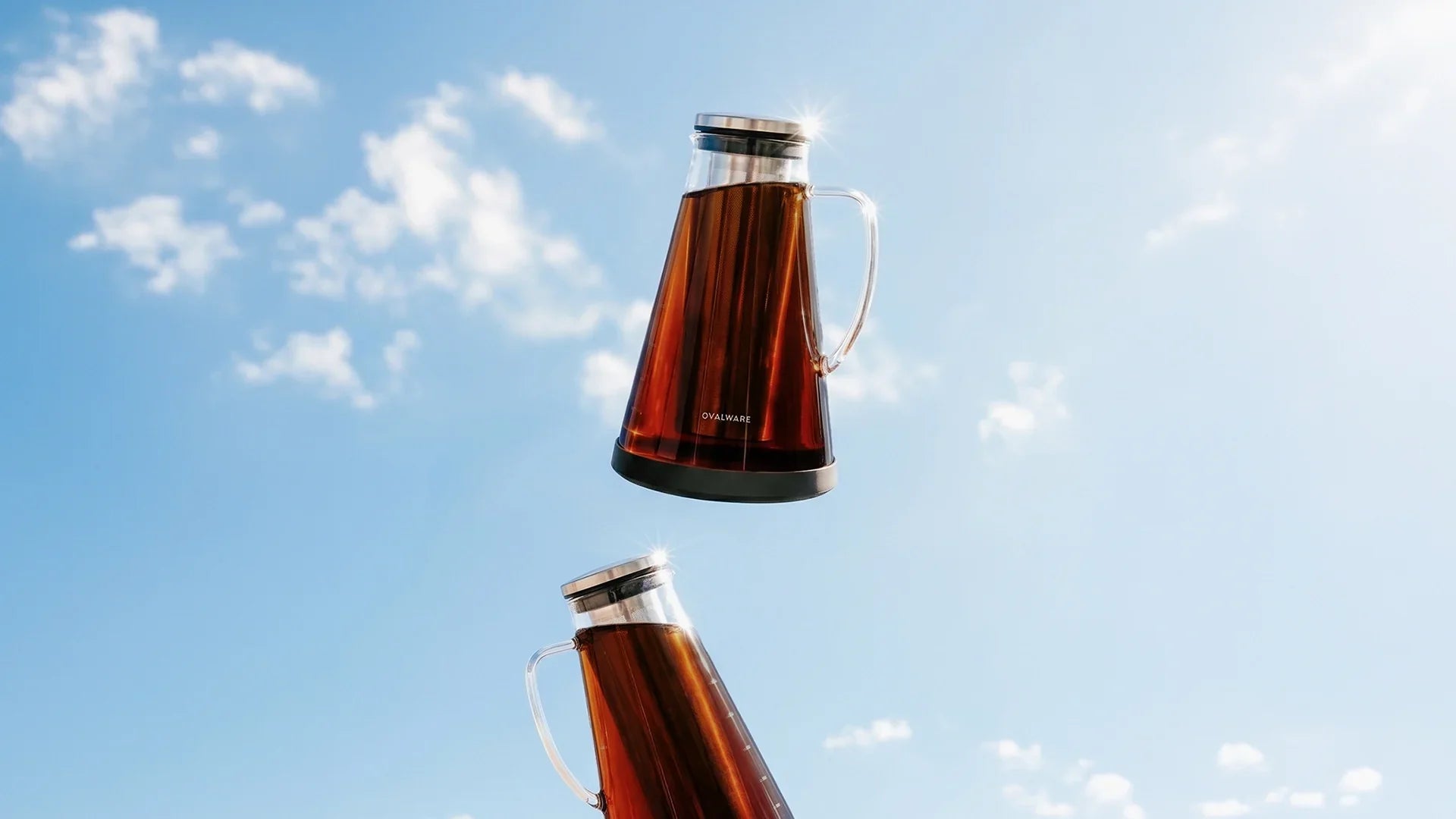
Use a container with a tight-fitting lid and fill it as close to the top as possible to minimize airspace. The Ovalware Cold Brew Maker's sealed lid keeps fridge odors out during the steep , and that same seal means you can store your finished cold brew right in the maker. No need to transfer to a separate container, and no additional air exposure from the transfer itself.
2. Keep It at 40°F (4°C) or Below
The USDA recommends refrigerator temperatures at or below 40°F (4°C). At this temperature, bacterial growth slows significantly and oxidation rates drop. Avoid storing cold brew in the fridge door , temperatures there fluctuate every time you open it. The middle shelf or back of the fridge maintains more consistent cold.
3. Store It Plain
If you're drinking your batch over multiple days, store it undiluted. Adding milk, oat milk, or water before refrigerating shortens shelf life significantly , dairy starts breaking down within 2-3 days, and added liquid dilutes flavor without preserving freshness. Mix individual servings as you pour them, according to Dark Horse Coffee's storage guide.
4. Start With Clean Equipment
Bacteria and mold need a starting point. Brewing in a thoroughly rinsed maker , and storing in a clean container , prevents premature spoilage. The Ovalware Cold Brew Maker is dishwasher safe, which makes this easy. Learn more about the cold brew procedure for best results start to finish.
Signs Your Cold Brew Has Gone Bad
Your nose knows before anything else. Fresh cold brew smells smooth, slightly sweet, and clean. Here's what aging looks like:
- Sour or vinegary smell: First sign that fermentation is starting. Still typically safe to drink, but flavor is compromised.
- Musty or off aroma: More advanced spoilage. Discard it.
- Flat, cardboard taste: Usually just oxidation , the cold brew is past peak but not necessarily spoiled. Let your nose make the final call.
- Visible mold: Rare if stored correctly, but possible if leftover grounds weren't fully removed. Discard immediately.
According to Breville's cold brew guide, fresh cold brew is smooth with a slightly sweet finish. As it ages, sour or fermented notes develop. When in doubt, smell it. If it smells off, don't drink it.
Can You Freeze Cold Brew?
Yes , and it works remarkably well. Cold brew's low acidity and lack of heat exposure mean it survives freezing without the flavor degradation hot-brewed coffee suffers. Two practical methods:
- Cold brew ice cubes: Freeze cold brew in an ice cube tray. Use these in your glass instead of water-ice , they keep your drink cold without diluting it as they melt. A perfect move for summer.
- Portion freezing: Freeze single-serving amounts in small jars (fill to 80% to allow for expansion). Thaw overnight in the fridge. Flavor holds up well.
Frozen cold brew keeps for up to 3 months without noticeable quality loss, per Aerial Resupply Coffee's storage guide. Freeze a batch when you're going on vacation and thaw it when you get back.
Make a Batch That Lasts All Week
The Ovalware Cold Brew Maker produces 1.0L or 1.5L per batch , enough for a week of cold brew at two servings per day. Set it up Sunday evening, steep in the fridge for 12-18 hours, and you'll have cold brew ready Monday morning that stays fresh all week.
The maker produces ready-to-drink cold brew , not concentrate. The brewing ratio (~85g of coarse-ground coffee per 1L of water) gives you smooth, full-flavored cold brew you can pour straight over ice. No dilution step, no measuring at serving time. Just open the fridge and pour.
For more on dialing in your cold brew grind size, or if you want ideas for what to add to cold brew each day, those guides cover both in detail.
| Feature | Detail |
|---|---|
| Capacity | 1.0L / 34oz or 1.5L / 51oz |
| Steep time | 12-18 hours (fridge) or 8-12 hours (room temperature) |
| Coffee ratio | ~85g per 1L water (≈1:12 ratio) |
| Output | Ready-to-drink cold brew , no dilution needed |
| Sealed lid | Yes , keeps fridge odors out during steep and storage |
| Dishwasher safe | Yes |
| Price | $40.99 (1.0L) / $46.99 (1.5L) |
| Free shipping | US orders $65+ |
Shop the Ovalware Cold Brew Maker →
Make it Sunday. Drink it fresh all week. Store it in the maker, sealed in the back of the fridge, and you'll hit the peak freshness window every day.
Frequently Asked Questions
How long does cold brew last out of the fridge?
At room temperature, cold brew should be consumed within 2 hours. Bacterial growth accelerates rapidly without refrigeration, and the coffee will start tasting flat and sour within a few hours. Always refrigerate immediately after brewing , cold brew is not shelf-stable at room temperature.
Does cold brew get stronger the longer it steeps?
No , once the grounds are filtered out and the cold brew is stored, steeping stops. Flavor changes you notice over time in the fridge are due to oxidation, not continued extraction. Coffee grounds must be in contact with water for extraction to occur. Strength is set at brew time, not storage time.
Why does my cold brew taste different after 5 days?
Oxidation. Even in an airtight container, small amounts of oxygen interact with coffee compounds over time, softening the flavor and sometimes adding slightly sour or flat notes. This is normal chemistry and typically starts around day 5-7. It's the same reason coffee beans go stale , just slower in cold brew due to the lower temperature and sealed environment.
Can I make cold brew ahead of time for a party?
Yes , cold brew is one of the best drinks to prep ahead. Make your batch 24-48 hours before the event for the ideal flavor window. Store it plain in the maker, then set out ice, glasses, and mixers at the party. Once poured, cold brew stays good at room temperature for up to 2 hours. Check out these cold brew pairing ideas for serving inspiration.
Is cold brew safe to drink after 2 weeks?
Possibly, but unlikely to taste good. Cold brew stays microbiologically safe in a sealed, clean container for up to two weeks under ideal conditions , but flavor typically drops noticeably after day 7. If it smells sour, musty, or fermented, or if you see any mold, discard it regardless of the date. When in doubt, trust your nose.