How to Make an Iced Latte Without an Espresso Machine (5 Methods That Actually Work)
Iced latte season hits hard and it hits fast. One warm morning and suddenly you want something cold, creamy, and caffeinated , but you don't have an espresso machine. Good news: you don't need one. The five methods in this guide all produce strong, concentrated coffee that works perfectly as the base for a homemade iced latte. Some take minutes. One takes overnight. All of them actually work.
What Makes a Latte (vs. an Iced Coffee)?
A latte is espresso plus steamed (or cold) milk , typically a 1:3 to 1:4 ratio of coffee concentrate to milk. An iced coffee is just brewed coffee served over ice, often black or lightly diluted. The difference is concentration and milk ratio. A latte tastes creamy, rich, and balanced. An iced coffee tastes more like coffee.
Most people blur the line between the two, and that's fine. But if you want a real iced latte at home, the key is starting with strong, concentrated coffee , not a standard cup of drip. Drip coffee is brewed at roughly a 1:17 coffee-to-water ratio. Espresso sits closer to 1:2. That concentration is what lets milk blend in without turning the whole drink watery and flat.
All five methods below produce coffee concentrated enough to hold up to milk. According to Serious Eats' deep dive on iced coffee, the single biggest mistake people make with homemade iced lattes is using regular-strength brewed coffee , the result tastes thin the moment milk hits it. Start concentrated, and the rest is easy.
Method 1: Moka Pot
A moka pot produces the most espresso-like coffee of any stovetop method. It brews under pressure, resulting in a dense, concentrated shot with strong flavor and a hint of body. It's the closest thing to a real espresso machine you can use on a standard stovetop.
What you need
- Moka pot (2-cup or 4-cup size)
- Finely ground coffee (slightly coarser than espresso grind)
- Filtered water
- Cold milk
- Ice
How to make it
- Fill the bottom chamber with hot water just below the safety valve.
- Pack the filter basket with coffee , level, not tamped hard.
- Assemble the moka pot and place it on medium-low heat.
- Remove from heat as soon as coffee starts to sputter (around the gurgling sound).
- Pour over a glass packed with ice, then add cold milk to taste.
Pro tip
Use pre-heated water in the bottom chamber. Cold water takes longer to heat up and can over-extract the grounds, producing a bitter result. Pre-heated water gives you cleaner, brighter flavor. The Kitchn's moka pot guide covers this step in detail.
Method 2: AeroPress
The AeroPress is one of the most versatile coffee brewers ever made. Brewed in "espresso style" , fine grind, small amount of water, short steep , it produces a concentrated shot with genuine body and low acidity. It's fast, easy to clean, and perfect for iced lattes.
What you need
- AeroPress (standard or Go)
- Fine to medium-fine ground coffee (17-19g)
- Hot water (around 200°F / 93°C)
- Cold milk
- Ice
How to make it
- Place filter in AeroPress cap, wet it with hot water, and lock the cap on.
- Add 17-19g of fine-ground coffee to the AeroPress chamber.
- Pour in 60-80ml of hot water and stir for 10 seconds.
- Let steep for 1 minute, then press slowly over a glass of ice.
- Add cold milk directly over the concentrated shot and ice.
Pro tip
Try the inverted AeroPress method for a longer steep and more control. Flip the AeroPress upside down, add coffee and water, steep for 90 seconds, then flip and press. Bon Appetit's AeroPress tips lay out the full inverted technique. It's worth the extra step.
Method 3: Cold Brew
Cold brew takes the longest of these five methods , 12 to 24 hours , but it requires almost no active effort and produces incredibly smooth, naturally sweet coffee with almost no bitterness. It's the lowest-maintenance option and works beautifully as an iced latte base.

What you need
- Coarse ground coffee
- Cold or room temperature water
- A cold brew maker or large jar with a filter
- Cold milk
- Ice
How to make it
- Add coarsely ground coffee to your cold brew maker.
- Add cold water at your target ratio (roughly 1:12 for a 1L batch).
- Stir gently to saturate all the grounds.
- Seal and steep in the fridge for 12-24 hours.
- Pour the finished cold brew over ice and add cold milk to taste.
Pro tip
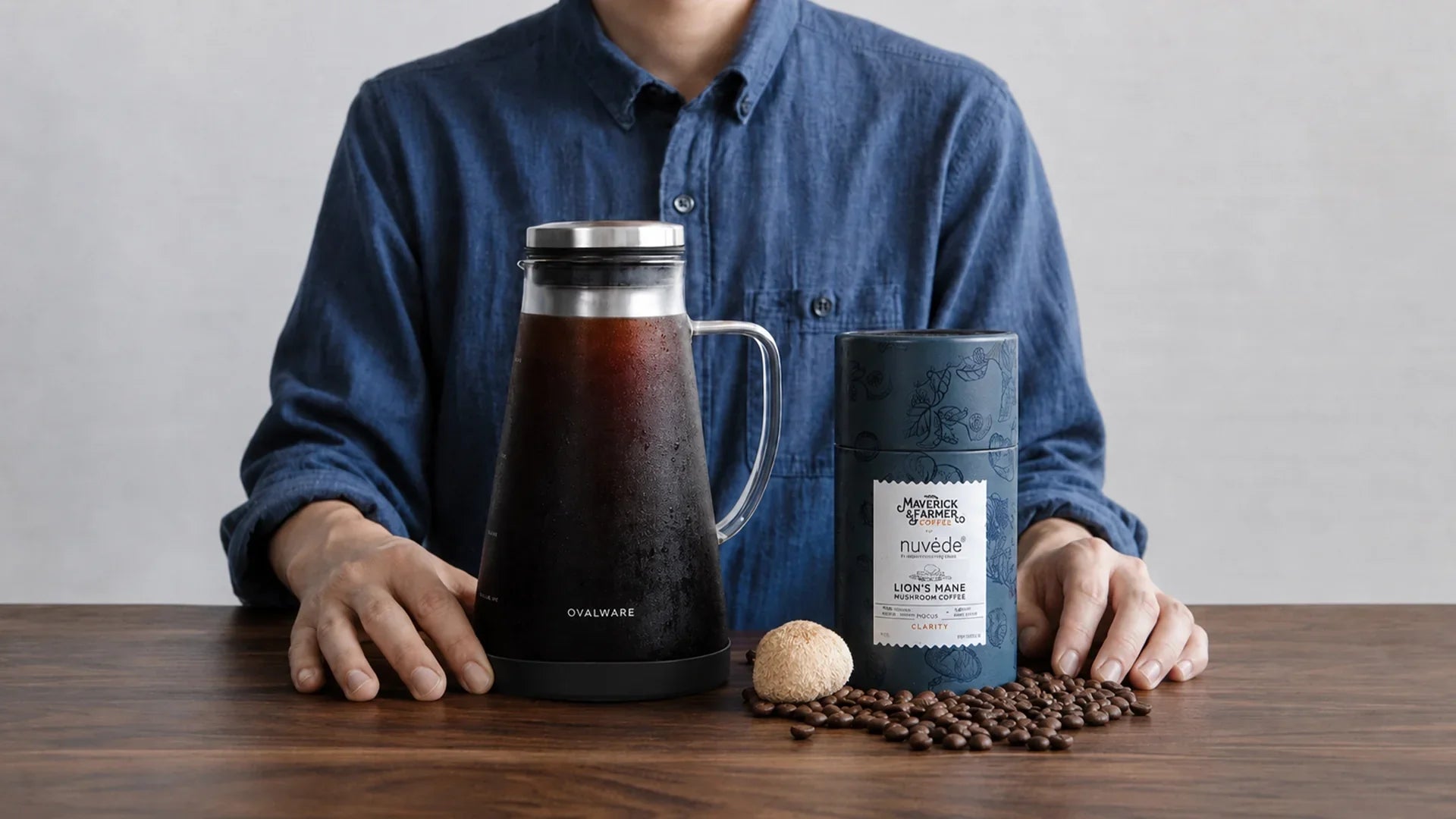
The Ovalware Cold Brew Maker is designed for this exact use. It brews ready-to-drink cold brew at a 1:12 ratio (1L batch) or 1:14 (1.5L batch) , no dilution needed once it's done. The airtight lid keeps it fresh in the fridge for up to two weeks, which means you can have iced latte ingredients ready any morning of the week. For a deeper look at how cold brew compares to iced coffee, see our cold brew vs. iced coffee breakdown.
Cold brew is also the most forgiving method for beginners. There's no temperature control, no timing pressure, and virtually no way to make it bitter. Food Network's cold brew recipe confirms that coarse grind and long steep time are the only two variables that really matter.
Method 4: Strong Pour Over
Pour over is simple: hot water poured slowly through coffee grounds in a filter. Brew it stronger than you normally would , double the grounds, keep the water the same , and you get a concentrated result that holds up well with milk and ice. No special equipment beyond a pour over maker and filters.

What you need
- Pour over dripper with filter (Ovalware pour over maker works great)
- Medium-fine ground coffee (use 1.5-2x your usual amount)
- Hot water (200°F / 93°C)
- Cold milk
- Ice
How to make it
- Set your pour over dripper over a glass or carafe packed with ice.
- Place a filter in the dripper and rinse it with hot water.
- Add 1.5-2x your normal dose of coffee grounds (try 30g for a double-strength 200ml brew).
- Pour hot water slowly in circular motions, giving the coffee a 30-second bloom first.
- Once brewed, the coffee chills instantly over the ice. Add cold milk and stir.
Pro tip
Brewing directly onto ice , called Japanese iced pour over , is a method Serious Eats recommends for flash-chilling coffee without diluting it. The ice melts slightly during brewing and accounts for about 30-40% of the water in your recipe, so reduce your pour water accordingly. It gives you brilliant clarity and no bitterness from sitting hot coffee on ice after the fact.
Method 5: French Press
Most households already own a French press. It's the most accessible method on this list and produces rich, full-bodied coffee when brewed with a higher coffee-to-water ratio than usual. The natural oils from unfiltered French press coffee add texture and depth that pairs well with milk.
What you need
- French press (any size)
- Coarse ground coffee (use a higher dose , around 1:10 to 1:12 ratio)
- Hot water (200°F / 93°C)
- Cold milk
- Ice
How to make it
- Add coarsely ground coffee to the French press at a 1:10 or 1:12 ratio by weight.
- Pour in hot water, stir once, and place the lid on (plunger up).
- Steep for 4 minutes.
- Press the plunger down slowly and pour the concentrate into a glass packed with ice.
- Add cold milk to taste and stir.
Pro tip
Decant the coffee immediately after pressing. Leaving French press coffee sitting on the grounds continues extraction and pushes the flavor toward bitter. Taste of Home's French press mistakes article lists over-steeping as the most common error. Pour it all out, then chill.
How to Froth Milk Without a Steam Wand
You don't need a steam wand to froth milk for an iced latte. A handheld milk frother, a mason jar with a lid, or even a standard blender can produce enough foam to top an iced latte. Cold foam , frothed cold milk , is actually what most coffee shops use for iced drinks anyway.
Here are the three most practical options:
Handheld frother
The easiest route. Submerge the frother head in cold milk and run it for 20-30 seconds. You get dense, creamy cold foam that sits on top of the iced latte. The Kitchn's milk frothing guide recommends 2% or whole milk for best foam volume , the fat content matters.
Mason jar shake method
Pour cold milk into a jar, seal the lid, and shake hard for 30-45 seconds. The foam won't be as dense as handheld frothing, but it works well enough for a casual iced latte. Pour it over the drink quickly before the foam settles.
Blender cold foam
Add cold milk and a pinch of sugar or vanilla syrup to a blender. Blend on high for 30 seconds. This produces thick, barista-style cold foam , the kind you see on ube lattes and pistachio lattes. Spoon or pour it directly over the top of the drink.
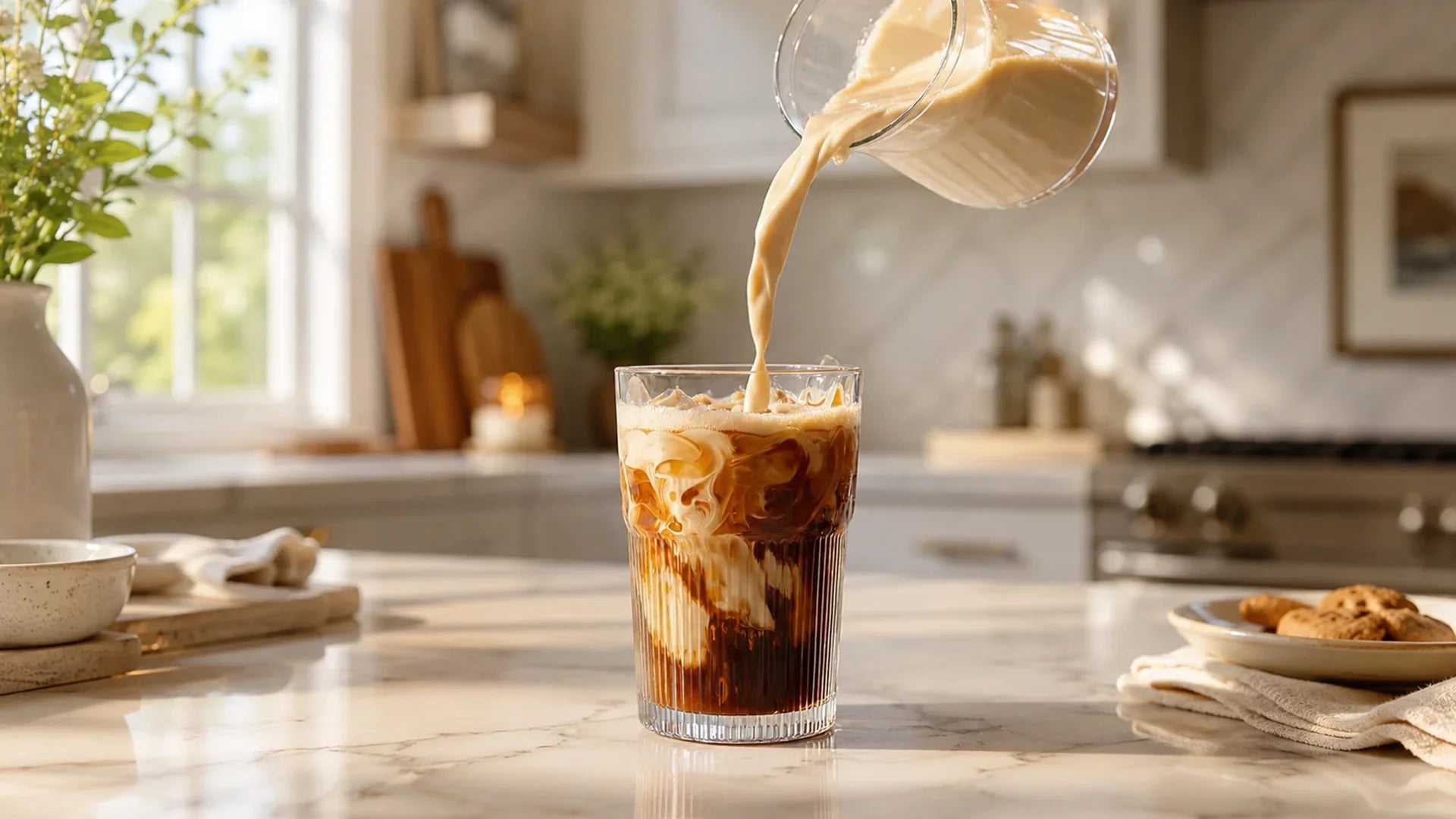
For iced lattes, cold foam floats on top and slowly mixes in as you drink. It adds creaminess and visual appeal without warming the drink the way steamed milk would. Bon Appetit covers the cold foam technique in depth if you want to dial in your ratios.
The Best Glass for an Iced Latte
The glass you use matters more than most people think. A good iced latte glass keeps the drink cold longer, shows off the layers of coffee and milk, and fits comfortably in your hand without sweating condensation everywhere. The Ovalware Latte Master Glass was designed specifically for this kind of drink.
It's hand-blown borosilicate glass with double-wall construction , the same insulation principle as a thermos, but in clear glass. The double wall keeps your drink cold and the outer surface stays completely dry. The wide mouth and tall, slightly tapered cylinder shape are sized for latte art and easy stirring. Whether you're pouring a simple iced latte or layering cold foam on top, the shape lets you see exactly what you're building.
For more on what makes a good iced coffee glass, see our best glass for iced coffee guide.
| Feature | Detail |
|---|---|
| Product | Ovalware Latte Master Glass |
| Price | $36.99 (Set of 2) |
| Size | 250ml / 8.5oz per glass |
| Material | Hand-blown borosilicate glass, double-wall |
| Colors | Clear Glass, Frost White, Stealth Gray |
| Best for | Lattes, cappuccinos, flat whites, matcha, iced drinks |
| Dishwasher safe | Yes |
| Free shipping | US orders over $65 |
FAQ
Can you make an iced latte with regular drip coffee?
You can, but regular-strength drip coffee is too dilute to taste like a latte once milk is added. If you use drip coffee, brew it at double strength , use 1.5-2x the amount of grounds with the same amount of water , and let it chill before adding milk. Otherwise the drink ends up watery and flat. A standard latte uses espresso, which is roughly 8-10x more concentrated than normal drip coffee.
What milk works best for a homemade iced latte?
Whole milk gives the richest, creamiest result and produces the best foam. 2% milk works nearly as well. Oat milk is the best plant-based option for iced lattes , it has a neutral flavor and foams reasonably well. Almond milk is thinner and tends to separate quickly, so it's best stirred in rather than layered. Serious Eats' guide to milk for coffee covers the full comparison.
How do I keep my iced latte from getting watered down?
Two strategies: start with strong enough coffee concentrate so the dilution from melting ice doesn't flatten the flavor, and use large ice cubes rather than crushed ice. Large cubes have less surface area and melt slower. Some people use coffee ice cubes , freeze leftover coffee in an ice cube tray , so the drink stays cold without getting diluted at all. Food Network recommends coffee ice cubes as a simple fix.
How much coffee do I need for one iced latte?
Aim for 60-90ml of strong concentrate per drink , roughly equivalent to a double espresso shot. For a moka pot, that's a full 2-cup brew. For AeroPress, use 17-19g of coffee with 60-80ml of water. For cold brew, pour about 3-4oz of finished cold brew over ice and top with milk. The milk-to-coffee ratio in a latte is typically 3:1 to 4:1, so a 250ml glass works well for a single serving.
Is cold brew the same as iced coffee?
No , they're made differently and taste different. Cold brew is steeped in cold water for 12-24 hours and never involves heat. Iced coffee is hot-brewed coffee that's chilled or poured over ice. Cold brew is smoother, less acidic, and naturally sweeter. Iced coffee has more brightness and acidity. Both work as iced latte bases, but cold brew tends to be more forgiving. See our full cold brew vs. iced coffee comparison for the detailed breakdown.