
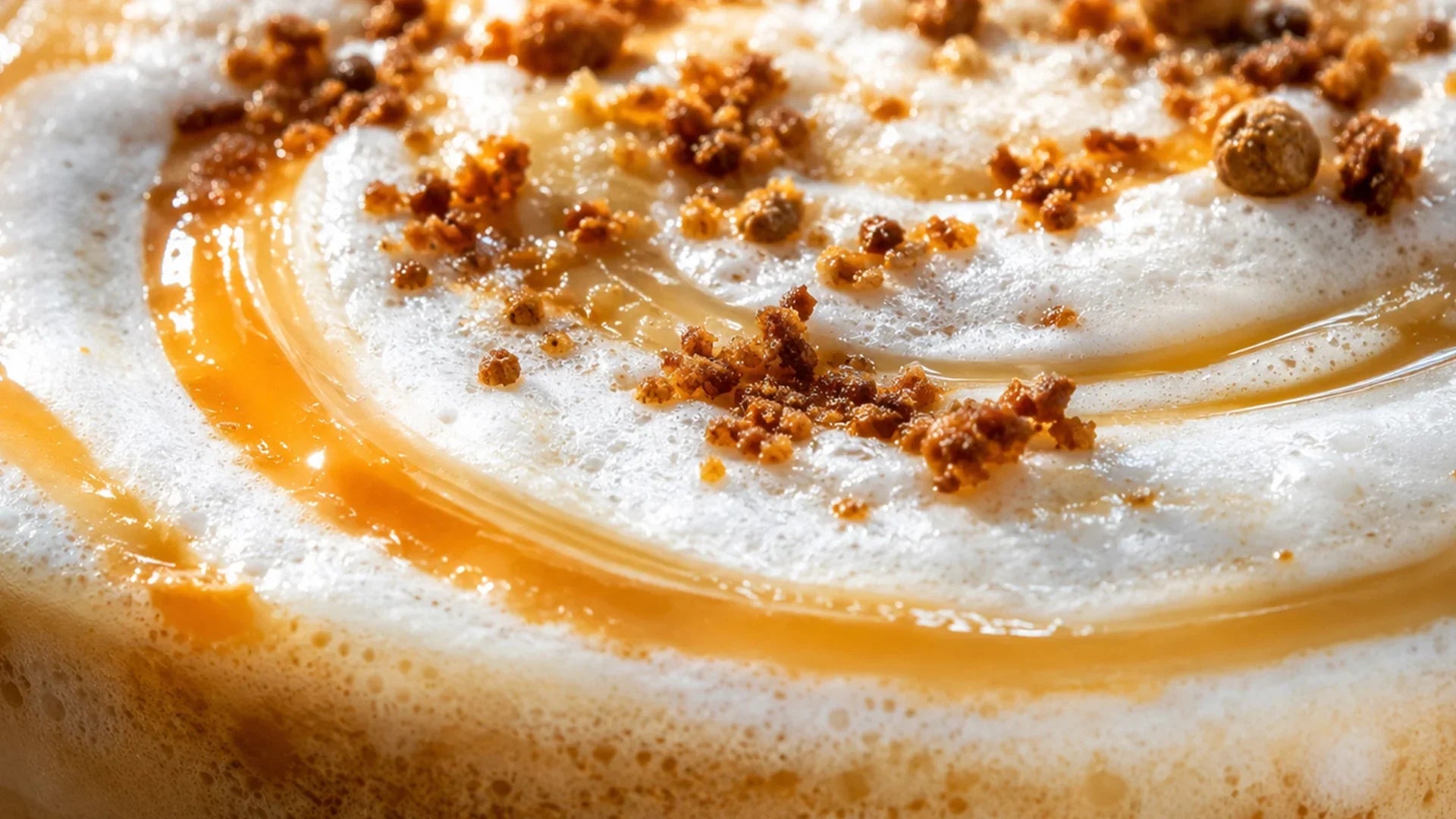
Miso Caramel Latte Recipe: The Viral Swavory Coffee Drink
A latte that tastes a little salty shouldn't work. But miso caramel lattes are everywhere right now , on café specials boards, in TikTok "trying viral drinks" videos, and even on Nespresso's official recipe page. The combination of fermented soybean paste and espresso sounds like a dare. It's actually one of the most balanced coffee drinks you can make at home, and the science behind why it works is more interesting than the drink itself.
This guide covers what a miso caramel latte actually is, why miso and coffee taste so good together, which type of miso to use, and the exact steps to make one in your own kitchen , hot or iced.
What Is a Miso Caramel Latte?
A miso caramel latte is an espresso drink made with steamed milk and a caramel sauce that's been infused with white or red miso paste, swapping out (or supplementing) standard caramel sweetness with a salty, fermented depth. It belongs to the "swavory" , sweet and savory , trend that's reshaping espresso bar menus in 2026, alongside other unconventional pairings like salted pistachio and tahini.
The drink itself is simple: a double shot of espresso, steamed milk, and 1-2 tablespoons of miso caramel sauce stirred through. What makes it taste complex is the chemistry, not the recipe.
Why Miso and Coffee Actually Work Together
Miso's savory depth comes from glutamate , the same amino acid responsible for umami, the "fifth taste" identified in 1908 by Kikunae Ikeda at what is now the University of Tokyo. Fermentation breaks down miso's soybean proteins into free glutamic acid through a process called proteolysis, which is why aged, darker miso tastes more intensely savory than fresh, pale miso , a relationship documented in peer-reviewed research on glutamate and umami taste published in The American Journal of Clinical Nutrition.
Espresso has its own glutamate-adjacent compounds from the roasting process, plus natural bitterness that pairs well with salt , the same reason a pinch of salt is a classic trick for cutting coffee bitterness. When you combine miso's umami and saltiness with caramel's sugar and espresso's roasted bitterness, you get a drink that hits sweet, salty, and bitter at once, which is part of why it reads as "complex" rather than just sweet. According to the Umami Information Center, umami compounds amplify the perception of other flavors around them rather than competing with them , which is exactly what's happening when miso caramel meets espresso.
This isn't a niche internet experiment, either. Miso caramel has an official Nespresso recipe page, and independent cafés have been posting their own miso caramel formulas as part of menu testing for upcoming seasons. It's landing at a moment when flavor is doing more work than ever to define what "specialty" coffee even means: according to a June 2026 analysis of the National Coffee Association's Specialty Coffee Report, 35% of specialty coffee drinkers say flavor is what makes a coffee "specialty" in the first place, with indulgent notes like caramel, chocolate, and brown sugar ranking highest. Miso caramel fits that exact profile while adding something genuinely new.
White Miso vs Red Miso: Which One for Your Latte?
Use white (shiro) miso for a milder, more balanced latte. Red miso works if you want a bolder, more pronounced savory edge , but start with less, since it's significantly saltier.
| Type | Fermentation Time | Flavor | Best For |
|---|---|---|---|
| White (shiro) miso | Shortest | Mild, sweet, floral | First-time miso lattes , easiest to balance |
| Yellow miso | Medium | Mild, earthy | A middle ground if you want more depth than white |
| Red miso | Longest | Bold, salty, deep umami | Experienced miso latte drinkers , use sparingly |
As a rule, the darker the miso, the longer it fermented and the stronger it tastes , The Kitchn's miso guide notes that color is a reliable shortcut for judging intensity before you even taste it.
How to Make a Miso Caramel Latte at Home
What you need:
- 1 double shot of espresso (about 2oz / 60ml) , or very strong moka pot coffee if you don't have an espresso machine
- 6oz (180ml) whole milk, steamed
- 1 cup cane sugar
- 1 cup heavy cream, room temperature
- 2 tablespoons white miso paste
- Pinch of sea salt (optional, if using white miso)
Step 1: Make the miso caramel. Dissolve the sugar in a small saucepan over medium-low heat, stirring until fully melted. Stop stirring once it boils and let it turn deep amber, about 5 minutes. Remove from heat and slowly whisk in the room-temperature cream , it will bubble vigorously, so add it gradually. Whisk in the miso paste until smooth. Cool and store in the fridge for up to 2 weeks.

Step 2: Pull your espresso. Brew a double shot directly into your serving cup.
Step 3: Add the miso caramel. Stir 1-2 tablespoons of miso caramel sauce into the hot espresso until fully dissolved.
Step 4: Steam and pour the milk. Steam whole milk to about 140°F (60°C) , hot enough for sweetness, cool enough to avoid scalding. Pour over the espresso-caramel base.
Step 5: Taste and adjust. Add a touch more miso caramel if you want more depth, or a small pinch of sea salt if you used a milder white miso and want more contrast.

Getting the Milk Texture Right
Steam whole milk to 140°F (60°C) for the sweetest, most stable result. Whole milk's 3-4% fat content produces the most stable microfoam, and stopping a few degrees before your target matters because residual heat carries the temperature up another 5-10°F after you shut off the steam.
The process has two phases, according to Vellutto's microfoam steaming guide. First, aeration: hold the steam wand tip just under the surface for 2-5 seconds to introduce air, aiming for about 30% volume increase. Second, texturing: submerge the tip and tilt the pitcher to create a vortex that breaks large bubbles into fine, glossy microfoam. Above roughly 160°F (71°C), milk proteins denature too far and the texture turns thin and eggy instead of silky , which is why pulling the wand early matters more than people expect.
Where This Trend Actually Came From
Miso caramel is one branch of a broader 2026 "swavory" movement remaking espresso bar menus, alongside salted pistachio and tahini. Industry coverage from Dalla Corte's 2026 coffee shop trends report names miso-caramel specifically as one of the flavors driving this shift, alongside spring onion lattes , though the two have landed very differently with drinkers.
The base technique , whisking miso into a standard caramel sauce , comes straight from pastry kitchens. Chopstick Chronicles' miso caramel recipe is one of the clearest examples of the method café accounts have adapted for coffee: dissolve sugar, caramelize, slowly whisk in warm cream off the heat, then stir in miso once the mixture has cooled slightly so the live cultures' aroma isn't cooked off.
Hot or Iced: Two Ways to Serve It
Hot, a miso caramel latte showcases the steamed milk's texture and the caramel's aroma. Iced, it's sharper and more refreshing , the cold mutes some sweetness, so you may want an extra half-tablespoon of miso caramel to compensate.
Either way, the layering effect , dark espresso-caramel base under steamed or cold milk , is part of what makes this drink shareable. The Ovalware Latte Master Glass is built for exactly this kind of drink: a tall, slightly tapered hand-blown borosilicate glass with double-wall construction, so you get the visual layering without the glass sweating. It comes as a set of 2, which is convenient, because once people taste this they will ask for a sip.
| Feature | Latte Master Glass |
|---|---|
| Capacity | 250ml / 8.5oz per glass |
| Material | Hand-blown borosilicate glass |
| Construction | Double-wall , no condensation, comfortable to hold hot or cold |
| Sold as | Set of 2 |
| Price | $36.99 |
| Free shipping | US orders $65+ |
If you like the idea of trying viral drinks at home, our ube latte recipe and espresso tonic recipe are both worth adding to the rotation.
How Much Caffeine Is in a Miso Caramel Latte?
A standard miso caramel latte made with a double shot contains roughly 125-130mg of caffeine , the same as any double-shot latte, since the miso caramel itself contributes no caffeine. The USDA FoodData Central database lists espresso at approximately 63mg of caffeine per fluid ounce, so a 2oz double shot lands around 126mg. That's comparable to a standard cappuccino and noticeably less than a large drip coffee.
Common Mistakes to Avoid
- Using too much miso caramel. Start with 1 tablespoon and add more to taste , it's much easier to add than to fix an over-salted cup.
- Boiling the cream into the caramel too fast. Add it slowly, off the heat, or the sugar will seize.
- Using dark red miso for your first attempt. It's intensely salty. White miso is far more forgiving while you're calibrating your taste.
- Oversteaming the milk. Above 160°F (71°C), milk proteins start to break down and the texture turns thin and eggy instead of silky.
Frequently Asked Questions About Miso Caramel Lattes
What does a miso caramel latte taste like?
Sweet, slightly salty, and savory in a way that's hard to place at first , most people describe it as caramel with a deep, almost umami backbone rather than tasting like miso soup. The espresso's bitterness ties the sweet and salty notes together.
Can I make a miso caramel latte without an espresso machine?
Yes. A moka pot or strong AeroPress shot (about 2oz) works in place of espresso. The intensity will be slightly different, but the miso caramel still balances it the same way.
Is miso caramel latte the same as the spring onion latte trend?
No. Both are part of the 2026 "swavory" coffee movement, but spring onion (scallion) lattes use raw allium flavor and have drawn mixed, often negative reactions online. Miso caramel is a cooked, sweetened application of umami and has a much more approachable, dessert-like flavor profile.
How long does miso caramel sauce last?
Up to 2 weeks refrigerated in an airtight container. The sugar and salt content both act as natural preservatives, so it holds well for make-ahead batches.
Which miso is best for beginners?
White (shiro) miso. It's the mildest, sweetest variety and the easiest to balance against caramel and espresso without overwhelming the drink.
The Bottom Line
Miso caramel lattes work because umami and sweetness aren't opposites , they amplify each other, the same way a pinch of salt makes caramel taste more caramel-y. Start with white miso, go easy on the first batch, and adjust from there.
If you're already building out your at-home latte setup, the Ovalware Latte Master Glass is designed for showing off drinks like this one. And if savory-sweet coffee has you curious, our tahini latte recipe and pistachio latte recipe are both part of the same flavor trend, with very different results.
New to steaming milk at home? Our guide to making the perfect latte at home covers the fundamentals this recipe builds on.