Vietnamese Iced Coffee at Home: How to Make Cà Phê Sữa Đá
Cà phê sữa đá has arrived. You're seeing it on menus at specialty cafes, neighborhood boba spots, and Vietnamese restaurants across the country. It's rich, sweet, intensely caffeinated, and served over ice. And it's one of the most satisfying coffee drinks you can make at home once you know how the recipe actually works.
This guide covers the traditional method, a cold brew adaptation using the Ovalware Cold Brew Maker, and everything you need to make the best version at home whether or not you own a phin filter.
What Is Cà Phê Sữa Đá?
Quick answer: Cà phê sữa đá (pronounced "ca feh sua da") is Vietnamese iced coffee made by brewing very strong coffee through a phin filter, mixing it with sweetened condensed milk, and pouring it over ice. "Sữa" means milk, "đá" means ice. The result is bold, sweet, slightly smoky, and completely different from a typical American iced coffee.
The drink traces its roots to French colonialism in Vietnam, when the French introduced coffee cultivation in the late 1800s. Because fresh dairy was scarce and expensive, Vietnamese coffee drinkers adapted by using sweetened condensed milk, which was shelf-stable and easier to transport. The phin filter, a small metal drip brewer, became the standard tool because it was cheap, portable, and produced an extremely strong brew that could stand up to the milk and ice.
Today, Vietnamese coffee is a global phenomenon. You'll find it at specialty cafes alongside single-origin pour overs, and it's influenced a whole generation of Vietnamese American and diaspora-led coffee shops that are reshaping how Americans think about coffee culture.
The Two Ingredients That Matter Most
Quick answer: Strong coffee and sweetened condensed milk. The coffee is the backbone. The condensed milk provides both sweetness and creaminess in one ingredient. Get these two right and the rest is just ice.
The Coffee
Traditional Vietnamese coffee uses a dark roast blend, often with robusta beans mixed in. Robusta has about twice the caffeine of arabica and a more bitter, earthy flavor profile that holds up to condensed milk beautifully. Popular brands include Trung Nguyen and Cafe Du Monde (the latter adds chicory for a rounded, slightly bitter edge).
If you're using an Ovalware Cold Brew Maker for the cold brew version, a dark roast arabica or a dark roast blend with robusta works well. The cold extraction process pulls bold, smooth flavor from dark roasts without the sharpness you sometimes get from hot brewing. Check out our guide to the best coffee beans for cold brew for specific roast recommendations.
Sweetened Condensed Milk
Don't substitute regular milk or cream here. Sweetened condensed milk is thick, sweet, and shelf-stable. It provides a distinctive caramel-adjacent richness that is specific to this drink. You can find it in any grocery store, usually labeled as "sweetened condensed milk" in cans. Eagle Brand and Longevity are both widely available.
A standard starting ratio is 2 to 3 tablespoons per glass. Start with 2 and adjust from there. Some people like it sweeter, some less so.
Traditional Method: Using a Phin Filter
Quick answer: Place the phin filter on your glass, add 2-3 tablespoons of condensed milk to the bottom, brew the coffee through the phin directly into the glass, stir, pour over ice.
- Add 2 to 3 tablespoons of sweetened condensed milk to the bottom of a glass.
- Set the phin filter on top of the glass.
- Add 2 tablespoons (about 25g) of ground Vietnamese coffee to the phin chamber.
- Place the press insert on top of the grounds, pressing gently.
- Pour 2 to 3 tablespoons of hot water over the press insert to pre-wet the grounds. Wait 30 seconds.
- Fill the phin chamber with hot water (about 120ml / 4oz), near boiling.
- Cover with the phin lid and let the coffee drip through. This takes 4 to 6 minutes.
- Remove the phin. Stir the coffee and condensed milk together vigorously.
- Pour the whole drink over a glass filled with ice.
- Stir once more and drink immediately.
The result is rich, sweet, and intensely caffeinated. The slow drip produces a very strong brew compared to drip or pour over.
Cold Brew Adaptation: Using the Ovalware Cold Brew Maker
Quick answer: Brew cold brew at the standard 1:12 ratio using a dark roast, then mix 120ml (4oz) of cold brew with 2 to 3 tablespoons of condensed milk over ice. The cold brew version is smoother and less bitter than the phin method but equally satisfying.
Cold brew has become a popular base for Vietnamese iced coffee adaptations because it's smooth, bold, and ready straight from the fridge. You brew a batch once and have it on hand for several days. If you want cà phê sữa đá without the 5-minute phin ritual every morning, cold brew is the answer.
Cold-extracted coffee is naturally less acidic than hot-brewed coffee at equivalent strength, which makes the cold brew version gentler on the palate and especially appealing to anyone who finds traditional phin coffee a bit sharp.
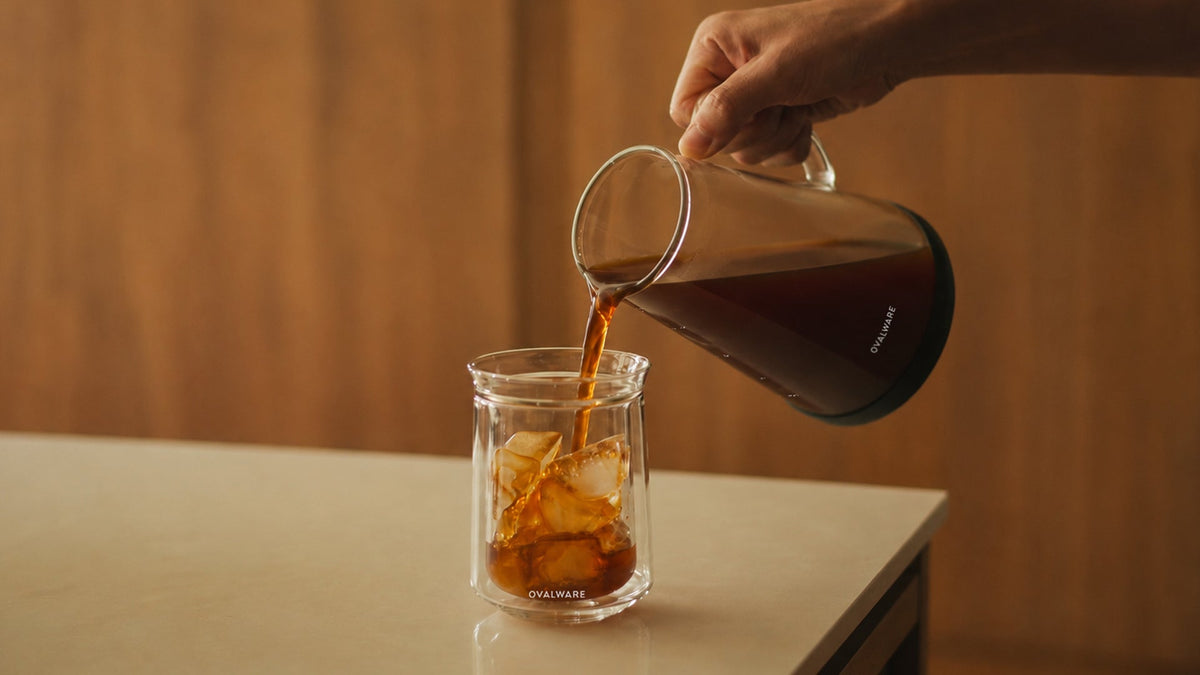
The Ovalware Cold Brew Maker brews ready-to-drink cold brew in 12 to 18 hours in the fridge. The borosilicate glass carafe doubles as a serving vessel, so your cold brew stays cold and fresh until you're ready to pour.
Cold Brew Vietnamese Iced Coffee Recipe
Brew the cold brew base:
- 1.0L maker: use 85g (3oz) of coarsely ground dark roast coffee and fill to the 1L line with cold filtered water (1:12 ratio)
- Steep 12 to 18 hours in the fridge with the lid sealed
- Remove the filter and store the cold brew in the same carafe for up to 2 weeks
Build each drink:
- Add 2 to 3 tablespoons of sweetened condensed milk to the bottom of a glass
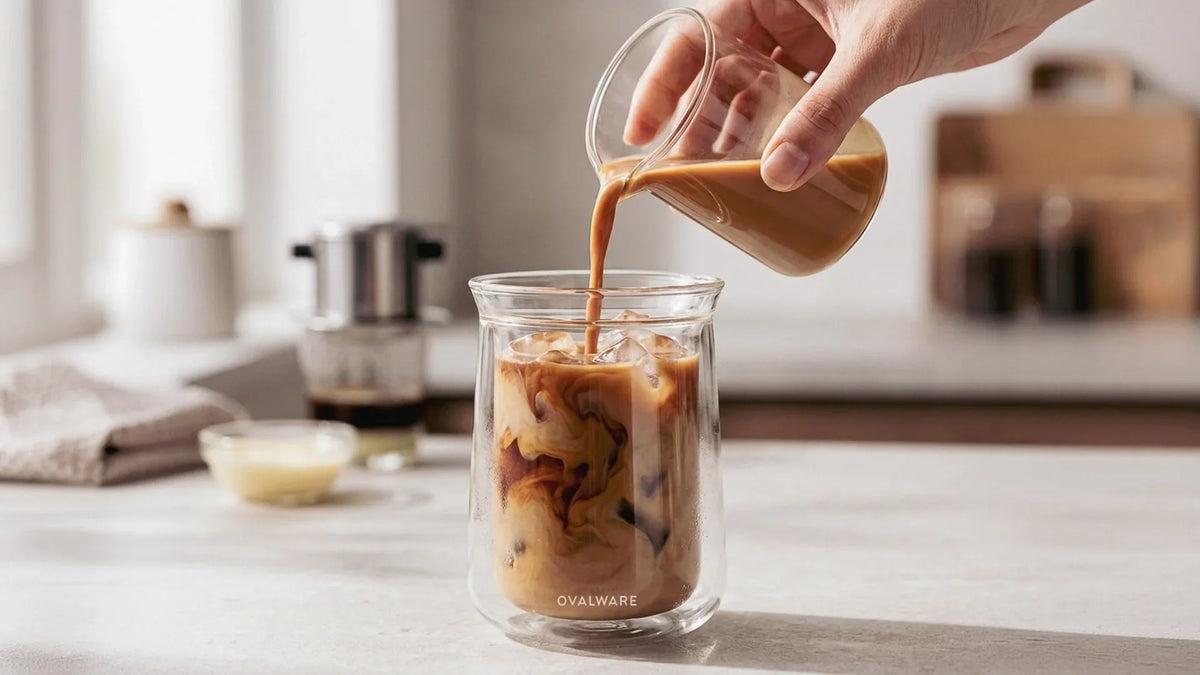
- Pour in 120ml (4oz) of cold brew
- Stir until the condensed milk dissolves completely
- Add a generous scoop of ice
- Taste and add more condensed milk if you want it sweeter
The cold brew version is notably different from the phin version in texture and flavor. Cold brew is smoother and naturally sweeter because cold extraction produces fewer acidic compounds than hot brewing does at equivalent strength. For people who find phin coffee a bit intense or bitter, the cold brew adaptation is more approachable while still being deeply satisfying.
To learn more about how long your cold brew stays fresh and how to store it, see our guide on how long cold brew lasts in the fridge.
Vietnamese Iced Coffee Variations to Try
Quick answer: Once you have the base ratio down, you can swap condensed milk for coconut condensed milk (vegan, slightly tropical), add a pinch of cardamom, or use fresh milk with simple syrup for a lighter version. The base is very adaptable.
Cà Phê Sữa Tươi (Fresh Milk Version)
Some modern cafes use fresh steamed milk instead of condensed milk plus a separate sweetener. This makes a lighter version. Use 60ml of strong coffee, 30ml of whole milk or oat milk, and 1 to 2 teaspoons of simple syrup over ice.
Coconut Condensed Milk
A great vegan swap. Coconut condensed milk has a subtle coconut note that pairs beautifully with dark roast coffee. The texture is nearly identical to dairy condensed milk.
Pandan Variation
Pandan is a Southeast Asian leaf with a sweet, grassy, vanilla-adjacent aroma. Add 1 tablespoon of pandan syrup to your glass before adding the coffee and condensed milk.
How to Serve Cà Phê Sữa Đá
A tall, clear glass shows off the layering of condensed milk, coffee, and ice before you stir. The Ovalware Double Wall Tasting Glass (350ml) keeps the drink cold without condensation on the outside, which matters if you're drinking it slowly. The double-wall construction keeps your hand dry and the drink cold for longer than a standard glass.
Serve it with a long straw or spoon. The ritual of watching the layers settle before stirring is part of the experience.
The Ovalware Cold Brew Maker
| Feature | Details |
|---|---|
| Sizes | 1.0L ($40.99) and 1.5L ($46.99) |
| Carafe material | Borosilicate glass |
| Filter | Fine-mesh stainless steel |
| Steep time | 12-18 hours (fridge) |
| Dishwasher safe | Yes |
The Ovalware Cold Brew Maker brews ready-to-drink cold brew. No dilution required. Free shipping on US orders $65 and over.
Frequently Asked Questions
What is cà phê sữa đá?
Cà phê sữa đá is Vietnamese iced coffee made with strong drip coffee (traditionally brewed through a phin filter), sweetened condensed milk, and ice. "Sữa" means milk and "đá" means ice in Vietnamese. The drink is known for its bold, sweet, intensely caffeinated character.
Can I make Vietnamese iced coffee without a phin filter?
Yes. A cold brew maker is a popular alternative. Brew cold brew at a 1:12 ratio using a dark roast, then mix 120ml of cold brew with 2 to 3 tablespoons of sweetened condensed milk over ice. The result is smoother and less bitter than the traditional phin version.
What kind of coffee beans should I use for Vietnamese iced coffee?
Traditional Vietnamese coffee uses a dark roast blend that often includes robusta beans, which are higher in caffeine and have a bolder, earthier flavor. Trung Nguyen and Cafe Du Monde (with chicory) are popular choices. For a cold brew version, any dark roast arabica or arabica-robusta blend works well.
How sweet should Vietnamese iced coffee be?
A standard starting point is 2 tablespoons of sweetened condensed milk per 120ml of coffee. That gives you noticeable sweetness that balances the bold coffee flavor. Traditional preparations in Vietnam tend toward the sweeter side, but modern cafes often offer lighter versions.
Is cold brew Vietnamese iced coffee authentic?
Cold brew is not the traditional preparation, which uses a phin filter and hot water. But cold brew adaptations are widely made and very popular, especially among Vietnamese American coffee drinkers and at specialty cafes. Think of it as a modern interpretation: different extraction method, same spirit.