How to Make Coffee Less Acidic: 7 Fixes That Actually Work
Your stomach isn't imagining it. For a real share of coffee drinkers, that first cup triggers heartburn, an uneasy stomach, or a sour aftertaste that lingers for hours, and it isn't just the caffeine talking.
Coffee is naturally acidic, sitting at a pH of about 4.85 to 5.13, according to the National Coffee Association. That's mild, but it's enough to bother a sensitive stomach or trigger reflux in people prone to it. The good news: acidity isn't fixed. How you roast, brew, and serve coffee changes how much acid ends up in your cup.
This guide covers seven real, research-backed ways to make coffee less acidic, from switching your brew method to picking the right beans. One fix, cold brewing, makes the biggest difference, and we'll show you why the numbers back it up, plus six other honest options if cold brew isn't for you.
Why Coffee Feels Acidic in the First Place
Coffee feels acidic because of naturally occurring compounds called chlorogenic acids, along with smaller amounts of quinic, citric, and malic acid, that survive roasting and brewing. Brewed coffee measures between pH 4.85 and 5.13, according to the National Coffee Association, mildly acidic, and roughly 100 times less acidic than lemon juice at pH 2. To count as "acidic" in food science terms, something generally needs a pH of 4.6 or lower, which means coffee sits just outside that line.
What varies from cup to cup isn't just pH. It's total titratable acidity: the full concentration of acid compounds that hit your taste buds and, for some people, irritate the stomach lining. Two coffees can share a nearly identical pH and still feel very different in your gut.
Roasting plays a big role here. Chlorogenic acid content drops as roast level increases, and research on roasting conditions and coffee acidity confirms this correlates directly with how acidic a brew turns out. The industry generally classifies coffee as "low acid" once it measures above pH 5.5, or contains at least 50% less acid than a standard cup.
How to Make Coffee Less Acidic: 7 Fixes That Actually Work
The fastest way to make coffee less acidic is to change how you brew it, not necessarily what beans you buy. Cold brewing cuts total titratable acidity by roughly a third compared to hot-brewing the same beans, according to a 2018 study in Scientific Reports, while switching to a dark roast can measurably reduce stomach acid stimulation in the same sitting. Below are seven fixes, ranked roughly by impact, backed by real research instead of coffee-shop folklore.
1. Switch to Cold Brew
Cold brew is the single biggest acidity fix available, because slow, cold extraction pulls far less total acid out of the grounds than hot water does in minutes. A peer-reviewed study published in Scientific Reports in 2018 found that while cold and hot brew samples shared a similar pH range (4.85 to 5.13), hot brew carried roughly a third more total titratable acid from the same beans. Many coffee brands and publications cite cold brew as 60-70% less acidic than hot coffee overall, a figure that reflects this titratable acidity gap rather than a dramatic pH shift.
The mechanism is simple. Heat extracts acid compounds fast and aggressively, while cold water steeping for hours is slower and more selective, it leaves more harsh acid compounds behind in the grounds instead of in your cup. That's part of why cold brew tastes smoother and sweeter than hot coffee made from identical beans.
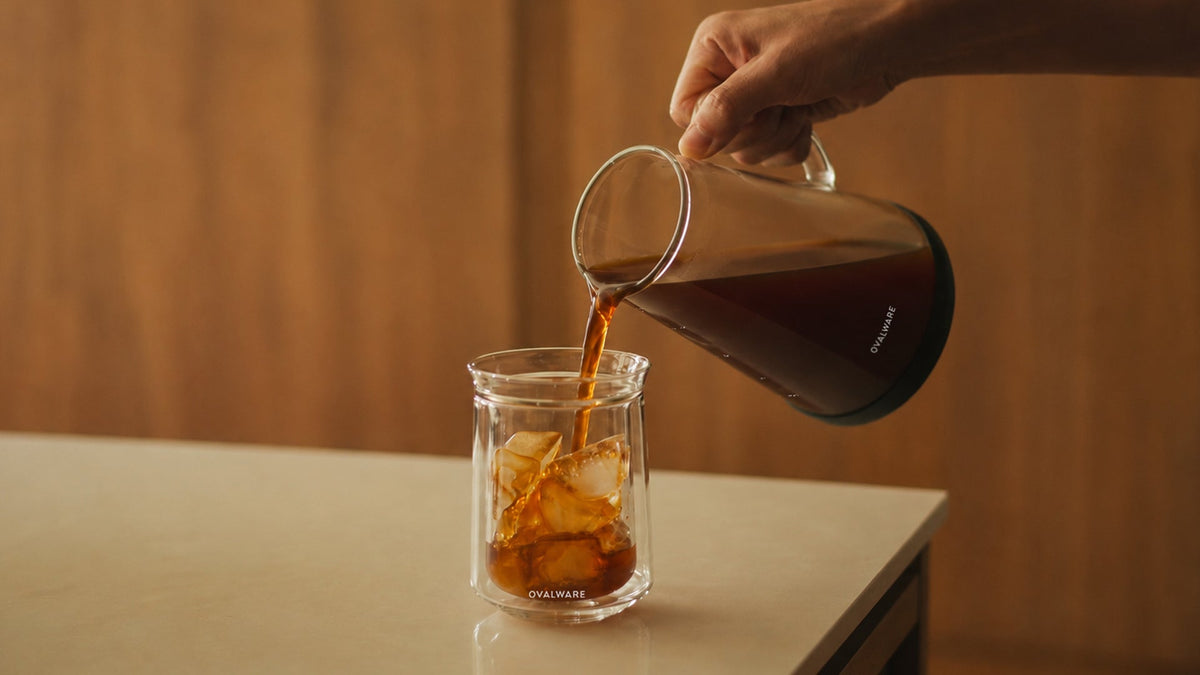
This is where the Ovalware Cold Brew Maker comes in. It's built for ready-to-drink cold brew, not concentrate, so there's no diluting before you drink it. For the 1.0L size, use about 85g (3oz) of coarse-ground coffee per liter of water, roughly a 1:12 ratio. For the 1.5L size, use about 110g (4oz) per 1.5 liters, roughly 1:14. That's different from the strong 1:4 to 1:8 concentrate ratios you'll see for some other cold brew methods that require dilution, the Ovalware system is designed to skip that step entirely.
Steep in the fridge for 12 to 18 hours, or 8 to 12 hours at room temperature, then pull the stainless steel filter and pour. Our steep time guide covers how to dial in the exact hours for your taste. Serve it over ice in the Ovalware Double Wall Tasting Glass, whose wide bowl shows off color and aroma without sweating in your hand.
2. Choose a Darker Roast
Dark roast coffee isn't just a flavor preference, it may genuinely be gentler on your stomach. A 2014 study in Molecular Nutrition & Food Research measured a compound called N-methylpyridinium (NMP), which forms during roasting and appears to suppress gastric acid production. Researchers found a dark brown roast blend contained 87mg/L of NMP compared to just 29mg/L in a medium roast blend, and it stimulated less gastric acid in nine healthy volunteers despite similar caffeine levels.
At the same time, chlorogenic acid content drops as beans roast longer, with light roasts retaining roughly 50% more chlorogenic acid than dark roasts from the same batch, and less chlorogenic acid generally means less perceived acidity. If you're not ready to switch brew methods, moving to a dark roast is a zero-effort swap worth trying first.
3. Pick Naturally Low-Acid Beans
Bean origin matters as much as roast level. Coffees from Sumatra, Brazil, and other low-elevation regions tend to develop naturally lower chlorogenic acid content than high-grown beans from Kenya or Ethiopia, which are prized for bright, acidic profiles. Processing matters too, naturally processed (dry-processed) beans generally produce a softer, less acidic cup than washed beans from the same farm.
If you want to stay in the light-to-medium roast range, choosing an origin known for a smoother, low-acid profile is a real fix, not a marketing trick. Check the bag for notes like "low acid," "smooth," or "chocolatey" rather than "bright" or "citrusy", those descriptors usually track with acid content. Our guide to choosing beans for cold brew covers origin and roast selection in more depth.
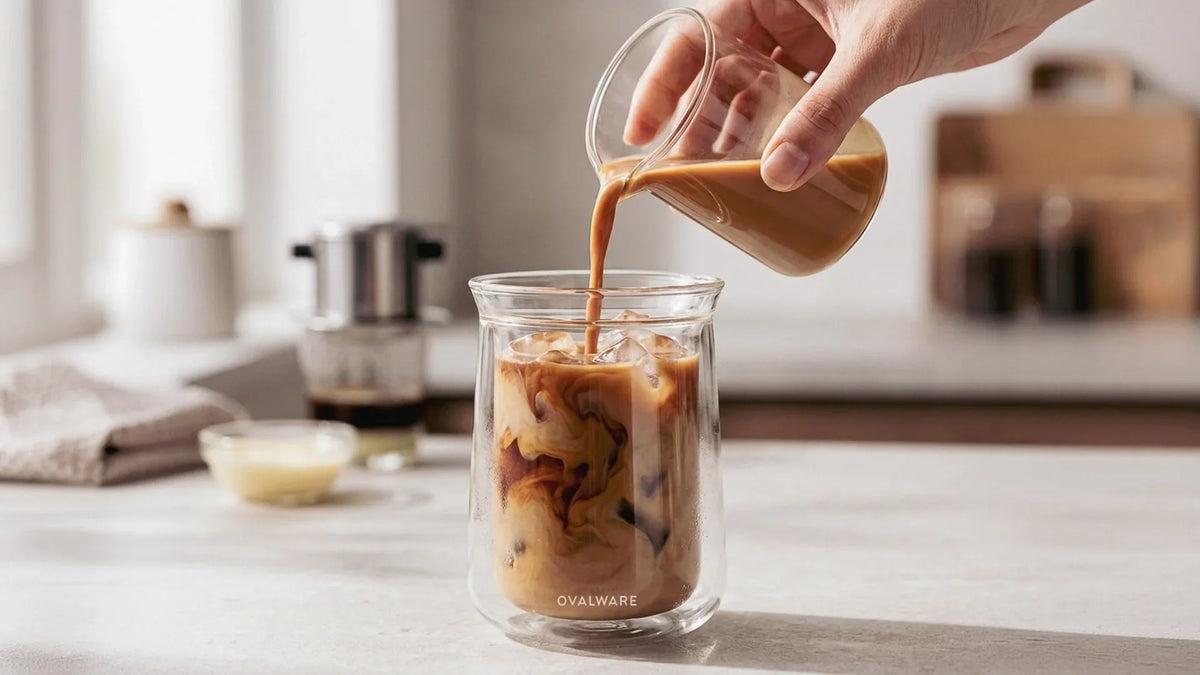
4. Add a Splash of Milk
Milk does more than cool your coffee down. Casein and whey, the two main proteins in milk, bind non-covalently to chlorogenic acid and other coffee polyphenols, a mechanism confirmed in 2024 peer-reviewed food science research on protein-polyphenol interactions. That binding reduces both astringency and the free acid available to hit your stomach lining, part of why milky coffee often sits easier than black coffee.
Any milk works, including plant-based options with enough protein, oat and soy bind more than almond, which is lower in protein. This fix costs nothing and takes no time, but it won't fully neutralize a genuinely acidic brew. Think of it as a complement, not a replacement.
5. Try Decaf or Half-Caf
Caffeine isn't the only thing in coffee that affects your stomach, but it plays a documented role. A classic study on lower esophageal sphincter (LES) pressure found coffee reduced LES pressure at both a low pH (4.5) and a neutral pH (7.0), with a larger effect at the lower, more acidic pH. A weaker LES makes it easier for stomach acid to travel back up the esophagus, the mechanical basis of heartburn.
Decaffeination removes about 97% of the caffeine in coffee beans, according to the National Coffee Association. Research on decaf's stomach effects is mixed, some studies find it still lowers LES pressure somewhat, others find little difference from regular coffee, so it may help some people and not others. It's worth testing for a week if caffeine, not just acidity, is part of your issue. Combining decaf with cold brewing is a reasonable next step; see our decaf cold brew guide for exact ratios.
6. Dial In Your Water
Water makes up more than 98% of your cup, and its mineral content changes how much acidity ends up in the brew. The Specialty Coffee Association's water standard recommends total hardness between 50 and 175 parts per million, with carbonate hardness between 40 and 75 ppm, bicarbonate acts as a natural buffer that softens perceived acidity.
If your tap water is very soft or heavily filtered with reverse osmosis, your coffee may taste sharper than the same beans brewed with mineral-balanced water. Bottled spring water or a basic pitcher filter that leaves minerals intact is usually enough to notice a difference. This fix is subtle, but it's nearly free and stacks with everything else on this list.
7. Adjust Your Brew Method and Grind
Beyond hot versus cold, the mechanics of your brew method affect acid extraction. Longer contact time between water and grounds, combined with a fine grind, pulls more total acid into the cup regardless of temperature. A coarser grind and a shorter, controlled brew, a properly timed pour-over instead of a long French press steep, generally extracts less total acidity.
Ratio matters too. An overly strong ratio over-extracts acidic and bitter compounds alike, while a balanced ratio pulls sweetness and body without dragging along excess acid. Our coffee-to-water ratio guide and grind size guide cover how to dial in these variables.
Which Fix Should You Try First? A Quick Comparison
Not every fix requires the same effort, and not every fix works the same way. Here's how the seven stack up against each other.
| Fix | Effort | Best For | Why It Works |
|---|---|---|---|
| Cold brew | Low (mostly hands-off) | Anyone with a sensitive stomach who still wants full-flavor coffee | ~30% less titratable acid than hot brew from the same beans |
| Dark roast | None, just buy dark roast | Hot coffee drinkers who don't want to change brew method | Higher N-methylpyridinium, lower chlorogenic acid |
| Low-acid bean origin | None, just buy the right beans | Light-roast lovers who don't want dark roast or cold brew | Naturally lower chlorogenic acid content |
| Add milk | None, just pour | Anyone who already drinks coffee with milk | Casein and whey bind acidic polyphenols |
| Decaf or half-caf | Low | People whose symptoms may be caffeine-linked, not just acid-linked | Removes ~97% of caffeine, which affects LES pressure |
| Dial in water | Medium, buy filtered or spring water | Home brewers making drip or pour-over | Bicarbonate minerals buffer acidity |
| Adjust method and grind | Medium, technique change | Anyone brewing hot who wants gentler extraction | Shorter contact time and coarser grind reduce over-extraction |
When Coffee Acidity Might Be More Than a Preference
Occasional discomfort after coffee is common and usually manageable with the fixes above. Coffee-related stomach symptoms are common enough to be a real research topic, not a fringe complaint. According to About GERD, one out of five adults in the US experiences heartburn or acid regurgitation weekly, regardless of diet.
The research on coffee specifically is more measured than headlines suggest. A 2025 systematic review and meta-analysis covering 39 studies and more than 121,000 patients, published in Clinical and Translational Gastroenterology, found coffee intake is associated with a small, statistically significant increase in GERD risk, real, but modest, and it doesn't mean everyone who drinks coffee will develop reflux.
There's also encouraging evidence that brewing changes help people who already have symptoms. A randomized pilot study of 40 people with GERD, published in Nutrients in 2022, found that switching to a specially processed low-wax coffee reduced symptom frequency and increased heartburn-free days, without eliminating coffee from the diet.
None of this makes coffee a treatment for reflux, and none of the fixes in this guide are a substitute for medical care. If you experience heartburn, regurgitation, or stomach pain regularly, with or without coffee, talk to a doctor. Persistent symptoms deserve a real diagnosis, not just a brewing adjustment.
Frequently Asked Questions
Is coffee bad for your stomach?
Coffee is mildly acidic, with a pH between 4.85 and 5.13, and it can bother a sensitive stomach or contribute to reflux symptoms in some people. For most healthy adults, moderate coffee intake doesn't cause lasting stomach problems. If you regularly experience discomfort, the fixes in this guide, especially cold brewing, can meaningfully reduce the acid load in each cup.
Does dark roast coffee have less acid than light roast?
Dark roast coffee generally has lower chlorogenic acid content than light roast, since roasting breaks these compounds down over time. Research also shows dark roast coffee contains more N-methylpyridinium, a compound linked to reduced stomach acid stimulation. The pH doesn't change dramatically, but the perceived and physiological acidity often does.
Is cold brew coffee less acidic than hot coffee?
Yes. A 2018 study in Scientific Reports found cold brew carries roughly a third less total titratable acid than hot brew made from the same beans, even though pH stays in a similar range. Many brands cite figures as high as 60-70% less acidic, which reflects this same titratable acidity difference rather than a dramatic pH shift.
Does adding milk to coffee reduce acidity?
Yes, to a degree. Casein and whey proteins in milk bind to chlorogenic acid and other coffee polyphenols, which reduces both astringency and the amount of free acid available to affect your stomach. It's a real, research-backed effect, but a smaller one than switching brew method or roast level.
Can decaf coffee still cause acid reflux?
It can for some people, though the evidence is mixed. Older research found that coffee reduces lower esophageal sphincter pressure at multiple pH levels, and some studies suggest this effect isn't purely caffeine-driven. Decaf removes about 97% of caffeine, which helps many people, but it isn't a guaranteed fix for everyone with reflux symptoms.
The Bottom Line
Coffee doesn't have to be off the table just because your stomach is sensitive. Roast level, bean origin, water, brew method, and what you add to your cup all genuinely change how much acid ends up in it, and cold brewing changes it the most, with real numbers behind the claim.
If your stomach has been telling you to cut back, try switching your brew method before you cut coffee out entirely. The Ovalware Cold Brew Maker makes the switch simple: load the grounds, fill with cold water, steep overnight, and pour straight from the carafe into a Double Wall Tasting Glass. No dilution, no extra steps, and a genuinely gentler cup waiting for you in the morning.