How to Store Coffee Beans to Keep Them Fresh
You just opened a fresh bag of coffee and the first cup was incredible. Ten days later, same beans, same grinder, same everything, and it tastes flat. A little dull. Almost cardboard-y. What happened?
Coffee beans do not rot the way milk or bread do. There is no mold, no sudden expiration cliff. Instead, they go through a slow chemical decline called staling, and it starts the moment the roaster finishes the batch. Oxygen, light, heat, and moisture each chip away at the aromatic compounds that make coffee taste like coffee.
The good news: staling is slow enough to control. Store your beans right and you can stretch peak flavor for weeks instead of days.
This guide covers exactly how to store coffee beans to keep them fresh: what goes stale first, the best containers and methods, whether whole bean or ground lasts longer, and the truth about freezing your beans. We will also cover how long beans actually stay fresh, backed by real research instead of kitchen folklore.
What Makes Coffee Beans Go Stale
Coffee beans go stale from four things: oxygen, heat, light, and moisture. Oxygen reacts with the oils and aromatic compounds that create flavor, breaking them down into flatter, duller molecules. Heat speeds up that same chemical reaction. Light, especially UV light, degrades the compounds even faster. Moisture softens the bean and accelerates oxidation from the inside out.

None of this happens overnight. Staling is a slow drift, not a sudden crash, but it never stops once beans are roasted. The National Coffee Association names these same four factors, air, moisture, heat, and light, as the core threats to freshness. Its advice is simple: limit exposure to all four and your beans hold their flavor much longer. Every minute a bag sits open on the counter, a little more oxygen gets in. Every degree of extra warmth in the cabinet above the stove speeds the clock.
Oxygen Is the Main Culprit
Oxygen is considered the single biggest driver of staling. According to packaging research summarized by MTPak Coffee, each 1% increase in oxygen exposure speeds up flavor degradation by roughly 10%. That is why airtight storage matters so much more than people think.
Heat Speeds Up the Clock
Warm cabinets near the oven, stovetop, or dishwasher push beans through their flavor window faster. The National Coffee Association specifically recommends avoiding those spots for exactly this reason.
Light Breaks Down Oils and Aromatics
Coffee oils and aromatic compounds are light-sensitive. A clear glass jar on a sunny counter looks nice, but it is quietly cooking away flavor with every hour of light exposure. Storage guides from sources like Sweet Maria's Coffee Library consistently point to opaque containers as the fix.
Moisture Is the Quiet Threat
Moisture softens beans and speeds up oxidation from within. It is also the main reason the fridge is a bad idea for coffee storage, a point we will come back to shortly.
What Goes Stale First: Aromatics, Oils, or Bulk
Aromatics go first, oils go second, and bulk flavor lasts longest. The volatile compounds that create coffee's fragrance are the most fragile part of the bean, and they start evaporating within days of roasting. Oils oxidize next, over several weeks, eventually turning rancid if beans sit too long. The base body and bulk flavor of the coffee are the most stable and the last to fade.
This is why a coffee can smell like "coffee" but taste noticeably flatter than it did a week ago. Your nose is picking up the loss before your tongue fully catches up. Research on coffee volatiles shows that the most fragile aromatic compounds break down first during oxidation, while heavier oil-based compounds degrade on a slower timeline. That staggered breakdown is exactly why fresh-roasted coffee smells so much brighter than a bag that has been open for a month.
| Rank | What Fades | Typical Timeframe | Why It Happens |
|---|---|---|---|
| 1 | Aromatics (fragrance) | Days 1 to 14 after roast | Volatile compounds evaporate fastest once exposed to air |
| 2 | Oils and flavor compounds | Weeks 2 to 6 | Oxidize gradually, can turn rancid if beans sit too long |
| 3 | Body and bulk flavor | Months | Most stable, breaks down last |
The Best Way to Store Coffee Beans
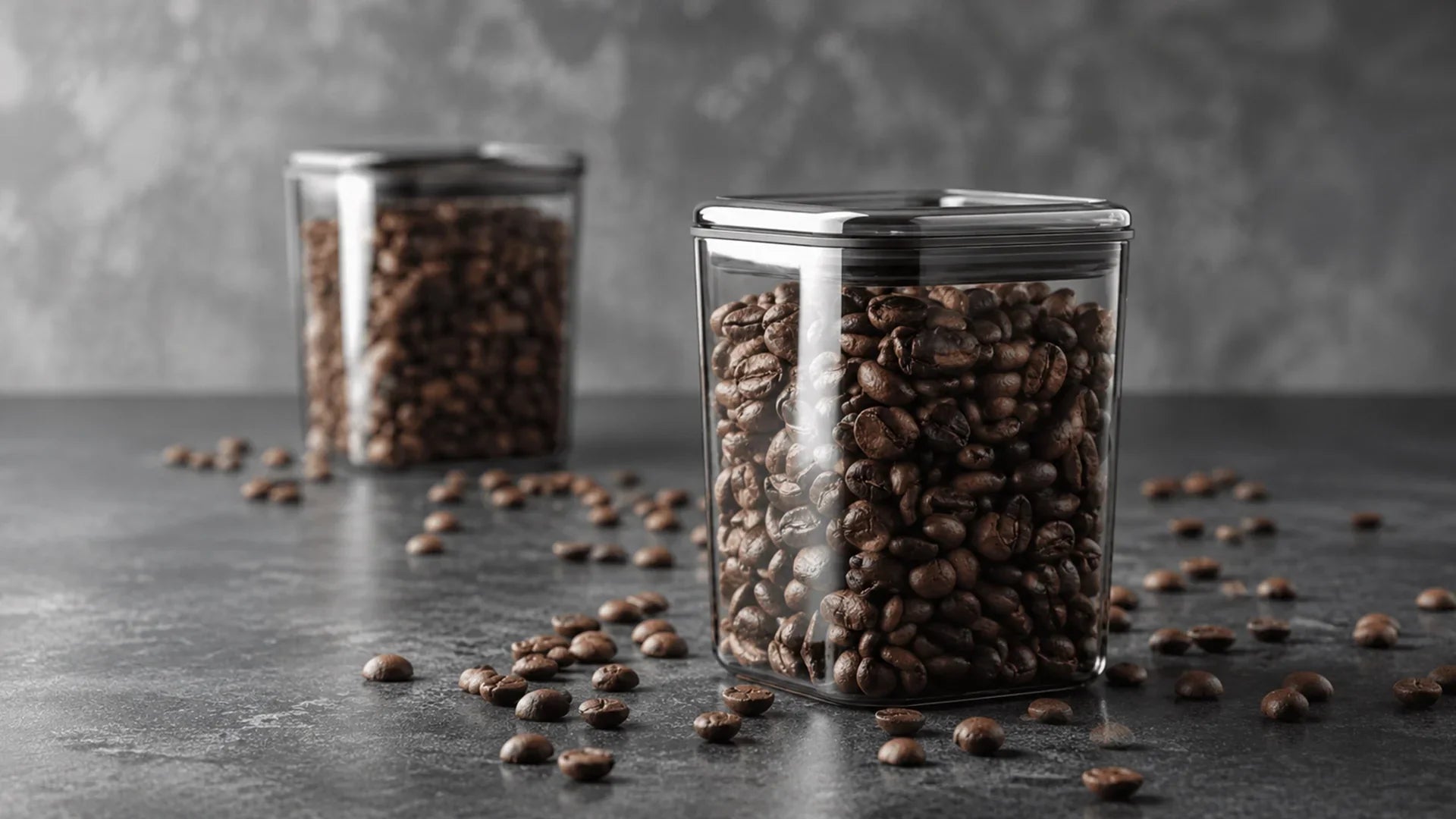
Store coffee beans in an opaque, airtight container, kept in a cool, dark cabinet away from the stove. Skip clear jars and skip the fridge. Buy only what you will use in one to two weeks so you are always working from a fresher bag. This one habit, matching your purchase size to your actual drinking pace, does more for flavor than any container upgrade.
The National Coffee Association's guidance is direct: transfer beans out of a bag that has already been opened and repeatedly exposed to air, into a sealed, opaque container, and keep that container somewhere cool and dark. A pantry shelf or a closed cabinet away from heat sources works well. A shelf right above the stove does not.
If you want to keep beans in their original bag, look for one with a one-way degassing valve. According to Barista Magazine, a sealed bag of freshly roasted coffee without any outlet for gas can actually burst within five to seven days from built-up carbon dioxide. Valves let that gas escape while blocking oxygen from getting in, which is why most bags of coffee you buy have one.

| Storage Method | How Well It Works | Best For |
|---|---|---|
| Original bag, valve intact, clipped tight | Good short term | First 1 to 2 weeks after purchase |
| Opaque, airtight canister | Best all-around option | Daily countertop or pantry use |
| Clear glass or mason jar | Poor unless kept in a dark cabinet | Only as a backup, never in direct light |
| Refrigerator | Not recommended | Avoid, moisture and odor absorption risk |
| Freezer, airtight and portioned | Very good for long-term storage | Bulk buys or more than a month's supply |
Whole Bean vs Ground: Why Grinding Speeds Up Staling
Whole beans stay fresh far longer than ground coffee because grinding exposes far more surface area to oxygen. A whole bean has a mostly sealed exterior. Grind that same bean and you shatter it into thousands of smaller pieces, each one now open to the air. Oxidation, the same process that turns a sliced apple brown, moves dramatically faster on ground coffee than on whole beans.
This is exactly why coffee professionals grind right before brewing instead of ahead of time. It is also why a brew method like pour over shows staleness so clearly. Because pour over uses a medium-fine grind and a clean, light body, any flatness in the beans shows up immediately in the cup. There is nowhere for stale flavor to hide behind milk, sugar, or a heavy roast.
The Ovalware Pour Over Coffee Maker is built around that medium-fine grind and works best with light to medium roast coffee, ground fresh right before you brew. Its dual-layer stainless steel filter needs no paper, so nothing dulls the cup except the beans themselves, which is exactly why fresh grounds matter so much here. If you already know your beans are a few weeks old, grinding a touch finer than usual can help pull a little more flavor out of a bean that has lost some of its punch.
If you buy pre-ground coffee anyway, treat the clock as already running. Ground coffee typically holds peak flavor for about one to two weeks at room temperature, according to the National Coffee Association, roughly half the window you get from whole beans stored the same way.
The Freezer Myth: Debunked or Confirmed
Freezing coffee beans is confirmed to work, but only when done correctly. The old worry that freezing ruins texture or introduces condensation does not hold up under research, as long as beans are sealed airtight and portioned so you are not opening the same bag over and over. Done right, freezing slows staling more effectively than a pantry shelf.
A nine-week study by Penn State food science researcher Andrew Cotter, working under professor Helene Hopfer and published in the journal Beverages, tested frozen versus room-temperature storage across six coffee samples. Using gas chromatography-mass spectroscopy alongside a 48-person consumer sensory panel, the study found that dark roasts held their aroma noticeably better when frozen, while room-temperature dark roasts developed clearly different, less pleasant aromas by week nine. Light roasts stayed fairly stable either way, suggesting freezing matters most for darker roasts.
Separate analysis of freezing research from Coffee Sapiens points to freezing at -25°C or colder as most effective for slowing oxidation and degassing, with beans holding quality for up to six months when vacuum sealed or stored airtight. The technique that trips people up is thawing. Let a sealed container sit at room temperature for an hour or two before opening it. Opening a cold container right away invites condensation onto the beans, which reintroduces the exact moisture problem you were trying to avoid.
How Long Do Coffee Beans Actually Stay Fresh
Whole bean coffee stays fresh for about 1 to 3 weeks at room temperature, 2 weeks refrigerated, and 3 to 4 months frozen, per the National Coffee Association. Ground coffee is shorter across the board, roughly 1 to 2 weeks at room temperature. None of these numbers mean the coffee becomes unsafe after that point. It just fades, losing the aroma and brightness that made it worth buying in the first place.
It helps to think in two timelines. The first is degassing. Beans release carbon dioxide for days after roasting, with roughly 40% of that CO2 escaping in just the first 24 hours, according to Fellow. Depending on the roast, that process runs anywhere from 2 to 12 days, which is part of why many roasters suggest resting beans for a few days before brewing rather than using them the moment they arrive.
The second timeline is staling, and it starts as soon as beans are exposed to air. This is where fresher beans make a real, tastable difference for a brew method like cold brew, which relies on a long steep instead of heat to pull flavor out. The Ovalware Cold Brew Maker steeps a coarse grind for 12 to 18 hours in the fridge, which means any flatness in the beans has 12-plus hours to show up in the final cup. Start with fresher beans and you get a smoother, rounder batch without needing to mask dullness with extra syrup or milk. For more on picking the right beans for this brew method, see our guide to the best coffee beans for cold brew, and if you already have a batch steeping, our guide on how long cold brew lasts in the fridge covers storage after brewing too.
The simplest rule of thumb: buy what you will drink in one to two weeks, check the roast date rather than the "best by" date, and store it properly in between. That single habit solves most freshness problems before they start.
Frequently Asked Questions
How long do coffee beans stay fresh once you open the bag?
Whole bean coffee stays fresh for about 1 to 3 weeks at room temperature, according to the National Coffee Association. Flavor actually peaks earlier than that, usually within the first week or two after the roast date.
What is the best way to store coffee beans?
Use an opaque, airtight container and keep it in a cool, dark cabinet away from the stove or sunny counters. Buy only a one to two week supply so you are always brewing from fresher beans.
Should you store coffee beans in the fridge?
No. The fridge introduces moisture and absorbs odors that beans pick up easily. The National Coffee Association notes refrigerated whole beans only last about 2 weeks, which is often shorter than a well-sealed pantry container.
Can you freeze coffee beans without ruining them?
Yes. Penn State research found that freezing preserves aroma, especially in dark roasts, for up to several months when beans are sealed airtight in portions and given time to reach room temperature before opening.
Does whole bean coffee last longer than ground coffee?
Yes. Whole beans expose far less surface area to oxygen, so they hold their aroma and oils much longer. Ground coffee typically holds peak flavor for only about 1 to 2 weeks at room temperature.
The Bottom Line on Storing Coffee Beans
Coffee does not go bad overnight, but it does fade, and the four culprits are always the same: oxygen, heat, light, and moisture. Keep beans in an opaque, airtight container, in a cool dark spot, and buy only what you will drink in a week or two. If you need to stock up, freezing in sealed, portioned bags is the one method backed by real research for stretching freshness for months instead of weeks.
Fresher beans also make a real difference once they hit your brewer. A coarse grind steeped low and slow in the Ovalware Cold Brew Maker comes out smoother when the beans are fresh, and a medium-fine grind in the Ovalware Pour Over Coffee Maker shows off exactly how bright fresh coffee can taste. Store your beans well, and every cup after this one gets to taste like the first. Still deciding which brew method fits your morning best? Our cold brew vs pour over comparison breaks down the differences.
| Product | What It Does | Price | Link |
|---|---|---|---|
| Ovalware Cold Brew Maker | Steeps a coarse grind for 12 to 18 hours to make ready-to-drink cold brew, no dilution needed. Available in 1.0L and 1.5L sizes. | From $40.99 | Shop Cold Brew Maker |
| Ovalware Pour Over Coffee Maker (with Filter) | 500ml borosilicate glass carafe with a dual-layer stainless steel filter, no paper filters needed. Best with a medium-fine grind and fresh, light to medium roast beans. | $46.99 | Shop Pour Over Coffee Maker |