Cold Brew vs Pour Over: Which Brewing Method Is Right for You?
You're choosing between two of the best home coffee methods out there. Both produce incredible coffee. But they taste completely different, take different amounts of time, and suit different kinds of people and mornings.
This guide covers everything: how each method works, how they compare on taste, caffeine, effort, and cost , and a clear recommendation at the end. By the time you're done reading, you'll know exactly which one belongs in your kitchen.
The Core Difference: Cold Extraction vs Hot Extraction
Answer: Cold brew steeps coarse-ground coffee in cold water for 12-18 hours. Pour over passes hot water through medium-fine grounds in 3-4 minutes. One is slow and passive; the other is quick and hands-on. Everything else , taste, acidity, effort, caffeine , flows from this single difference in temperature.
Hot water is a fast, aggressive solvent. At around 200°F, it quickly pulls acids, sugars, aromatic oils, and a full range of flavor compounds from the grounds. That's why pour over is bright, complex, and aromatic , you're getting a wide flavor extraction in just minutes.
Cold water works much more slowly and selectively. It captures the sweeter, rounder flavor compounds while leaving most of the sharp acids and bitter elements behind. That's why cold brew tastes smooth and mellow even though it uses more coffee per ounce of water to compensate for that slower extraction.
Neither is objectively better. They're different tools made for different results. Understanding the brewing ratio for each method is the foundation of getting great results from both , see our guide to coffee to water ratios for every brew method.
Taste: Smooth and Chocolatey vs Bright and Aromatic
Answer: Cold brew delivers a smooth, full-bodied cup with low acidity, chocolatey notes, and a mellow sweetness. Pour over is brighter and more aromatic , it highlights the bean's natural character, including fruity, floral, or citrus notes depending on the roast. If you want something smooth and easy to drink, choose cold brew. If you want to actually taste the coffee, choose pour over.
Cold Brew Taste Profile
- Smooth and round , no sharp or biting edges
- Very low acidity, much gentler on the stomach
- Chocolatey, caramel, and mellow fruit notes
- Consistent from cup to cup since you batch brew
- Versatile , works beautifully over ice, with milk, flavored syrups, or straight
Pour Over Taste Profile
- Bright and clean , clarity in every sip
- Higher acidity that brings vibrancy and complexity
- Floral, fruity, or citrus notes , especially pronounced with light roasts
- Strong aromatics since hot water releases volatile flavor compounds
- Best appreciated black or with just a small amount of milk
If you tend to prefer your coffee smooth and approachable, cold brew will feel like a revelation. If you want to taste the origin character of a single-origin bean, pour over is where that shines. See how cold brew compares to regular iced coffee if you're still working out what fits your palette.
Caffeine: Closer Than You Think
Answer: When served at similar strengths, cold brew and pour over have comparable caffeine , roughly 150-200mg per 12oz serving. Cold brew uses more grounds per ounce of water, but that's to compensate for cold water's slower extraction efficiency, not to create a high-caffeine product. Ready-to-drink cold brew is not a concentrate.
Cold brew has a reputation for being much stronger , and it's true that cold brew uses significantly more coffee by weight. The Ovalware Cold Brew Maker uses about 85g of coffee per 1 liter of water (a 1:12 ratio) for the 1.0L maker, and about 110g per 1.5 liters for the 1.5L maker. That produces a ready-to-drink cold brew , no dilution needed or intended.
A standard pour over runs closer to a 1:15 to 1:17 ratio. When you compare both methods at drinking strength, the caffeine lands in similar territory. The biggest variable is actually the beans you use and the roast level , not the brewing method itself.
Effort: Passive Patience vs Active Attention
Answer: Cold brew requires about 5 minutes of active effort , combine coffee and cold water, seal it, and refrigerate for 12-18 hours. Pour over takes 3-4 minutes of active, hands-on attention but rewards you with an immediately fresh cup. Cold brew wins on morning convenience; pour over wins on instant gratification.
Making Cold Brew , Step by Step
- Grind your coffee coarse (like coarse sea salt)
- Add grounds to the stainless steel filter
- Fill the carafe with cold water
- Seal and place in the refrigerator
- Wait 12-18 hours (or 8-12 hours at room temperature)
- Lift out the filter , coffee is ready to pour and drink
The active time is under 5 minutes. The rest is just waiting. And you get 4-5 cups from one batch , all ready to grab from the fridge throughout the week. See our cold brew steep time guide to dial in your preferred strength and flavor.
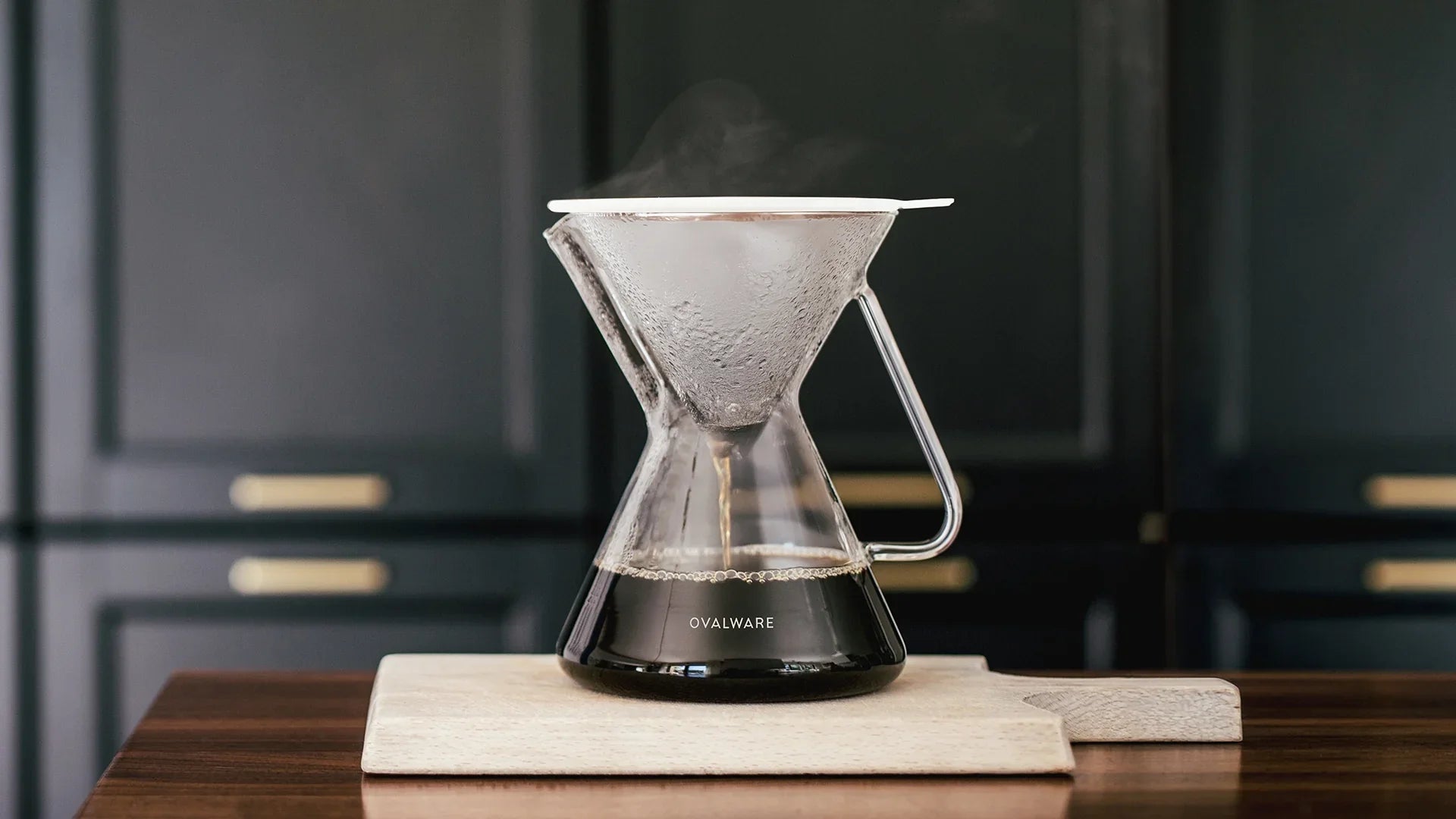
Making Pour Over , Step by Step
- Heat water to around 200°F (about 30 seconds off boil)
- Grind your coffee medium-fine , freshly ground works best
- Add grounds to the stainless steel filter
- Bloom: pour a small amount of hot water and wait 30-45 seconds
- Continue pouring in slow, steady spirals over 3-4 minutes total
- Drink immediately while hot and aromatic
Pour over requires you to be present , you can't walk away mid-brew. But many people find that 4 minutes of focused, intentional brewing is exactly the kind of quiet ritual they want in the morning. See how World Brewers Cup techniques translate to home brewing for expert-level pour over tips.
Cleanup for Both
Simple for both methods. The Ovalware Cold Brew Maker and Pour Over Coffee Maker are both dishwasher safe , pull out the stainless steel filter and put everything on the top rack. No grounds left in a mesh to scrub, no paper filters to dispose of.
Cost Comparison
Answer: Both methods cost roughly the same upfront ($40-$47 for Ovalware) and save significant money compared to buying cafe coffee daily. Neither requires paper filters. Cold brew uses slightly more coffee per batch but produces multiple servings at once. Pour over uses less coffee per cup but you brew one cup at a time.
| Factor | Cold Brew | Pour Over |
|---|---|---|
| Equipment cost | $40.99-$46.99 | $46.99 (3-piece kit) |
| Paper filters? | No , stainless steel included | No , stainless steel included |
| Coffee per batch/cup | ~85g per 1L batch | ~15-17g per 250ml cup |
| Servings per brew | 4-5 cups per batch | 1-2 cups per session |
| Active time required | 5 min (then 12-18hr steep) | 3-4 min every time you brew |
Both Ovalware brewers use reusable stainless steel filters , no ongoing paper filter cost. That adds up fast compared to setups that require paper filters every single day. The full case for reusable filters vs paper breaks down the numbers in detail.
Who Cold Brew Is Made For
Cold brew is a fit if you:
- Want coffee ready the moment you open the fridge in the morning
- Prefer a smooth, low-acid cup that's easy on the stomach
- Batch brew for the week rather than brewing one cup at a time
- Drink mostly iced coffee during warm months
- Like customizing with milk, oat milk, syrups, or flavor add-ins
- Want a coffee base for cocktails, protein coffee, or other drinks
- Prefer not to think much before that first sip of the morning

Cold brew is everyday magic made real: a 5-minute Sunday night prep, and great coffee all week without touching anything. Check our cold brew maker buying guide for what features actually matter in a maker.
Who Pour Over Is Made For
Pour over is a fit if you:
- Drink your coffee hot and want it fresh every morning
- Love exploring different origins, roasts, and flavor profiles
- Enjoy the ritual of making something carefully by hand
- Want precise control over your cup , strength, flavor, everything
- Drink your coffee black or close to it
- Have 5 minutes to spare and want them to feel intentional
- Care about tasting what quality beans actually offer

Pour over rewards a little attention and pays it back in flavor clarity. If coffee is part of a morning you genuinely look forward to , not just a caffeine delivery mechanism , this is your method. The right pour over ratio is where most people unlock a noticeably better cup.
The Ovalware Setup for Each Method
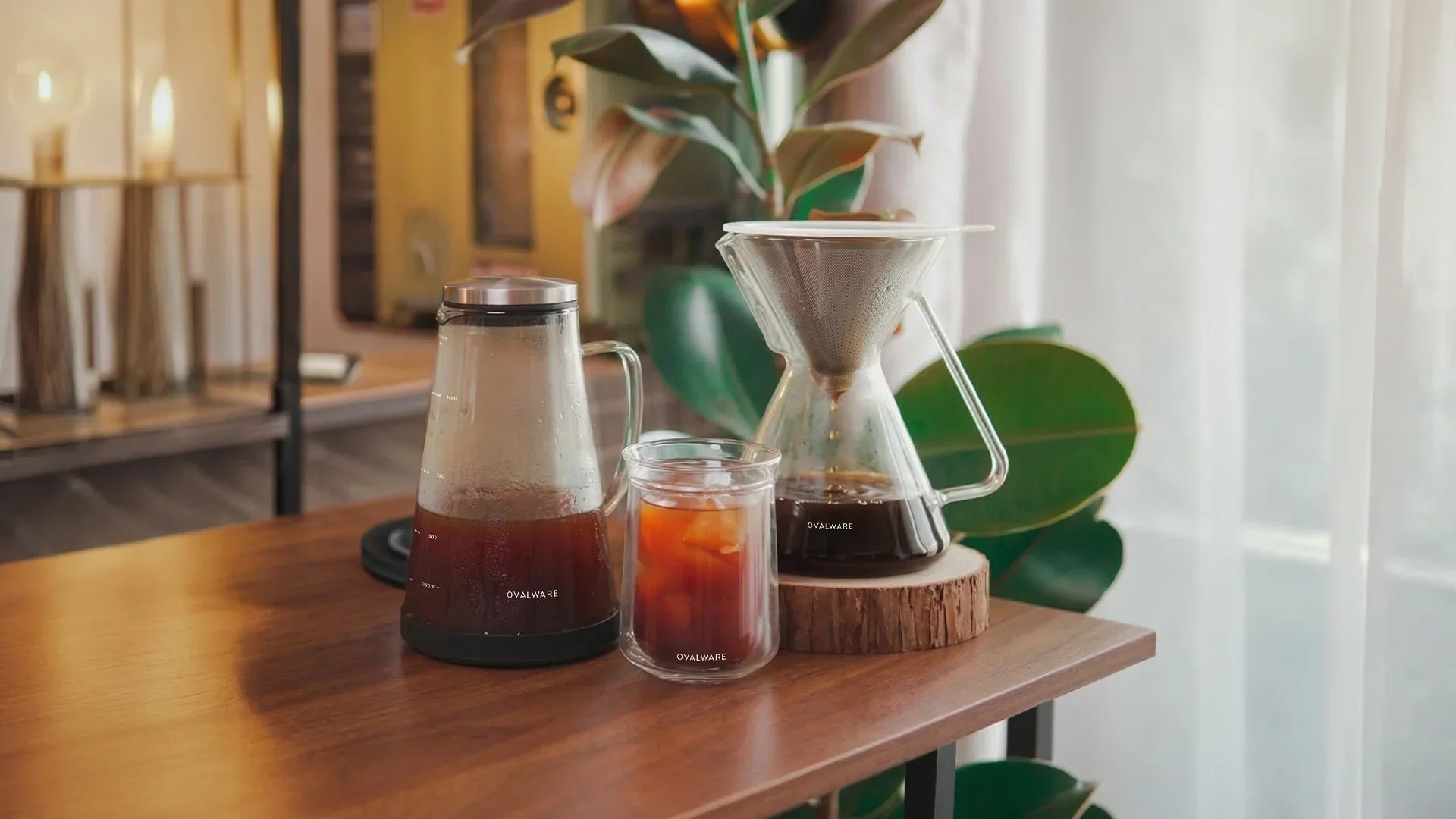
You don't need two different brewers from two different brands. Ovalware makes both , built the same way: hand-blown borosilicate glass, stainless steel filters, no plastic in the brew path, dishwasher safe. Pick one or get both.
| Ovalware Cold Brew Maker | Ovalware Pour Over Coffee Maker | |
|---|---|---|
| Best for | Batch brewing, smooth cold coffee, low acid | Fresh cups, hot coffee, bright and complex flavor |
| Brew time | 12-18 hours in fridge, fully hands-off | 3-4 minutes, hands-on |
| Sizes / Price | 1.0L , $40.99 | 1.5L , $46.99 | 500ml , $46.99 (3-piece kit: carafe + filter + lid) |
| Filter type | Fine-mesh stainless steel | Dual-layer stainless steel (laser-cut + superfine mesh) |
| Paper filters needed? | Never | Never |
| Dishwasher safe? | Yes , carafe and filter | Yes , both pieces |
| Best paired with | Double Wall Tasting Glass or Double Wall Mug | Range Server for serving; tasting glass for sipping |
| Shop | See the Cold Brew Maker → | See the Pour Over Maker → |
Free shipping on all US orders $65+.
The Final Call: Which One Should You Choose?
Answer: Choose cold brew if you want coffee ready without any morning effort , smooth, low-acid, perfect over ice. Choose pour over if you want a fresh, hot, aromatic cup that showcases the character of your beans. If you're unsure, they complement each other perfectly as a weekday/weekend split.
Choose cold brew if: You want coffee ready when you wake up with zero morning effort. You prefer a smooth, mellow cup. You drink mostly iced coffee or like adding milk and syrups. You want to batch brew and grab-and-go all week.
Choose pour over if: You drink hot coffee and want it fresh every morning. You love exploring what quality beans taste like. You have 5 minutes to invest in a morning ritual. You want the most nuanced, aromatic cup your beans can offer.
Can't decide? Get both. Cold brew on weekdays when mornings are rushed. Pour over on weekends when you have the time to actually taste what you're drinking. They fit together naturally , and with Ovalware, both setups use the same materials, the same care, and the same philosophy.
Frequently Asked Questions
What is the main difference between cold brew and pour over coffee?
Cold brew uses cold water and steeps for 12-18 hours, producing a smooth, low-acid, chocolatey coffee. Pour over uses hot water around 200°F and brews in 3-4 minutes, producing a bright, aromatic cup that highlights the bean's natural flavors. Temperature of extraction is what drives every other difference between them , including taste, acidity, effort, and caffeine.
Which has more caffeine , cold brew or pour over?
When served at similar strengths, cold brew and pour over have comparable caffeine , roughly 150-200mg per 12oz cup. Cold brew appears stronger because it uses more grounds per ounce of water, but most ready-to-drink cold brew is brewed close to drinking strength, not as a concentrate. The biggest caffeine variable is actually your bean choice and roast level.
Is cold brew less acidic than pour over?
Yes. Cold brew is significantly less acidic than pour over , typically 60-70% less acidic. Cold water extraction doesn't release the same acids that hot water does. This makes cold brew much gentler on the stomach and the better option for people with acid sensitivity or reflux.
Which brewing method is easier for beginners?
Cold brew is more forgiving for beginners. You combine coffee and cold water, wait 12-18 hours, and filter. There's very little that can go wrong. Pour over requires more attention to water temperature, pour rate, and grind size , but the technique becomes intuitive quickly with a little practice, and the results are rewarding.
Can I use the same coffee beans for both cold brew and pour over?
Yes, but different roasts work better for each method. Pour over shines with light to medium roasts, which highlight fruity and floral notes. Cold brew works well with medium to dark roasts, which bring out chocolatey, caramel flavors that hold up beautifully in cold extraction. The grind also differs: coarse for cold brew, medium-fine for pour over.
Sources:
Pour Over Coffee vs Cold Brew , Majesty Coffee · Cold Brew vs Pour Over , BRIM Coffee · Cold Brew vs Iced Pour Over , Kéan Coffee · Iced Pour Over Is Better Than Cold Brew , Caffeine Letter · 5 Things You Should Know About Cold Brew , Kaldi's Coffee · Caffeine in Coffee, Espresso & Cold Brew , Bean Box · Caffeine Levels in Different Brews , Rock Creek Coffee Roasters · Summer Brewing Methods Showdown , Second Best Coffee · Cold Brew vs Iced Pour Over , Chattahoochee Coffee Company · Does Cold Brew Have More Caffeine Than Regular Coffee? , Aerial Resupply Coffee