
Double Wall Glass Mug: What It Is, Why It Works, and How to Choose the Right One
You've probably seen them in coffee shops , or on your Instagram feed. That glass mug where the coffee looks like it's floating in mid-air, the outside feels room temperature even when you're holding something piping hot, and iced water never leaves a ring on your desk.
That's a double wall glass mug. And there's real physics behind why it works so well.
This guide covers exactly what double wall glass means, how the insulation actually works, what separates good glass from cheap glass, and what to look for when you're ready to buy. By the end, you'll have a clear answer to every question you came here with.
What Is a Double Wall Glass Mug?
Quick answer: A double wall glass mug is a cup made from two separate layers of glass with a sealed air pocket between them. That trapped air acts as insulation , slowing heat transfer in both directions. Hot drinks stay hot. Cold drinks stay cold. And the outer surface stays comfortable to hold no matter what's inside.
The construction is simpler than it sounds. Two glass vessels are formed , one slightly smaller (the inner wall) and one slightly larger (the outer wall). The inner vessel holds your drink. The outer vessel is sealed around it, trapping a thin layer of still air between the two. That air gap is what makes the whole thing work.
Double wall glass mugs are different from vacuum-insulated stainless steel in one key way: they keep the air pocket rather than removing it completely. A true vacuum has near-zero gas molecules, which means near-zero heat transfer by conduction or convection. An air gap is not quite as efficient, but it's close enough to make a genuine, everyday difference , and it lets you actually see your drink, which is most of the appeal.
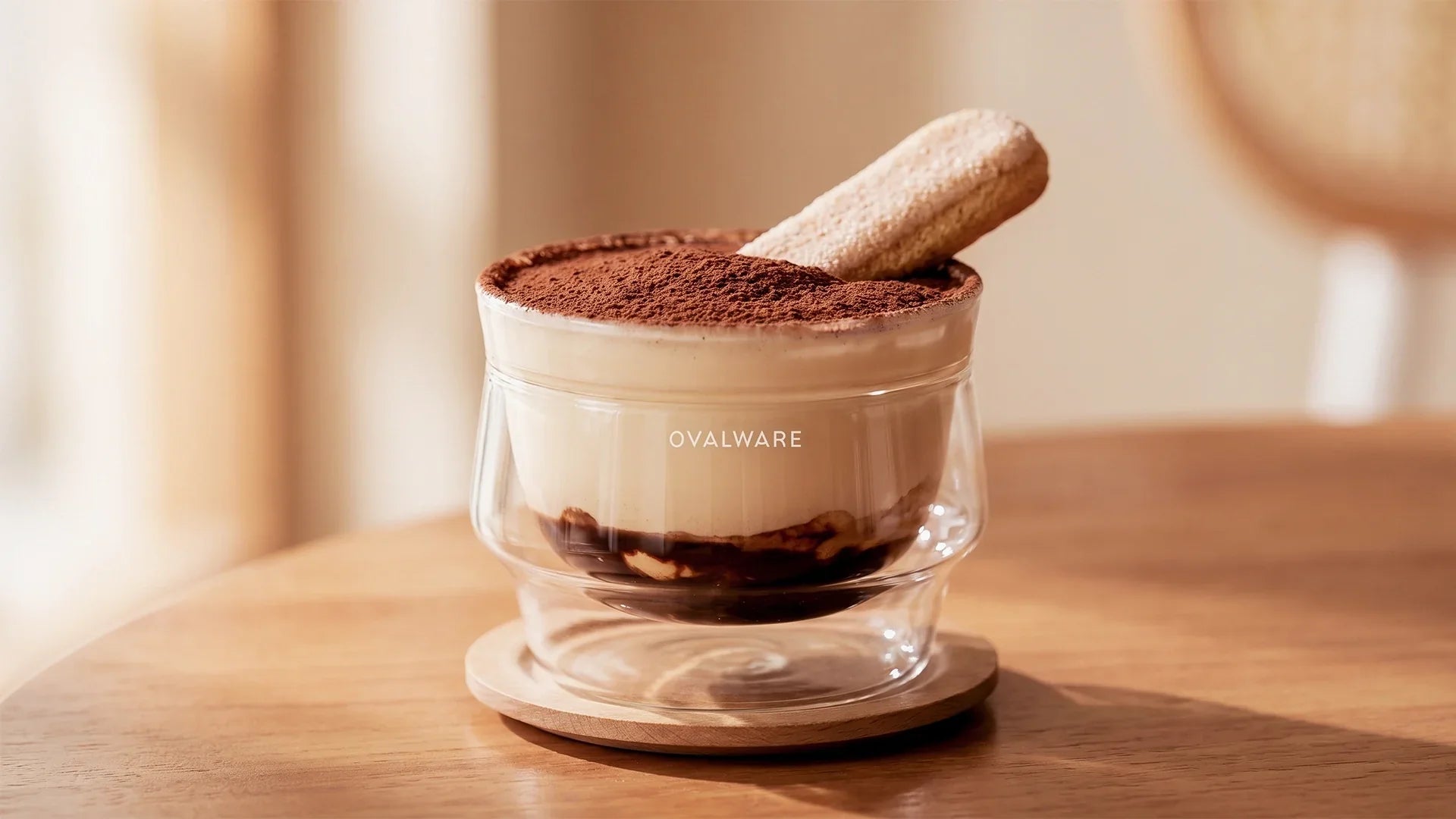
The other visual effect worth mentioning: the drink appears to "float" inside the outer glass. Because the two walls are clear and separated, there's a slight visual gap around the beverage. It's a striking look that makes even a basic cup of coffee feel like something worth paying attention to.
Most quality double wall glass mugs are made from borosilicate glass , the same material used in laboratory equipment and high-end cookware. More on that shortly.
How Does the Insulation Actually Work?
Quick answer: Still air is a poor conductor of heat. The sealed gap between the two glass walls traps air that can't circulate, which means heat can't flow easily between your drink and the outer wall. The result is significantly longer temperature retention than any single-wall cup can offer , without any moving parts or mechanical complexity.
Heat moves in three ways: conduction (through solid materials), convection (through moving fluids or gases), and radiation (electromagnetic waves). A double wall glass addresses all three, which is why it outperforms both ceramic and single-wall glass.
- Conduction: Heat moving through solid material slows dramatically when it hits the air gap. Glass conducts heat reasonably well, but still air is a poor conductor , roughly 40 times less conductive than glass. Once heat reaches the inner wall, it struggles to bridge the gap to the outer wall.
- Convection: In the sealed air pocket, air molecules can't circulate freely. Convection requires movement , hot air rising, cool air falling, creating a current. In a sealed, narrow gap, that movement is suppressed. Heat transfer by convection is essentially stopped.
- Radiation: Some heat does radiate across the air gap regardless. This is where vacuum-insulated steel has a real advantage , a vacuum blocks radiated heat, while the air gap doesn't entirely. But the radiation loss over typical coffee-drinking timescales is small enough that it doesn't meaningfully matter for daily use.
The practical result: a quality double wall glass mug keeps coffee at a comfortable drinking temperature for roughly 1-2 hours, according to testing by Kitchables and reviews from Antifoodie. That's compared to 20-30 minutes for a ceramic mug and roughly 10-15 minutes for a single-wall glass.
The same principle works in reverse for cold drinks. The air gap slows down heat from the warm room reaching your cold drink , keeping it colder longer. It also eliminates condensation. Water vapor in the air condenses on surfaces that drop below the dew point. Because the outer wall of a double wall glass stays close to room temperature (not chilled by whatever's inside), condensation never forms. No wet ring on your desk. No damp hands.
Double Wall vs. Single Wall Glass: The Real Difference
Quick answer: In a single-wall glass, heat flows straight through the glass to the outside air. Hot drinks cool in minutes, cold drinks sweat immediately. A double wall glass interrupts that flow with an insulating air pocket , extending temperature retention by 3-4x and eliminating condensation entirely.

Here's how they compare in the moments that actually matter:
| Feature | Single Wall Glass | Double Wall Glass |
|---|---|---|
| Temperature retention (hot) | 10-20 min | 1-2 hours |
| Condensation (cold drinks) | Yes , wet desk, wet hands | None |
| Exterior feel with hot drink | Hot , uncomfortable to hold | Room temperature , comfortable |
| Visual effect | Standard transparent glass | Drink appears to "float" |
| Weight | Lighter | Slightly heavier (two walls) |
For a daily coffee ritual, the double wall format wins on every practical point. The only real tradeoff is weight , two glass walls are heavier than one. But for anyone who actually wants their drink at the right temperature while they're drinking it, the double wall design is an easy choice.
If you're also thinking about what glass shape works best for cold drinks specifically, our guide to the best glass for iced coffee covers the details.
Borosilicate Glass vs. Regular Glass
Quick answer: Borosilicate glass has a much lower thermal expansion coefficient than regular soda-lime glass. It expands and contracts far less when temperatures change , which means it can handle a cold glass filled with hot coffee without cracking. Regular glass cannot handle that reliably. For any mug holding hot liquids, borosilicate is the right material.
Borosilicate glass contains boron trioxide, which significantly lowers the material's rate of thermal expansion. It was developed in the late 19th century and became the standard for scientific and medical glassware because of its thermal stability. Those same properties make it ideal for drinkware.
Here's what that means in practice: when you pour hot liquid into glass, the glass expands. When that expansion happens unevenly , some areas heat up faster than others , stress builds up inside the material. Regular soda-lime glass (the kind used in most inexpensive glassware) expands about three times more per degree of temperature change than borosilicate. That's why cheap glasses crack in the dishwasher or shatter when hot liquid meets a cold surface.
Borosilicate glass expands far less, distributes thermal stress more evenly, and handles temperature changes reliably. It's also more resistant to the micro-fractures that develop in cheaper glass over repeated heating and cooling cycles , which matters a lot for a mug you're using every day.
When shopping, look for explicit "borosilicate glass" in the product listing. Vague terms like "heat-resistant glass" or "tempered glass" don't guarantee the same performance. As noted by Low Key Coffee Snobs in their double wall mug roundup, the distinction between borosilicate and standard glass is one of the first filters worth applying when evaluating options.
All Ovalware glassware , including the Double Wall Mug , is hand-blown borosilicate glass. If you care about what your drinkware is made from, our guide to going plastic-free with your coffee setup covers why material choice matters for your whole brewing ritual.
What to Look for When Buying a Double Wall Glass Mug
Not all double wall glass mugs are the same. Here's what actually separates a great one from a frustrating one.
Glass material , borosilicate only
As covered above: borosilicate handles thermal shock. Regular soda-lime glass does not. If a product listing doesn't specifically say borosilicate, assume it's cheaper glass. This is especially important for dishwasher use, where temperature swings are rapid and repeated.
Capacity that matches how you actually drink
Double wall glass mugs typically range from 250ml to 600ml+. Think about your real drinking habit:
- 250-350ml: Best for espresso drinks, cortados, flat whites, and small lattes.
- 400-500ml: The sweet spot for most coffee drinkers , covers a full Americano, a pour over serving, or a medium iced coffee comfortably.
- 600ml+: If you make large batches or drink multiple cups without refilling.
Filling a mug only halfway reduces its insulation efficiency , the larger air surface area above the drink speeds up cooling. Match your mug size to the volume you actually drink.
Handle design and fit
Some double wall mugs are handleless, some have ergonomic handles. For hot drinks especially, a handle keeps the liquid further from your hand. The handle should feel stable with three fingers through it , and ideally, it should be formed as part of the glass rather than attached separately. Glued or attached handles can loosen over time with repeated heating and cooling. A handle formed from the same glass, fused into the design, is more reliable long-term.
Seal quality at the base
The air gap only works if it's properly sealed. Lower-quality double wall glasses sometimes develop small leaks at the base where the two layers are joined. Water can work its way into the gap over time, causing permanent fogging between the walls. This doesn't make the mug unsafe, but it ruins the look and reduces insulation. Check reviews specifically for reports of fogging , it's the most common failure mode for double wall glasses, and it's worth filtering for before buying. According to Well Whisk, seal quality at the base is one of the primary differentiators in the category.
Dishwasher compatibility
Most quality double wall borosilicate glass mugs are dishwasher safe, but top rack is consistently recommended for longevity. High-pressure spray on the bottom rack can stress the seal at the base over many cycles. Hand washing extends the life of the glass seal significantly. Either way, look for explicit dishwasher-safe confirmation before buying.
Color and finish options
Clear glass is the classic choice , the full visual effect, drink in full view. Tinted or frosted finishes are now available for those who want a different aesthetic. The insulation works the same regardless of finish , color is purely a visual preference.
The Ovalware Double Wall Mug
For a straightforward, well-made double wall glass mug built for daily use, the Ovalware Double Wall Mug covers all the essentials. Hand-blown borosilicate glass, 500ml capacity, an ergonomic handle formed as part of the glass design, and three color options. It's sold as a set of two , one for your morning ritual, one for whenever you want company.

It handles hot coffee, iced drinks, tea, and anything in between. If you make an Americano at home in the morning, the double wall format keeps it at the right temperature throughout , check out our guide to making a great Americano at home for the full recipe.
| Spec | Detail |
|---|---|
| Capacity | 500ml / 17oz per mug |
| Sold as | Set of 2 |
| Price | $42.00 for the set |
| Material | Hand-blown borosilicate glass |
| Construction | Double-wall with sealed air insulation |
| Handle | Ergonomic, formed as part of the glass |
| Colors | Clear Glass, Stealth Gray, Frost White |
| Dishwasher safe | Yes |
| Free shipping | US orders $65+ |
Shop the Ovalware Double Wall Mug →
Not sure which mug fits your drinks? The Double Wall Mug at 500ml is the everyday workhorse for full-size coffee drinks. For espresso drinks and lattes, the Latte Master Glass is sized specifically for those. For smaller pours and tasting, the Double Wall Tasting Glass at 350ml is the right fit.
Frequently Asked Questions
What is a double wall glass mug?
A double wall glass mug is a cup made from two layers of glass with a sealed air pocket between them. The trapped air acts as insulation, slowing heat transfer in both directions. Hot drinks stay at temperature significantly longer than in ceramic or single-wall glass, cold drinks stay cold without sweating, and the outer surface stays comfortable to hold regardless of what's inside.
How long does a double wall glass mug keep coffee hot?
In real-world use, a quality double wall glass mug keeps coffee at a comfortable drinking temperature for roughly 1-2 hours , compared to 20-30 minutes for a standard ceramic mug. That's enough time to drink a full mug without racing against the clock. It won't keep coffee piping hot for 6-8 hours like a vacuum-insulated steel thermos, but for a morning coffee ritual, it's more than enough.
Does a double wall glass mug sweat?
No. Condensation forms when a surface drops below the dew point of the surrounding air. Because the outer wall of a double wall glass stays close to room temperature , rather than being chilled by the cold drink inside , condensation doesn't form. No wet rings on your desk, no slippery glass, no damp hands.
What's the difference between a double wall glass mug and vacuum-insulated stainless steel?
Both create an insulating barrier between inner and outer walls. Vacuum-insulated steel removes the air entirely , creating a near-perfect thermal barrier that keeps drinks hot for 6-12 hours. Double wall glass keeps still air in the gap, which is less thermally efficient (1-2 hours hot) but has a major advantage: you can see your drink, it doesn't impart any metallic flavor, and the aesthetic is hard to beat. Choose glass for daily home use where you want the visual experience. Choose vacuum steel for travel or all-day heat retention.
Can you use a double wall glass mug for cold drinks?
Yes , it works just as well for cold drinks as hot ones. The insulating air pocket slows heat from the room reaching your cold drink, keeping it colder longer. And because the outer wall stays at room temperature, condensation never forms. You can hold iced coffee for an entire morning without your hand getting cold or the glass leaving a ring. It's one of the most useful , and underappreciated , benefits of the double wall format.
Sources consulted:
Kitchables , The Benefits of Double-Walled Glass Coffee Mugs for Heat Retention · Antifoodie , How Well Do Bodum Double Wall Glasses Work vs. a Normal Glass? · Low Key Coffee Snobs , The 6 Best Double-Walled Coffee Mugs · Jiateng Glass , What Are Double Walled Glasses Good For? · The Calculated Chemist , Benefits of Drinking Coffee from a Glass Double-Wall Insulated Mug · Wilmax , The Advantages of Double Wall Glasses over Normal Glasses · WOW Glassware , 12 Advantages of Using Double-Walled Glasses · National Park Shops , The 7 Best Double Wall Glass Mugs · Well Whisk , 5 Best Double Wall Glass Coffee Mugs